5 hours ago
Can't listen to advice ? Kurti begs allies to convince the five EU nations to recognise Kosovo
Periskopi(7 months ago)
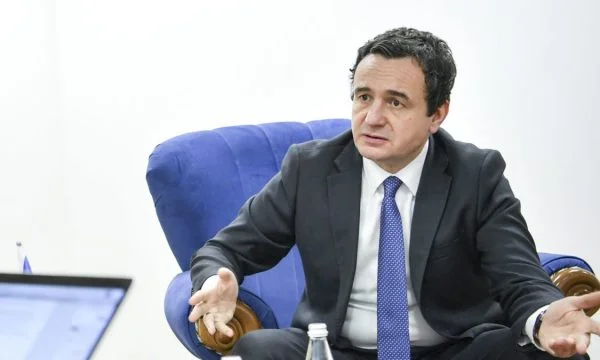
(7 months ago)A day after Syria's recognition of Kosovo, incumbent Prime Minister Albin Kurti has called on allied countries to commit to convincing the five European Union countries that have not yet recognised the state of Kosovo. The five EU nations that have not yet recognised Kosovo's independence [...]
A day after Syria's recognition of Kosovo, incumbent Prime Minister Albin Kurti has called on allied countries to commit to convincing the five European Union countries that have not yet recognised the state of Kosovo.
The five EU nations that have not yet recognised Kosovo's independence are Spain, Greece, Slovakia, Romania and Cyprus.
Speaking at the Paris Peace Forum, Kurti said the Kosovo government is working bilaterally with these countries, stressing that there have been partial progress so far. He cited recognition of Kosovo passports from Spain and the establishment of the status of the Kosovo Office in Greece as important steps towards full normalisation of relations.
Kosovo was recognised by Syria. This year Kenya and Sudan have also recognized us. This means that 120 countries from around the world have already known our Republic. We are working bilaterally with these five EU non-recognitional countries. There are progresses, Spain has recognised our passports, Greece has raised the status of our office in Athens, even though recognition has yet to occur. We're working hard and we need the states that have known us to convince what they've still done,” said Kurti.
According to him, although these states have not formally recognised Kosovo, none of them oppose the country's European path. “We have the Stabilisation and Association Agreement, we are part of the Berlin Process and we participate in the EU Growth Plan,” he added.
Under discussion with subject “Peacekeeping at a crossroads: The future of UN missions and global responsibility”, Kurti stressed that Kosovo is a double success story: “S first, is the success of NATO's military and humanitarian intervention to stop Serbia's genocide, and, second, as a country where development and democracy walk side-by-side (4)x3>.