2 hours ago
“can learn lessons from Kosovo”, Bloomberg: The Gaza peace plan can work if “copes” KFOR
Periskopi(8 months ago)
(8 months ago)Why did the 20-point peace agreement US President Donald Trump mediate for Gaza, about 10 days ago, seem to be already in trouble? Thus begins the prestigious Bloomberg article on the situation in Gaza, underlining that without a successful peacekeeping force, the fighting ban will be very [...]
Why did the 20-point peace agreement US President Donald Trump mediate for Gaza, about 10 days ago, seem to be already in trouble?
That's how prestige begins Bloomberg Her article on the situation in Gaza underlining that without a successful peacekeeping force, the fighting ban will be very difficult. According to author Michael Champion, a model for example is that of Kosovo, where KFOR follows the decades-long peacekeeping mission.
Instead of preparing to disarm and withdraw from politics, Hamas militants have stepped out of their homes to execute Palestinian rivals and restore control in areas from which Israeli forces withdrew. Israel says the terrorist group is also ambushing its troops, while Hamas says the Israeli Protection Forces continue to bomb Gaza from the air. Both counts appear accurate, while the IDF is also refusing to reopen Rafah crossing point between Gaza and Egypt, as required.
The simple cause of such a quick break-up is that neither Hamas nor the Israeli government were satisfied with the agreement they were forced to sign by Trump and the region's leaders. But since both sides said from the beginning they had no intention of implementing the main terms of the agreement, why are they misbehaved?” is probably the wrong question. A better question would be: “How can they be successful?”
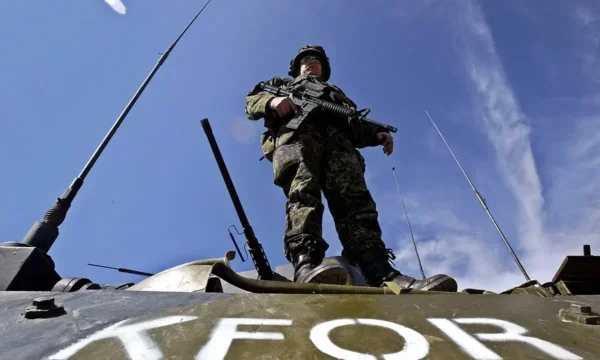
A good way to find the answer would be to consider what is perhaps the best model for creating a Gaza peacekeeping force: Kosovo Force, better known as KFOR, which was formed in 1999 and continues to operate even today, is written in the article. Bloomberg.
It is no coincidence that structures defined in Trump's 20-point plan were based on a proposal by former UK Prime Minister Tony Blair. These in some respects are similar to what he was involved in building them for Kosovo.
NATO forces, which were deployed in Kosovo after Serbia's 78 days of bombing, managed immediately to fill its security vacuum.
At that, in Gaza's case, the peace element of Trump's agreement, he said, is still being processed in Cairo. Bloomberg notes that KFOR's model is a model for every future mission in Gaza, a force sanctioned by the United Nations led by Muslim countries like Egypt, Azerbaijan and Indonesia.
Although KFOR, according to Bloomberg, was not perfect, and the fact that it is still present in Kosovo after 25 years confirms that, it represents one of the most successful peacekeeping operations. For Gaza, the lesson is clear, the vacuum of security must be filled immediately, or any peace deal is doomed to failure.
The KFOR case, reads the article, shows that without the preparation of forces to fill the vacuum of security, no peace deals can survive. And for Gaza, the place where it has to start is Rafah, even if it has to be implemented gradually. /BalkanWeb/ Periscopi/