an hour ago
Kosovo risks remaining without funds from EU Growth Plan
Periskopi(8 months ago)
(8 months ago)Procrastination of the new government's constitution and creation process may cost Kosovo the loss of funds from the European Union's Western Balkans Growth Plan, European Integration connoisseurs warn. The growth plan, covering the period 2024-2027, contains a 6 billion-euro package approved by the EU in [...]
Procrastination of the new government's constitution and creation process may cost Kosovo the loss of funds from the European Union's Western Balkans Growth Plan, European Integration connoisseurs warn.
The growth plan, covering the period 2024-2027, contains a 6 billion-euro package, approved by the EU at the end of 2023, to support the approach of economies of six Western Balkan countries to European standards.
To benefit from these funds, countries must complete EU required reforms, including private sector, green transition and digitalisation.
Out of this package, Kosovo can benefit over 880m euros, of which more than 250m as non-re return grants, while the rest in favourable credit form.
However, the country has not benefited from the 61m-euro pre-finance stake already shared by Albania, Montenegro, Northern Macedonia and Serbia.
These countries were also given new tools last week.
Outside the benefits lies Bosnia and Herzegovina, which has not adopted the reform agenda and the Growth Plan in time.
Kosovo was among the first to approve the reform agenda, but funds remain blocked due to the lack of institutions to ratify the formal agreement with the EU.
This sends a negative signal to Brussels, where the frustration of institutions and member states is continuing to grow because of the behaviour of the Kosovo political elite”, says Donika Emini, researcher at the European Consultative Group for Balkan Politics ( B EPAG, Radio Free Europe.
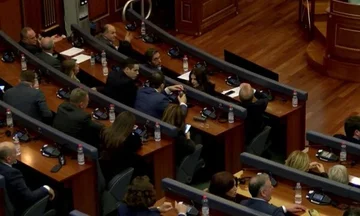
Kosovo's Assembly was declared constitutionalised on October 10th, but, meanwhile, the process was rejected at the Constitutional Court by the Serbian List.
The country, as well, still remains with the incumbent government, even though Vetevendosje Movement leader Albin Kurti has received the mandate for forming the new executive.
EU funds for Kosovo “can redistribute”
According to Bekim Salih, from the Institute for Advanced Investigatives, GAP, delays in the institution's constitutionalisation block not only funds but also the implementation of reforms.
Kosovo's ability to receive the funds should be translated as Kosovo's inability to make reforms. Reforms, of course, can take place over a certain period, but it is seen that their dynamics will be late, slow”, he says.
Donika Emine is on the same line.
She explains that not receiving funds from the Growth Plan does not mean that the money dedicated to Kosovo will be lost automatically. However, if Kosovo fails to withdraw and use these funds throughout the programme, the risk of loss is too high.
According to Emin, due to delays in adopting the agreement by the Parliament and the lack of a full-term Government, implementation of the reform plan in Kosovo will begin much later than in some other Western Balkan countries.
“... and that penalizes him very much. The country must gain access to funds by implementing the agenda reforms approved by the EU. So these are the funds for which specific reforms must be worked and implemented. Kosovo has already lost a lot of time”, Emini says.
In the course of this, it warns that lack of reforms could block EU payments, leaving large sums unused by 2027.
“... and if funds have not been used or the conditions have not been met at the end of the program period, the EU can redistribute them [land] to countries or projects that have fulfilled the conditions faster”, says Emini.
Emrush Ujkan, executive director of the Council of European Investors, stresses that the Growth Plan is only one of the EU's tools in its agenda for the integration of the Western Balkans.
According to him, the EU will not stop the processes initiated due to the delays of countries scheduled to meet European criteria.
In this direction, if the tools are not taken, this is also true of the other instruments that will be reselled, which falls, not on us, but on other countries that are in this process”, says Wolfan.
According to him, the EU's planning regarding the implementation of the Growth Plan was to keep pace with all Western Balkan countries.
Therefore, there is no time to go back to a process of what is planned at the right time. If [the specific country] has failed to take concrete action, the responsibility will be taken by itself”, Wolfan tells Radio Free Europe.
He stresses that if Kosovo fails to withdraw EU funds for reforms, it does not mean that reforms will not be required ) they will later be financed by Kosovo's own budget.
The European Commission announced in April 2024 that if Western Balkan partners fail to meet the conditions, payments could be suspended in part or in full.
The European Commission also explained that after such a suspension and “in the event Western Balkan partners fail to meet the relevant conditions over a one-year grace period [or two years from the first year of implementation], the suspended amount would be withdrawn and could be re-entered among other beneficiaries in the following years”.
Kosovo reports - EU “at lowest level”
Kosovo's delays in forming the new legislature and executive, from holding parliamentary elections on February 9th until now, have made the situation difficult even in terms of formal communication of Kosovo institutions with the European Union.
In August, EU officials have announced they will not hold meetings within the Kosovo Government building until the country has an executive with a full mandate.
Emini emphasises that this is a disturbing message at the address of Kosovo authorities regarding the lack of functional institutions.
“has lost the communication and co-ordination channel with the EU for reforms, as well as diplomatic relations between Kosovo and the EU”, she says.
These relations, Salihu sees them at the lowest level in the last decade.
According to him, in the absence of a government with full mandate and a legally packaged assembly, Kosovo has difficulty communicating with the EU for bilateral reports and integration processes.
The “You see, no longer mention of Kosovo's membership in the Council of Europe, is mentioned no longer in the possibility of lifting [the punishment] measures against Kosovo. Kosovo's reports with the European Union are considered to be the lowest in the past 10 years, following the signing of the SAA [Relief-Asociation Agreement]”, Salihu says.
Kosovo failed to join the Council of Europe in 2024.
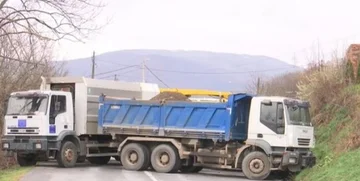
The country continues to be under EU punitive measures, which were imposed in June 2023, due to increased tensions in northern Kosovo, inhabited by Serb majority.
European integration recognisers estimate that further procrastination of the formation of new institutions “maintains” the gap in reports between Kosovo and the EU.
According to them, it could deepen even further, if the country eventually heads to early parliamentary elections, due to disagreements among political parties about forming new institutions. / REL/ Periscopi/