an hour ago
Former Japanese Prime Minister Shinzo Abe's murder author admits guilt
Periskopi(8 months ago)
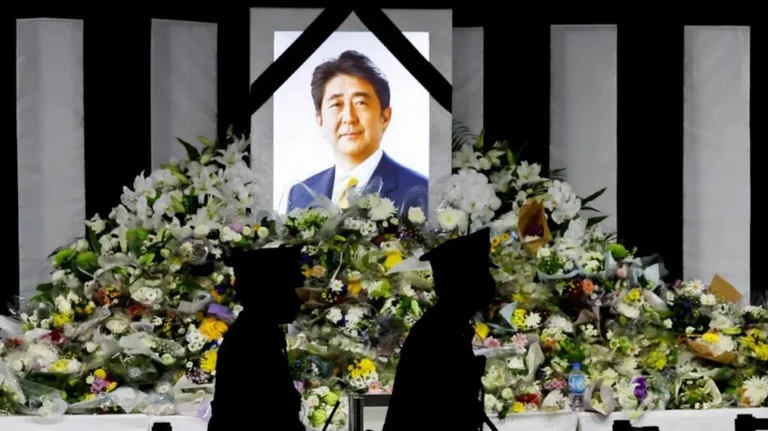
(8 months ago)A man charged with the murder of former Japanese Prime Minister Shinzo Abe has pleaded guilty on the first day of trial against him in Tokyo. Tetsuya Yamame, 45, said in court that “everything is true”, the BBC reports. He had used a weapon made himself to shoot Abe during an election rally in [...]
Tetsuya Yamame, 45, said in court that “everything is true”, reports BBC. He had used a weapon himself made to shoot Abe during an election rally in the western town of Nara in July 2022.
Abe, one of the best-known figures in modern Japanese politics known for his nationalist foreign policy and for the economic strategy called “Abenomics”, was shot several times and passed away in hospital the same day. His murder shocked Japan and the international community.
Investigations revealed that Yamame had targeted the former prime minister because he blamed him for the alleged links between the Liberal Democratic Party (LDP), in power for decades, and the Church of Unification, otherwise known as “Moonies”.
Yamame had told investigators that he had blamed Abe for promoting the church, which, according to him, had financially destroyed his family. In his testimony, he claims that his mother had donated about $100 million (about $660,000) to the church as evidence of her faith.
This case caused a wave of investigation into Japan on the activities of the Church of Unification, founded in South Korea and known for its ceremonies of mass marriages. Four Japanese ministers resigned after revelations of possible ties to the organisation.
In March of this year, a court in Tokyo ordered the dissolution of the Church of Unification in Japan, removing tax exemption status and demanding liquidation of its assets.
However, according to The Japan Times, Yamama's mother has not changed her attitude. Rather, she has declared that the murder of Abe has strengthened her religious faith.
Yamamam's trial is expected to last until January next year, while defence has rejected some of the allegations of violations of the law on weapons, arguing that the improvised weapon used is not classified as firearms under current legislation.
After the assassination against Abe, Japan, a country with the lowest levels of gun violence in the world, has further strengthened the laws regulating the possession and production of artisanal weapons.
Shinzo Abe's murder has opened up major debates on the security of politicians, the role of religious organisations in politics and the regulation of weapons laws in a country where such crimes are extremely rare. /Periscope/