an hour ago
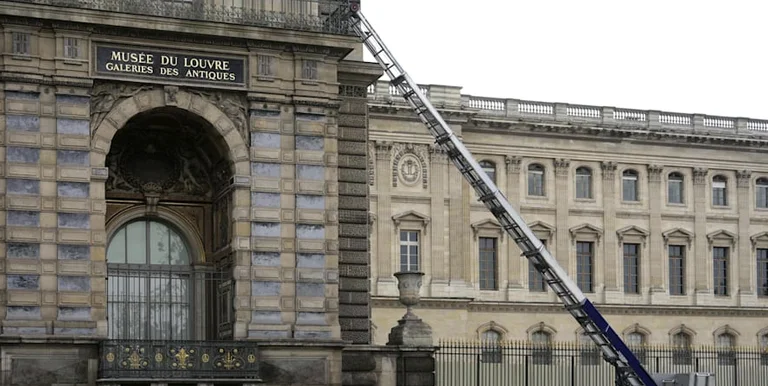
Israeli spies sneak up on Louvre thieves in Paris
Periskopi(8 months ago)
(8 months ago)Two suspects in the Louvre robbery in Paris have been arrested. The Israeli security firm CGI Group, whose president is politician and former intelligence chief Yaʹacov Perry (81), was involved in their identification. A man bound to the museum hired us through our branch in Rome, as it is difficult to [...]
The Israeli security firm CGI Group, whose president is politician and former intelligence chief Yaʹacov Perry (81), was involved in their identification.
A man associated with the museum hired us through our branch in Rome, as it is difficult to work directly with Israeli companies in the current political situation. A CGI team traveled from Rome to Paris immediately and searched the museum staff, security personnel and tourist guide”, has said of BILD Zvika Nave, CEO of CGI.
They soon found digital forensic evidence showing some employees involved in the robbery.
CGI agents, for example, secretly spoke to employees who were unaware of being questioned. These conversations were recorded.
They didn't know who was talking to them, or why these questions were being asked. But that led to the conclusion that they had been in contact with the authors outside the” museum, says Nave.
All leads were verified twice. But just because someone said something wasn't enough. We then verified twice with at least another source. By, say, 500 employees, we soon narrowed to three or four key suspects. And two of them were arrested”, added Navy.
The CGI group also played an important role in finding Green Vacul robbers in Dresden in 2019, at the time, they were members of the Remmo family from Berlin.
And Eve sees strong similarities.
Even in Germany, an employee from a security company at the time helped provide information to perpetrators. Even in Germany, the alarm didn't work. Someone inside made sure of this”.
The work has not yet been completed in Paris, treasures have not yet been found. Gone.
The “issue has not yet been resolved; stolen treasures have not been returned to their owners. But we're very optimistic, we're on the right track”, hope nave.
In Dresden, CGI had found some of the stolen Saxon treasures on the dark network (Dark Net), where robbers were offering them for sale.
Through negotiations with robbers, they managed to convert 80 percent of the jewelry, representing 50 percent of the total value, into the State Collections of Dresden Art.
Interestingly, in August, Zwicka Nave gave an interview to the Italian newspaper “Il Tempo” in which he gave a mirror to his company's work.
Part of this work includes research at Dark Net, which is not accessible through conventional research engines. Criminals also discuss their plans there. And even then, he warned that the Louvre in Paris was also a topic of discussion.
“Mona Lisa in Louver is one of the most controversial objectives at the Dark Netway forums “, he said. /Periscope/