11 minutes ago
The diamond of power escaped, but what French crown jewels are in the hands of the Louvre robbers
Periskopi(8 months ago)
(8 months ago)Bonaparte considered his Louvre to be his museum by placing there a host of works of art, destined to be his, brought around the world. Napoleon believed that their owner was only the one who understood and desired art and who took advantage of the weapons, he never thought he was committing a crime by [...]
Because they belonged to him, they belonged to the whole world, in his view. When the crown took place in 1802, the Louvre Museum was called the Napoleon Museum until 1815 after its death, and then his legacy was publicly condemned.
Many of his works were later returned to their homeland. Many of the emperor's personal treasures and family began to disappear, among them, the crown pearls. Some of them found over the past two centuries returned to the Louvre and settled in the Apollo Gallery, where they were stolen by four robbers.
However, today's gallery is not the same, even though the jewelry there was evidence of the extraordinary work of French crown goldsmiths. The most important, Regent Diamond, 140,64 Karate, is still there, surrounded by an aura that often revolves around pearls with real stories. The diamond was found accidentally in a mine in India at the beginning of the century. X coordinate VII was then sent to England and cut off by the Venetians. At the beginning of the century. X coordinate V III was still considered the largest diamond in the world.
During the French Revolution, it was stolen. Later, it was said that it was used to finance Napoleon's Italian campaign, after which he placed it in the handle of the sword on the eve of his enthronement as emperor. This is how he appears in David's portrait of Louver showing his apocalypseic ceremony by means of his never - to - be style.
The value and significance of other jewelry is less. Neither is extraordinary or of rare beauty and quality. But the historical figures they belonged to - all related to Napoleon - are of interest.
Some jewelry came from the legacy of Maria Amalia Bourbon, Louis Philip's wife, who led from 1830-1848. An extraordinary woman who lived a quiet, unsaltary life who did not have a special taste for fashion or was known for her unbridled luxury. A famous photo by Antoine Claudidet, taken just before her death in 1866, shows her more like Mother Teresa than as queen.
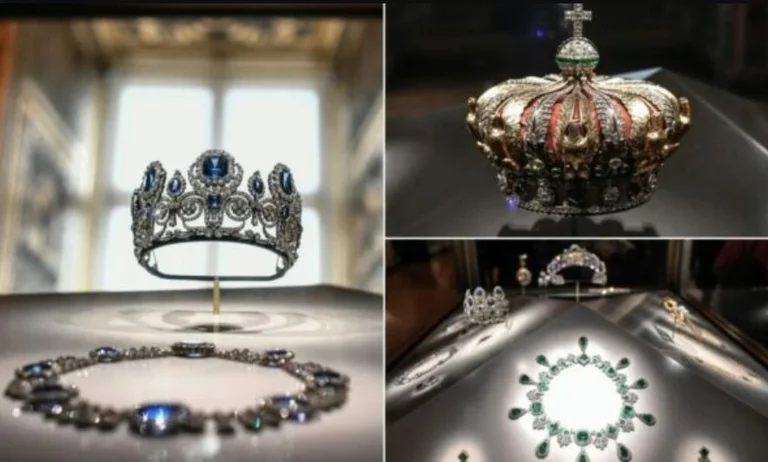
Among the stolen items are the jewelry of Hortense de Beauharnais, Josephine's daughter, who later married Napoleon's younger brother and Dutch King Louis Bonaparte. Full of artistic and passion (was musician), she possessed the Hortensia Diamond, a miracle that remains part of the museum collection and has not been stolen. But other objects belonging to her, a crown, a necklace of sapphires, and earrings, have been stolen.
These include the items of Austria's Marie Louise, Napoleon's wife, who succeeded Josephine and who refused to comply with her. She was a skilled manager and a master, but she was not known for her exquisite taste of jewelry.
Some of the jewelry belonged to the queen of France who died in 1920, Empress Eugéni, wife of Napoleon III. A woman involved in the turmoil and since difficult financial circumstances was forced to sell most of her jewelry. The robbers must have known.