an hour ago
Bloomberg analysis/ What the impact of Trump sanctions on Russian oil companies is what experts think.
Periskopi(8 months ago)
(8 months ago)US President Donald Trump announced sanctions against the largest oil companies in Russia, launching the first major package of economic sanctions against Vladimir Putin's Russian economy as part of pressure to end the war in Ukraine. US Treasury Department added state companies Rosneft PJSC and Lukoil PJSC [...]
US President Donald Trump announced sanctions against the largest oil companies in Russia, launching the first major package of economic sanctions against Vladimir Putin's Russian economy as part of pressure to end the war in Ukraine.
US Treasury Department added state companies Rosneft PJSC and Lukoil PJSC in the “blacklist”, citing Russia's “lack of serious commitment to the peace process”, the statement said on Wednesday.
The decision marks a twist for Trump's approach to Russia, which has so far avoided imposing large-scale sanctions and said earlier this month it would meet Putin in the coming weeks. It is also a radical change in Western access to Russian oil, as efforts so far, such as limiting G7 prices, have been aiming to limit the Kremlin's income without interrupting oil flow to the market.
Just a day earlier, Trump had hinted at a change of approach, saying that “does not want a date without results”.
Oil markets reacted immediately as Brent rose by 3% to over $64 per barrel. The threat to further curb Russian exports came at a time when the global market was preparing for a possible over-fortensification.
Rosneft, led by Putin's close ally, Igor Sechin, and Lukoil, a private company, are the two biggest oil producers in Russia, representing nearly half of its total gross crude oil exports, according to Bloomberg estimates. Revenues from oil and gas taxes make up about a quarter of the Russian budget.
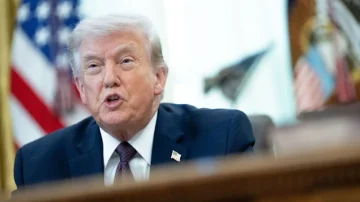
“I just felt that the time had come”, Trump said from the Oval Office during his meeting with NATO Secretary General Mark Rutte. He voiced hope that sanctions “will not last much” and that war “will soon end”.
“Every time I talk to Vladimir, we have good conversations, but they don't lead anywhere”, the American president added, specifying that the meeting with Putin would be held “in a later phase”.
Before that decision, Trump had repeatedly withdrawn from threats of tariffs or sanctions against Russia. On July 29th, he gave Moscow ten days to agree to a ceasefire with Kiev, the deadline expired on August 8th without American action. A meeting with Putin in Alaska followed, but no progress was made on the Ukrainian front.
The last movement was already taken into consideration by former President Joe Biden, but he had rejected it, fearing divisions in international energy markets and an increase in prices. For Trump, who has based most of his policy on keeping low fuel prices, the decision is a bold risk and shows that his patience with Putin is ending. He has said he believes the “benina will drop to $2 per galon”.
Kiev welcomed this move as Ukrainian Ambassador Olga Stefanysyna said that “for the first time during the mandate of 47th US President Washington is imposing full-scale sanctions on Russian energy companies”.
On the morning of the same day, Russia launched new attacks with fears and rockets in Ukrainian cities, killing at least seven civilians, including children. Russian attacks on energy infrastructure continue, while Kiev responds by hitting Russian refinerys.
However, it remains uncertain whether the new sanctions will have any real impact on Putin's strategy. The Beden administration imposed numerous waves of sanctions after the 2022 invasion that damaged the economy but did not prevent the ongoing war.
As new measures directly target companies and not the third parties working with them, Russian oil exports are likely to continue, though at a higher cost.
Sanctions may also have a harmful effect in India, a major Russian oil buyer. Relicance Industries Ltd, India's biggest importer, has a long supply deal with Rosneft.
The United Kingdom had already imposed sanctions on Rosneft and Lukoil a week earlier, while the European Union is expected to announce a new package of measures today, which would include a ban on Russian liquid natural gas imports (LNG).
With the early US, EU and United Kingdom action, <x0 coordinate is now taking shape that can make Russian oil purchase purchase extremely difficult”, said Kevin Book, managing director of ClearView Energy Partners in Washington. “This is the first important step of Trump's second mandate against Russian oil”, he said.
However, Thomas Graham of the Council for Foreign Relations warned that new sanctions “could ultimately result less effective than the White House hopes”.
“If the administration thinks it will lead to a fundamental change in the behaviour of the Kremlin or in Putin's politics,” is wrong, he said.
“Sanctions function slowly and the Kremlin has been extremely skilled at bypassing these <x1) measures, he concluded.
Oil Price Growth
The gross Brent oil rose by 3% to over $64 per barrel, while West Texas Intermediate (WTI) was traded close to $60 after Washington imposed sanctions on Rosneft PJSC and Lukoil PJSC, citing Moscow's lack of commitment to peace. Trump also intends to pressure key Russian oil buyers India and China.
“These sanctions mark a change in President Trump's approach to Russia and pave the way for even tougher measures that could ultimately affect Russian exports”, said Warren Patterson, head of the ING Groep goods strategy in Singapore. However, he noted that it remains uncertain how effective they will be.
After the measures were announced, Trump said he planned to discuss Russian oil imports from China with Chinese President Xi Jinping at a meeting scheduled for next week in South Korea. At the same time, he said Indian Prime Minister Narendra Modi had assured him that the country would gradually reduce its acquisitions.
China and India have emerged as the biggest Russian oil buyers since the invasion of Ukraine, as Western countries have avoided Moscow. Trump has imposed high tariffs on India because of its trade with Russia, but has so far refrained from China's goal. Last week, the United Kingdom imposed sanctions on two Chinese oil companies, as well as Rosneft and Lukoil.
According to analyst Rachel Ziebba of the Centre for New American Security in Washington, “this is obviously one of the most important measures in the United States, but its effectiveness will be limited by the use of illegal financial networks.” As she estimates, “Kina and India may put down little of their purchases, but there are no unexpected disruptions of Russian exports. ”
Rosneft, led by Igor Sechin, a close associate of Putin and Lukoil private, are the two biggest oil producers in Russia, covering almost half of the country's total exports, according to Bloomberg estimates. The taxes on oil and gas constitute around 25% of the Russian state budget.
New US sanctions represent a radical change in politics, as previous efforts were limited to the G7 price ceiling, which was intended to cut Kremlin revenues without interrupting supply and causing price hikes.
Vandana Hari, founder of Vanda Insights, said the “teg would need time to fully understand the implications of these “, adding that “ato would likely cause considerable concern for the refinerys in India and China. ”
Meanwhile, European Union countries reached an agreement on a new package of sanctions against Russia, which is expected to be adopted Thursday. The sanctions will target 45 subjects that helped Russia bypass the measures, including 12 companies in China and Hong Kong, according to a statement from Denmark, which holds the presidency of the EU Council./Periscopi/