an hour ago
BIK brings to legalise the Saudi who defends Wahhabiism in Kosovo, will speak to imams about the book of a prominent Wahhabi
Periskopi(8 months ago)
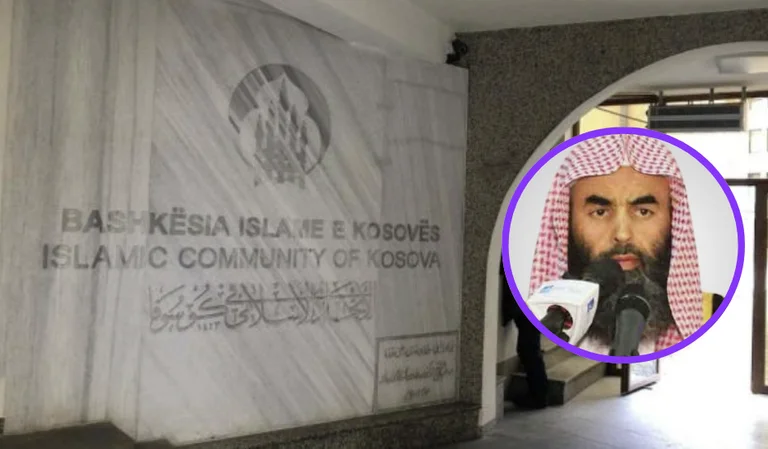
(8 months ago)The treatment for the mothership that started today in Gjakova, organised by the Islamic Community of Kosovo (BIK), has brought Abdulmohsin bin Abdulaziz Al-Askar, one of the best-known figures of the Saudi religious academy. The theme of his speech is “The Concept of Teuhide, according to the book éSharh Kitab al-Tawhid) to fah Abdulaziz bin Baz”, one [...]
Abdulmohs bin Abdulaziz Al-Askar is professor of Arabic and religious rhetoric at the Emam Muhammad University bin Saud, this institution known for its ties to Saudi Arabia's Salafiste/wahabist electricity. It also legalizes the Al-Nachil Mosque in Riyadh and has received the titles of magistrates and doctors in the field of Arabic and religious studies.
Despite his connection to the Wahhabi academic system, Al-Askar has no public involvement in politics or militant activism. It is a typical product of the Saudi religious system, where literature, religious conservativeism, and conversion are emphasized.
In his speech today, Al-Askar will explain to the imams the meaning of the teuhide by book “Sharh Kitab al-Tawhid” of fah Abdulaziz bin Baz.
The book, based on the work of Shehmah bin Abd al-Wahhab, is one of the main pillars of Wahhabi ideology and is promoted as a clear guide of faith. One of his best-known quotes is:
Who says that we can seek the intercession of the dead, or the prophets after death, has made a big bottle and has gone off the teuhid route. ”
The book criticises Sufist practice, collective commemorations, and tomb honors, naming them dangerous forms of politicism. It also excludes any innovation (bid) from religion, promoting pure literature and returning to the path of the first generations of Islam.
In the context of today's speech, Al-Askar is expected to reinforce his views to prohibit any practices not found in the Koran or Sunet, clearly displaying the conservative and Literal spirit of Wahhabi doctrine.
Many Scholars Ashhar, Maturid, and Hanneph, representing the moderate Islamic tradition, have voiced criticism of Bin Buzz's approach. They argue that direct interpretation of God's qualities can lead to anthropomorphism and that some practices, which are accepted in Islamic tradition, should not be regarded as bidas (Recisity in religion). For example:
Literality of God's Qualities
Bin Buzz: Accept Allah”'s “Hand, “
Customs Ashharite/Maturity: These qualities are interpreted to avoid anthropomorphism, while Imam Abu Khanfe views the meaning Literal as a deviation from tradition.
Mediation and Tevesul
Bin Buzz: Every demand for intercession (from the Messenger) or the like of it will be rejected.
Hannefie and Sufist tradition: He considers mediation through God as an expression of love and respect.
Billions (religious traditions)
Bin Buzz: Every innovation is forbidden.
Traditions Ashhar, Maturid, Hanef: They run between good and bad guys, and most of them don't make coffee.
Koffrey and Takfir
Bin Buzz: A person who judges by law without wisdom can be declared an unbeliever.
Traditions Ashhar, Maturid, Hanef: They do not declare anyone to be an unbeliever for certain sins or practices.
Access to Sufism
Bin Buzz: He sharply criticises the Sufist practice and the collective goat.
Sufist tradition: The practice of self and goat is considered the allowed spiritual way and part of Ehli Suit.
Internationally, the Wahhabi current has been viewed carefully. Report European Commission for Radicalisation (2013) notes that Literalism and rejection of religious pluralism may have influenced ideological radicalism in some cases. The report does not declare Wahhabiism as terrorism, but considers it a theological basis that could be used by radical groups for ideological justification.
Despite that, Kosovo's Islamic Community is orientation institution haneph and discretionAccording to her Constitution. BIK tradition and spirit have always targeted interreligious mode and co-existence, protecting a balanced and harmonised approach with local Islamic culture. The presence of a conservative Saudi legalist and the use of Bin Baz's book raises questions about the ideological compatibility of the legal message with Kosovo's moderate hanefie tradition.
Today's training has started in Gjakova with several immams present, and Abdulmohsin Al-Askar's speech has attracted the attention of the religious community, opening a new debate on the impact of Saudi conservative ideologys on Kosovo religious institutions, where moderate Islamic tradition has historically dominated.