7 hours ago
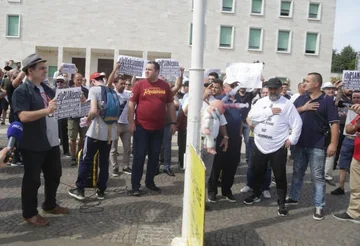
Serbs after the closure of institutions: “is not only about salaries”
Periskopi(a year ago)
(a year ago)Disappointed in everything. Both from Pristina and Belgrade. That is how Serbs south of the Iber River feel, with whom Radio Free Europe spoke, after Kosovo authorities closed a number of Serbian institutions this week, including temporary municipal organs, post offices, social work centres, etc. These institutions offered Serbs in Kosovo services [...]
Disappointed in everything. Both from Pristina and Belgrade.
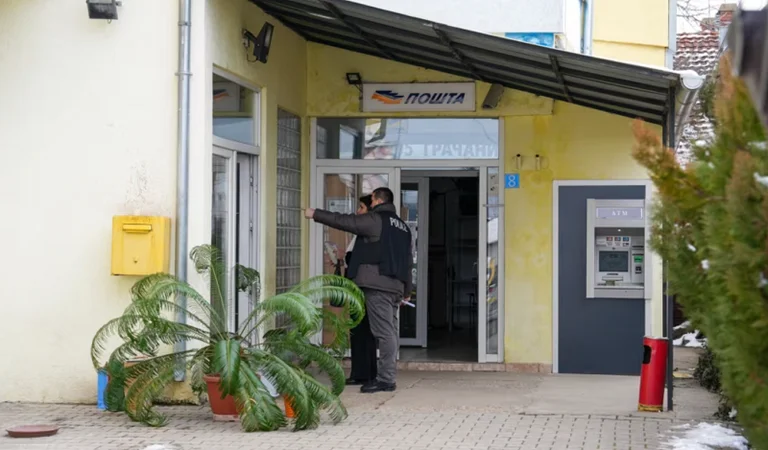
That is how Serbs south of the Iber River feel, with whom Radio Free Europe talked, after Kosovo authorities Close this week a number of Serbian institutions, including temporary municipal organs, post offices, social work centres, etc.
These institutions offered Serbs in Kosovo various administrative services. Through them they also received some kind of aid from the state of Serbia.
What happens now, no one knows. The only thing that was said was that employees of these institutions will not be left without salaries from Serbia.
Does the closure of Serbian institutions mean the interruption of their work? No.
All of this is sad “and, for regreting”, says Nada from Gracanica, near Pristina.
She is disappointed that official Belgrade, consistently, says workers will not be left without salaries, while providing services to citizens remains in second place.
This isn't just about wages. They'll get their wages, but that's not the point. For me, it's very difficult”, Nada says to Radio Free Europe, and adds that neither from Belgrade “does he expect absolutely anything”.
Ratko Trajkovic, also from Gracanica, is similarly expressed.
They said they would not leave people without salaries. That's not worth anything. This is a Serbian environment, we should have our [Serbian institutions]”, he says.
Senior officials from Serbia and the Serbian List -- the largest Serbian party in Kosovo -- who has Belgrade's backing -- said they would continue bilateral consultations on further steps, and stressed that the Kosovo government could close the targets, but not institutions operating within the Serbian system.
Belgrade doesn't want to do anything. It seems that everything is agreed. It's embarrassing what's happening”, Traykovitch adds.
According to him, the only solution now would be to form the Association of Serb majority municipalities and, through it, citizens to be offered the services of closed institutions.
Official Pristina began shutting down Serbian institutions in Kosovo at the beginning of 2024, saying they had no permission to act and that their functioning was illegal.
Thus, some of the closed institutions, mainly temporary municipal organs, were moved to alternative offices near border points: Brnjak, Jarinje and Merdare.
Meanwhile, workers working at Serbia's Post in the north, following the closure of its branches, moved to Gracanica to work.
It's as if we were thrown alive into a”
Pensioner Momcilo Stojanovic from Brnica, near Pristina, often went to Gracanica for various administrative jobs about the aid he receives.
On Thursday this week, he was in Gracanica to get more information about the possibility of treatment at one of the bathrooms in Serbia, but met at closed doors.
It's like we were thrown alive in a well. Where do we go now?
He says he does not understand why Kosovo authorities insist so much on closing Serbian institutions. Their closure, he says, only makes life more difficult for ordinary people.
Another Gracanica resident, Milorad, does not blame Kosovo government alone for all of this.
He says that “with all of these has to do with the state of Serbia”, because he has not found a solution over time.
Which institutions have so far closed?
Kosovo authorities continued in 2025 the closure of institutions operating within the Serbian system, which the official Pristina considers illegal.
So far around twenty interim municipal bodies, the Tax Administration in Northern Mitrovica, the Directorate for Local and Afarist Space and the Directorate for Construction Land in northern Mitrovica, Serbia's Post Savings Bank, the Office for the Government of Serbia's Kosovo, the Directorate of Pension Security Fund and Invaldor in Northern Mitrovica, the Kosovo-Mitrovica Administration District and some social work centres.
All these institutions worked within the Serbian system and employed thousands of workers.
Only educational and health institutions remain in office, which in the majority Serb environments in Kosovo also work within the Serbian system.
What is the solution?
So far, Serbian officials and representatives of the Serbian List have not come up with concrete proposals on how to proceed with providing services from closed Serbian organs.
Radio Free Europe asked the Office for Kosovo in Serbia's Government for further plans, but, until the publication of this article, no response was received.
Aleksandar Popov, from the nongovernmental Centre for Regionalism in Novi Sad, says the solution would be to implement the part of the Brussels Agreement for normalising relations between Kosovo and Serbia, which concerns forming the Association of Serb majority municipalities.
In that case, Serbia would be able to care for health, education and would be able to directly assist institutions that are crucial to the survival of Serbs in Kosovo”, Popov says.
Kosovo refuses to establish the Association of Serb majority municipalities, for fear it could adversely affect the internal functioning of the state.
“Without the integration of Serbs in Kosovo there can be normalisation with Serbia”
Popov says that the functioning of Serbian institutions in Kosovo has eased members of the Serb community to some extent.
“They have made it easier for them to meet certain daily needs, such as mail, insurance... and have not needed to go to Serbia to resolve those issues”, he adds.
According to him, Kosovo Prime Minister Albin Kurti has actually brought Belgrade ahead of an act committed.
This goes in its favour before parliamentary elections [in Kosovo]. He is using the multiple vacuum that was created in the international community, with the change of mediators and administrations, to expel Kosovo institutions calling parallel”, Popov says.
He adds that the withdrawal of Serbs from Kosovo institutions about two years ago has made it impossible to find a solution for Serbia's institutions in Kosovo.
“Belgrade, through the Serbian List, protecting Serbs has, in fact, contributed to all of this”, says Popov.
The Serbian list announced on January 17th that it has addressed the QUINT ambassadors ( The United States, Great Britain, Germany, Italy and France, the European Union, the Organization for Co-operation and Security in Europe and the United Nations Mission in Kosovo UNMIK, with a letter that “has become clear from these” actions, which “aim to expel everything Serbian from Kosovo”.
The Serbian list said it has called for immediate reactions against Kurt's actions, non-almic communiqué”, which Pristina did not take seriously.
What messages did Belgrade send?
The director of the Office for Kosovo in Serbia's Government, Petar Petkovovic, said on 16 January that he has talked to Kosovo Serb political and institutional representatives for the next <x0-steps, the help and support of the state of Serbia”.
However, he did not specify which concrete moves it is about, but reiterated that no one would remain without income from Serbia's budget.
Serbia's “State of Kosovo and Metohija is not walls and offices, but people, and each of our people is the representative of the state of Serbia in Kosovo and Metohija”, Petkovic wrote in the Instagram.
Serbia's President Aleksandar Vuciq named the actions of Kosovo authorities as the “apparent terror”.
Serbian List: Serbian institutions employees to continue to be paid
Speaking to Serbian Television B92 on January 15th, he said Belgrade would try to solve the problems of Serbs from Kosovo.
According to Serbian Foreign Minister Marko Djurovic, Pristina's move is “efforts to undermine the collective rights and identity of Serbs in Kosovo”.
Djuric wrote in the Instagram that <x0 strategy only deepens divisions and threatens stability in the region”.
What did the leaders of the closed institutions say?
In addition to Gracanica, the provisional municipal authorities and most other Serbian institutions for Kosovo were shut down on January 15th, even in nine other municipalities south of Ibri.
Lipjan's interim municipal authority chairman Milan Joksimovic said at a Serbian List conference that the institution he heads has provided services to about ten thousand citizens and that they will not be deprived of them.
Nemanja Petkov, director of the Centre for Social Work, which worked in Gracanica, said workers no longer have objects from which they can continue to provide benefits services.
“on the territory we cover, about 450 families receive social assistance. Many beneficiaries have also used once-in-a-day financial assistance and are about 150 beneficiaries of the assistance to care for”, Petkovic told Radio Free Europe.
Serbia's Post of Kosovo Director Ivan Milojevic said he expects within the dialogue between Kosovo and Serbia a solution to the further functioning of the institution he heads, and added that talks are already under way in Brussels.
Speaking to Radio Free Europe, he said these talks are being led by “ekies of experts from Belgrade and Pristina”, but that he has not yet participated in them personally.
These [talks] are more on the technical level. I believe that [the solution] will come after February 20th [after elections in Kosovo]. Let's see if we're gonna have another four years of terror or we're gonna have a situation a little different. I hope for better”, Milojevic said.
However, Klisman Cadiu, chief of Kosovo Deputy Prime Minister Besnik Bislimi, who heads negotiations with Serbia at the technical level, flatly denied that discussions are taking place in Brussels with Belgrade on the further functioning of Serbia's Post in Kosovo.
The European Union did not answer Radio Free Europe's question if Serbia's Post or other closed Serbian institutions in Kosovo are negotiating within the Pristina-Belgrade dialogue.
In a response on January 15th, the EU said the issue and the status of institutions operating in the Serbian system should be resolved within the dialogue taking place in Brussels.
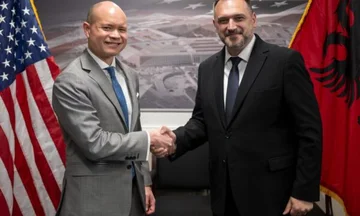
The event for closing Serbian institutions also criticised From the United States, which described the government of Kosovo as uncoordinated action.
According to the US, the closure negatively affects all citizens, including ethnic Serbs and other communities.