9 minutes ago
Sanctions Against NIS in Serbia without influence in Kosovo
Periskopi(a year ago)
(a year ago)US sanctions against Serbia's Oil Industry (NIS) will not produce any effect on the Kosovo fuel market, the Kosovo Oil Association estimates. Mayor Fadil Berjan says Kosovo does not import fuel from Serbia, and therefore “will not have any movement of oil and gasoline prices in [...]
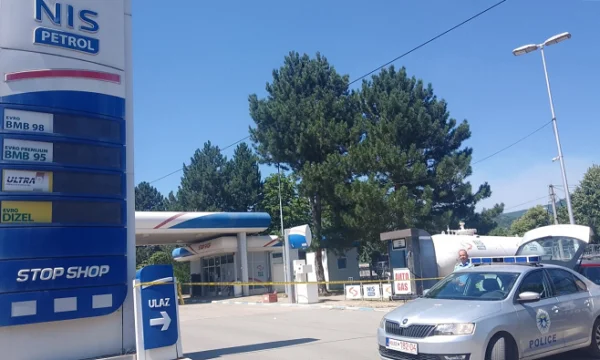
US sanctions against Serbia's Oil Industry (NIS) will not produce any effect on the Kosovo fuel market, the Kosovo Oil Association estimates.
Mayor Fadil Berjan says Kosovo does not import fuels from Serbia, and therefore “will not have any movement of oil and gasoline prices in the country”.
Read:
Kosovo customs confirms that during 2024 there has been no oil and gasoline imports from Serbia.
From the Economic Oda of Kosovo, meanwhile, they say sanctions against NIS could affect the eventual increase of product prices in Serbia, which are then imported to Kosovo.
On January 10, the United States has decided NIS on its list of sanctions, due to shares in the Russian company Gazprom Neft.
The aim of sanctions is to prevent Russia from using energy revenues for its war in Ukraine.
No dependence on Serbia
Kosovo farmers are willing and easy to support the embargo on Serbia's import of fuels, Behrani says.
According to him, they don't import any oil from Serbia and they don't have anything to do with NIS.
All importers that Kosovo has about 60 o'clock import from Porto Romano, from Durres to Albania”, Berjan says of Radio Free Europe.
According to data it provided REL from Kosovo Customs for 2024, Kosovo has imported over 808m litres of oil, worth over 501m euros, and over 92m litres of gasoline, worth about 56m euros.
During 2023, meanwhile, over 740 million gallons [740 million L] of oil have been imported, worth over 507m euros, and over 86 million liters of gasoline, worth over 55m euros.
That year, the import of fuels from Serbia has made up less than 1 per cent of the total amount of imports, according to Customs, while last year there was no such thing.
Evental effects <x0minial”
Berjani says that even in the event of rising oil and gasoline prices in Serbia, this will not affect Kosovo.
In all situations, we depend nothing on Serbia in terms of oil derivatives. There is no need for panic in terms of prices, because there is no market influence of Serbia”, Berjan says.
It shows that in Kosovo, currently, the price of oil per litre averages between 1.25 and 1.28 euros, while in Serbia, 1.70 euros.
Even Lulzim Rafuna, chairman of the Kosovo Economic Ode, does not expect an increase in fuel prices in Kosovo.
Serbia is the small market to cause any disorder. It's not like America or Germany”, he says.
However, Rafuna warns that the eventual increase in fuel prices in Serbia ʹ as a result of sanctions can indirectly affect Kosovo.
He says there are many foreign, American, German, Italian and Turkish companies in Serbia, which their products are also sold in Kosovo.
The eventual rise in the cost of production of products in Serbia for these companies, according to him, could cause indirect cross-effective “ ” to the Kosovo market as well.
The products we import from these foreign companies, which produce in Serbia, can come at a little higher cost than we have now. But that's just assumption”, Rafuna says.
He adds that even in that case, the effect would be minimal, because if the Kosovo market is not ready to accept the same products from Serbia at eventually slightly higher prices, importers will be directed towards cheaper products from other countries.
Kosovo, most of its goods are imported from abroad to countries of the region, of the European Union, Turkey, etc.
On average annually, it imports goods worth 5 billion euros, ranging from basic products to construction products, while exporting under the value of 1 billion euros mostly metal and plastic products.