13 minutes ago
Renowned American magazine analyses Trump's effects on the Balkans, including Kosovo
Periskopi(a year ago)
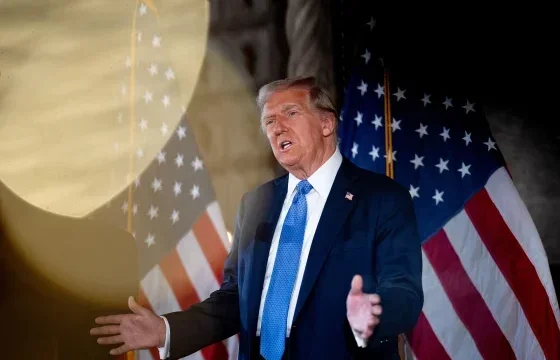
(a year ago)Known American magazine “Foreign Policy” has made a review of Donald Trump's return to the White House and its significance to Balkan states. “Texas many in the region fear animism towards Serbian nationalists, the transactionism of the new US administration can surprise all”, writes the renowned American magazine. All discussions on [...]
“Texa many in the region fear animism towards Serbian nationalists, the transactionism of the new US administration can surprise everyone”, writes the popular American magazine.
All discussions in Washington on the approach of the Trump administration on global issues relate to Ukraine, China, the Middle East and recently Greenland, there are few conversations for the Western Balkans.
“Building access to American foreign policy for this region can shake down the fragility status that reigns there. The current issues of the Western Balkans and the delicate geopolitical balance have silenced Bosnia and Herzegovina's slide into civil war, while the frozen conflict between Serbia and Kosovo has remained such that 26 years”, says Foreign Policy analysis.
The American magazine writes that Serbian nationalists, in particular, have hope of bringing Trump back. According to her, they are optimistic that his administration will be closer to Belgrade and Republika Srpska in Bosnia.
Serbian Vice President Aleksandar Vuciq and Republika Srpska President Milorad Dodik want the US to be against Western governments and institutions that strongly support Kosovo's independence and the centralised structure of Bosnia that was created by the Dayton Agreement in 1995”, writes <x2Freegin Policy”.
Under the pretext of protecting Serbian interests and advancing the cause of the Serb union, Dodik has spent years undermining the Dayton Agreement by undermining Bosnian state institutions with various actions that are considered dangerous and destabilising by the United States and other Western governments.
“In practical terms, this would mean easing US restrictions on pro-Russian Serbs who want Serbian unity and reject sanctions against Moscow. These restrictions and pressures include sanctions against Dodik and ultranationalists, including Serbian Deputy Prime Minister Aleksandar Vulin, who formerly headed Serbia's Security and Intelligence Agency and was known for his links to Moscow and the persecution of rumours against Putin in the Russian immigrant community in Serbia”, writes “Freegin Police”.
Moreover, the previous US administration recently imposed sanctions on NIS, Serbia's oil and gas company, which is owned by the majority of Gazprom. It is not hard to imagine Trump to ease pressure on Serbia for its relations with Russia, while remaining silent on human rights issues in Serbia.
Serbs who believe in the idea of “Greater Serbia” claim land in the former Yugoslavia and outside the borders of modern Serbia. During the 1990s, following the idea of a Greater Serbia by then Serbian leader Slobodan Milosevic was a key factor in the wars that destroyed the region.
Although Vuciq has declared that his government has no interest in redefining international borders, many of Serbia's neighbours doubt Belgrade sees the realisation of Greater Serbia as a long-term goal. A 13-page statement adopted by Serbia and Republika Srpska in June 2017 defines a vision of Serbian domination that would restore parts of Kosovo under Belgrade's control and violate Bosnia's sovereignty.
Shortly after Trump's election victory in last November, Vuciq had a highly friendly “call with him, invited him to Belgrade and praised him for his knowledge of “many things for Serbia,” stressing that positive estimates for Trump in Serbia are higher than in any other European country.
Richard Green, the special presidential envoy for the peace negotiations between Serbia and Kosovo from 2019 to 2021, was a central figure in maintaining friendly relations between Washington and Belgrade during Trump's first mandate. During Joe Biden's presidency, Grenelli visited Belgrade several times. In 2023, Grenelli received the decoration of the Serbian flag, and Vuciq praised it for “proving the truth about events in Kosovo and the region. ”
Despite Greene's role in Trump's second administration, Kosovo has reason to be concerned about Trump 2.0. The United States has known Kosovo's independence since 2008, and today most United Nations member states, including most European countries, also recognise it. But Serbia, Russia, China and a long list of mostly non-Western states recognise Kosovo as part of Serbia”, the magazine estimates.