10 minutes ago
Has the removal of the dinar <x0 positive effect” in Kosovo's financial system been removed?
Periskopi(a year ago)
(a year ago)The regulation of the Kosovo Central Bank for financial transactions to be conducted only in the euro has not achieved its goal, as Serbia's currency, the dinar still circulates in Serb areas in Kosovo and revenues from Serbia's budget do not convert to euros, says Radio Free Europe (REL) economics professor in [...]
This regulation was a hasty decision. A political decision by this Government”, he thinks, and adds that the issue of removing the dinar should be resolved through dialogue on normalising relations between Kosovo and Serbia, mediated by the European Union.
Bektash points out that even after a year of adoption of the regulation, there is no agreement on the transfer of money that would provide access to these funds to Kosovo Central Bank.
Kosovo Central Bank Governor Ahmet Ismaili, commenting on this regulation at the annual conference at the end of December, said it has had a positive <x1->effective” throughout the financial sector, bringing the sector's “sunification and disruption of illegal financing”.
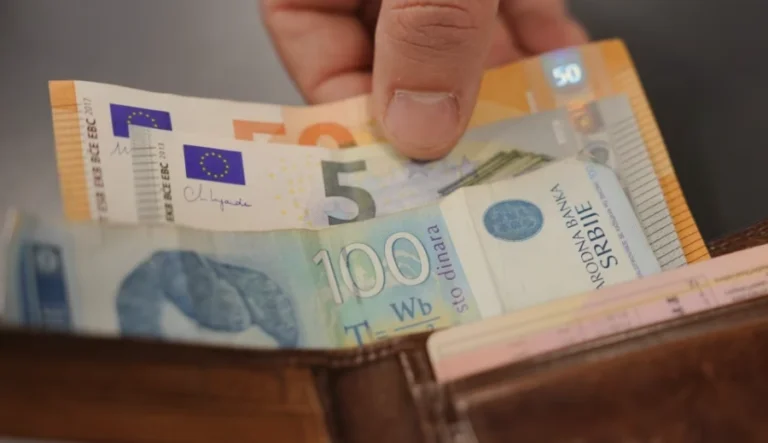
The regulation, which prohibits payments with other currency except the euro, was subsequently approved by dinars in late December 2023 and entered into force on February 1, 2024.
Members of the Serb community, who receive different revenues from Serbia's budget in dinars, reacted sharply to this regulation, while it was also criticised by the international community with the argument that there could be negative consequences for minority communities.
Professor Bektash says the only thing that has changed this year is that Kosovo citizens from the Serb community must go to Serbia to receive their income in dinars.
“The transition period needed to make sense, for the Central Bank of Kosovo and the People's Bank of Serbia to reach an agreement on converting the dinar into euros and to ensure the flow of money to pensioners and others who receive revenues in dinars”, Bektas considers.
The People's Bank of Serbia has insisted that the dinar issue be discussed within dialogue, which Kosovo has generally rejected, arguing that this is the internal issue.
What's the real situation on the ground?
Petar from Northern Mitrovica is a worker of one of the closed institutions, which functioned according to the Serbian system, which Kosovo has concluded with the argument that “illegally operated”.
In a conversation for Radio Free Europe, Petar says he actually doesn't go to work, but he takes his salary regularly.
“Paga transfers me to an account that is in dinars. Perhaps this too had to be resolved, so that the salary would be somehow converted and taken to the euro in Kosovo normally, through banks like NLB Banka or Raiffeisen Banka, located in our town of”, this citizen says.
He notes that “neither side wants to pay attention to the people who are going through difficulties”.
The Kosovo Central Bank has confirmed that the removal of financial transactions in dinars does not prohibit payment of revenues from Serbia's budget, but that they must be exclusively in euros to enable access to the flow of money.
Even so, however, these revenues have remained in dinars. Also, in some Serbian areas, mainly in municipalities in the north, ʹ the dinar continues to circulate as payment tool on commercial objects.
Official Belgrade refuses to close its institutions in Kosovo, and some of them have been transferred to border sites in Serbia. Even ATMs have been placed, from Kosovo citizens, drawing their income into dinars.
“For dinars, in Serbia”
Radomir from Leposaviqi says that now, “usually”, draws his income to dinars in Rakes, a border town in Serbia, about 30km from this majority Serb municipality in northern Kosovo.
“Zaconally we go there (in the Race) and we buy Serbian products from here (in Kosovo) for a period. We're used to paying cards... in general, it's not very simple, but we're adapting to”, he says.
He notes that long lines of payments from Serbia's budget are created at border points, and often it happens to wait for several hours to pass from Kosovo to Serbia or vice versa.
You need to arm yourself with patience because there are large crowds to pay pensions or some other income. I have two pensioners in the family, I've taken them to Rashka, but now I've got a warrant and I pull out their pensions by”, Radomir relates.
Milorad from Gracanica, a majority Serb municipality near Pristina, until the removal of the dinar received the pension in a check, the money was given to the Post ward operating in the Serbian system or sent to the home address by the mailman.
He explains that in the first months after stopping the use of the dinar, he went to Serbia every month to withdraw the pension, but then he opened an account to the Serbian Post Savings Bank, where he transfers the money.
Now, as he says, the bank card gives to his children, who attract his pension to Serbia.
Each year Serbia allocates millions of euros for the payment of revenues for Serbs in Kosovo.
In addition to salaries and pensions, financial assistance as social assistance is included, additions for children, and similar ones.
At the end of October 2024, the government of Serbia declared Kosovo's territory as “special social protection zone”, which envisions additional financial assistance for the unemployed, pensioners and children. /Radio Europe Free