7 hours ago
Maliqi warns: US sanctions could be expected within next week against individuals or companies in the Balkans
Periskopi(a year ago)
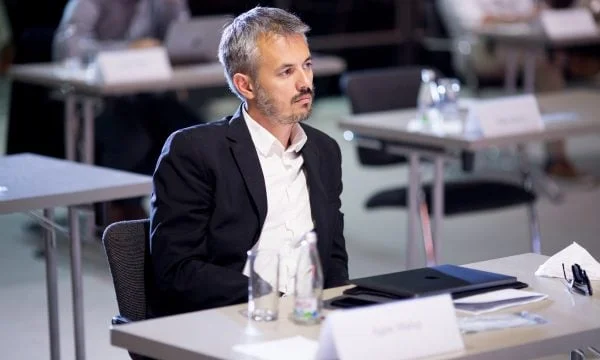
(a year ago)Political issue acquaintance Agon Maliqi has reacted after the United States of America has imposed sanctions on the Serbian oil industry. Maliqi has said that sanctions show that their team is working actively and that additional sanctions can be expected on individuals and companies in the Balkans. “Sanctions [...]
Political issue acquaintance Agon Maliqi has reacted after the United States of America has imposed sanctions on the Serbian oil industry.
Maliqi has said that sanctions show that their team is working actively and that additional sanctions can be expected on individuals and companies in the Balkans.
“Today's sanctions are not directly linked to yesterday's change of the exclusive order for sanctions against the Balkans, but simply show that the sanctions team (which includes the engagement of many state agencies) is working actively, that it is not a question of formal action, and that additional sanctions can be expected against individuals and companies in the Balkans within the next week. This is a way through which the outgoing administration wraps up the balance of four-year relations with states and gives “jott” to governments, without concern that it needs to co-operate with them” he said.
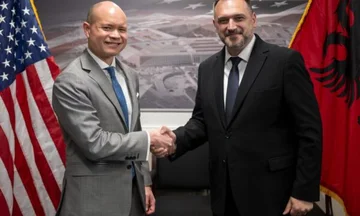
On the other hand, he also mentioned the visit of US Deputy Secretary of Management and Reserve Richard Verma.
“As part of this balance may likely even read v's visit. US Secretary Verma in Albania, Kosovo and Serbia and discussions on Strategic Dialogue with the US. This status of structural bilateal co-operation is an indication of the depth of the partnership, and this dialogue Albania and Northern Macedonia have started in 2022. Kosovo has been offered this status of the relationship today, but it must be stressed that it will be signed this weekend even with Serbia. Gazprom's departure from Serbia does not seem to be only American demand, but also a way for Serbia to get rid of it. Serbia in September signed agreements with Washington for strategic energy partnerships, and this is likely the” result.
Agon Maliqi's full submission:
As warned earlier, US sanctions against Serbia's NIS were today formalised as part of sanctions on the global activity of Russia's Gazprom (which is NIS owner). This is a major impact because this annual circulation company of about $3 billion is now forced to change owners. It is impossible to operate in world markets, since every economic operator working with dollars and US financial institutions effectively violates American law by working with this company. Of the sanctions on Gazprom, only traders from China and India were spared, who seem to be the biggest and most problematic bite for the world economy system than small mahales like the Balkans of Serbia.
Today's sanctions are not directly linked to yesterday's change of the exclusive order for sanctions against the Balkans, but simply show that the sanctions team (which includes the engagement of many state agencies) is working actively, that it is not a question of formal action, and that additional sanctions can be expected against individuals and companies in the Balkans within the next week. This is a way through which the outgoing administration wraps up the balance of four-year relations with states and gives “the fines” to governments, without concern that it needs to co-operate with them anymore.
As part of this balance, it can probably be read by a vice visit. US Secretary Verma in Albania, Kosovo and Serbia and discussions on Strategic Dialogue with the US. This status of structural bilateal co-operation is an indication of the depth of the partnership, and this dialogue Albania and Northern Macedonia have started in 2022. Kosovo has been offered this status of the relationship today, but it must be stressed that it will be signed this weekend even with Serbia. Gazprom's departure from Serbia does not seem to be only American demand, but also a way for Serbia to get rid of it. Serbia in September signed agreements with Washington on strategic energy partnerships, and that is the likely result.