9 minutes ago
Kallas: Europe Must Increase Pressure on Moscow
Periskopi(a year ago)
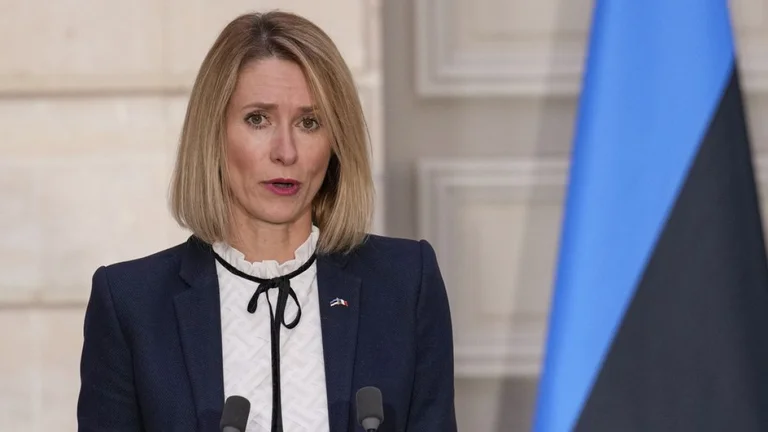
(a year ago)European Union foreign policy chief (BE), Kaya Kallas, said Kiev and its partners must continue to pressure Russia to improve Ukraine's position in any eventual negotiations to end the war. Speaking on January 14th in an interview for Radio Free Europe and [...]
European Union foreign policy chief (BE), Kaya Kallas, said Kiev and its partners must continue to pressure Russia to improve Ukraine's position in any eventual negotiations to end the war.
Speaking on January 14th in an interview for Radio Free Europe and several European newspapers, Kallas said increasing economic pressure on Moscow and its international isolation are the only ways to prevent Russia from gaining supremacy.
We should not underestimate our capabilities and overestimate those of the Russians”, Kallas said. “Russia sometimes looks like a mysterious power that cannot be defeated. That's not true. We are stronger both in military and economic strength. We must approach things from a position of force”.
The Russian economy has suffered several shocks, such as increasing interest rates over 20 per cent, Gazprom has been forced to fire 40 per cent of its management staff, the labour market is “in a very poor situation” and the Russian army has been forced to recruit Korean-veriative soldiers to fight on Moscow's side, she said.
The “all this shows that they are not in a good position”, she added.
Russia is convinced that time is on its side, but Kallas said she believes this claim is wrong and that Kiev's Western allies must further increase economic pressure.
We see that their monetary reserves are completely exhausted. They have much less income than before from the sale of oil and gas”, she said.
The European Union will discuss sanctions while trying to decide on a 16th package that will coincide with the anniversary of the war on 24 February, an EU official for Radio Free Europe said. The package will be container, despite the difficulty of finding new areas for sanctions, the official said.
The focus of the package is expected to be technical measures and those against avoiding sanctions. Also, discussions will examine the restrictions on aluminum import as raw materials, tariffs for agricultural products, including chemicals used in garbage, and other measures to limit what is called Russia's dark oil tanker, according to the official.
Kallas voiced confidence that the European Union could preserve unity in politics for sending weapons and other aid to Ukraine, despite resistance from some European governments that are sympathetic to Russia.
Estonia's former prime minister said the European Union has maintained unity despite the <x0-negotiable” with those governments.
“is becoming increasingly difficult”, she agreed. “However, I still believe we can represent a united position, because only then can we remain strong”.
The stronger Ukraine is on the battlefield, the stronger it will be at the negotiating table, she said.
Kallas also commented on US President-elect Donald Trump's statement that he will end the war soon, saying the world awaits Trump's plan.
If Trump, who is expected to be inaugurated on January 20th, truly uses US power to pressure Russian President Vladimir Putin to withdraw troops from Ukraine and stop shelling civilians and civil infrastructure, war could be over in time, she said.
But, she reiterated the EU's stance that there should be no decision for Ukraine without Ukraine's consent, and that is also true of Europe.
It is clear that whatever agreement is reached, Europe must be part of it. It is up to Ukrainians to decide what kind of agreement is acceptable to them”, she said.
Whether Putin really wants peace is the other topic, she said, warning that a ceasefire would be used by the Russians only to reassemble and reassemble their forces.
The Rus have never respected ceasefires. Therefore, it is important for Europe to keep peace stable and permanent”, she said.
Kallas also spoke of recent attacks on underwater cables on the Baltic Sea, stressing that it would be a mistake to address them separated from attacks on critical European infrastructure. The incidents should be considered collectively and also in the context of similar attacks she said China has committed against Taiwan and South Korea.
This shows the need to further develop international maritime law and further strengthen sanctions against Russia's dark fleet, which it uses to avoid sanctions against its oil exports, Kallas said. / REL