7 hours ago
IKD: Government to Review Raft-Strategy Against Corruption
Periskopi(a year ago)
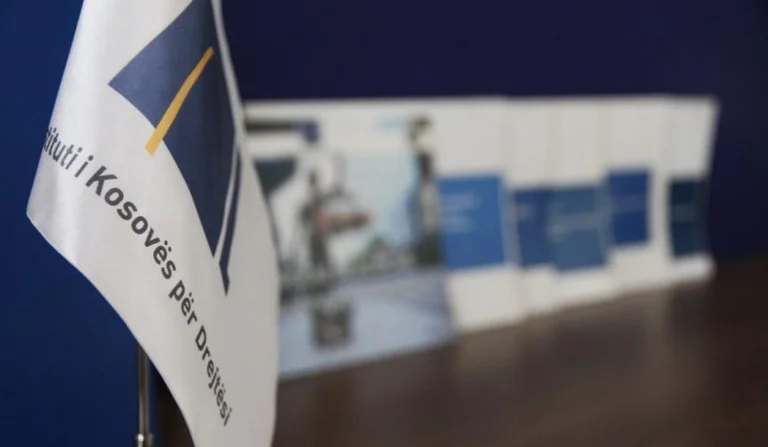
(a year ago)Kosovo Institute for Justice (IKD), with support from the Bureau for International Narcotics and Law Implementation Issues (INL), has released the report Thursday “The array of Anti-Corruption Strategy”, in which the Drift-Strategia against corruption published by the Prime Minister's Office, is analysed. Initially, the IKD highlights the fact that Kosovo has no anti-corruption strategy that [...]
Initially, the IKD highlights the fact that Kosovo has no anti-corruption strategy since 2019, and that neither the deadline for completion of the Strategy has been respected, which was until December 1st, 2023.
Through a media communique, The IKD points out that despite the unintelligible and unnecessary delays by the current Government in adopting the Strategy, the action company towards drafting the Drift-Trategia against corruption is a positive step towards meeting this legal obligation, provided that local and international institutions' comments and suggestions are carefully addressed during the public consulting process.
In the communiqué, it is said that the analysis also finds that neither was the regulation of government work respected in terms of the deadline for comment.
This, according to the IKD, had offered a deadline of only nine working days to give comments on the consultancy platform, ignoring the 15-day minimum deadline.
Also, The IKD finds that draft strategy and draft action plan have not been drafted in line with the Government's Manual for Planning, Learning and Monitoring of their documents, Strategy and Action Plans.
Moreover, The IKD finds that this document has substantial shortcomings in identifying problems, does not make a real and practical reflection of problems in the area of prevention and fighting corruption, so that the necessary measures can easily be identified.
On the other hand, it also says the draft strategy includes measures which do not clearly constitute anti-corruption measures.
According to the IKD, draft strategy lacks significant measures in key anti-corruption areas, and that many of the cruise areas that present high potential for preventing and fighting corruption are not part of the draft strategy.
The IKD stresses that the draft strategy should make an adequate reflection of the actual situation and also contain the practical problems posed by the public in recent years.
According to the IKD, closed public procurement procedures have raised doubts about transparency and the legality of spending public money.
Also, reports of revenge on beacons are said to indicate the system's weaknesses in protecting those who play a key role in uncovering abuses.
It further points out that allegations of abuses in various ministries, the use of single-manic contracts by Government and municipal levels, as well as alleged corruption in public enterprises highlight the need for increased institutional supervision and independence from political influences.
In addition, this report also says that doubts about the involvement of senior state officials in illegal actions and allegations of problems in the division of subsidies identify the need for handling these areas.
According to the IKD, these problems require a comprehensive approach to draft strategy.
And so, The IKD finds that in many cases, the draft strategy contains only descriptions of certain resources and not an indirect approach and assessment of data on the basis of these sources. While the focus on digitalization and transparency is seen as a positive aspect, The IKD stresses that specification of actions and assessment of risks for this purpose is required.
Besides, The IKD has also identified inaccurate in the content of the draft strategy.
Regarding inaccuracies, the communiqué says that Drift-Strategy has referred to Transparency International Index for 2017, since the same has not yet been published.
And so, The IKD also stresses that the draft strategy has wrongly referred to the Venice Commission as the European Union organ, while the same is the body of the Council of Europe.
Meanwhile, it becomes known that the IKD has recommended that the draft strategy review prevention and fighting corruption through gender dimension.
In this regard, according to the IKD, gender access in relation to prevention and fighting corruption would stress the importance of women's involvement in preventing and fighting corruption.
Meanwhile, the IKD estimates that some important measures in the area of prevention and fighting corruption should be addressed in the draft strategy.
“Some measures that must include draft strategy have to do with 1) prevention and management of conflict interest; 2) Protection of signals; 3) assessments of the dangers of corruption in different areas or sectors and assessment of risks and gaps of legislation (mir and secondary) that could potentially increase corruption 4) assessments if legislation is in line with international anti-corruption standards, harmonisation of legislation with EU directives, 5) international law assistance, 6) international integration, Kosovo Police, 7) Confisctives against the 7th law, Ivyttts, 8th) government levels, government's second-times in public order, and further state-of-level government decisions.
In the end, it becomes known that the IKD has found that the proposal for expanding the competencies of the Constitutional Court, to make it the KPC and KKP watchdog, conflicts with the Constitution and role of constitutional justice in Kosovo.
This, according to this report, can limit the independence of justice institutions and create a imbalance in power sharing.