7 hours ago
What happens after the gas supply stops from Russia for Europe?
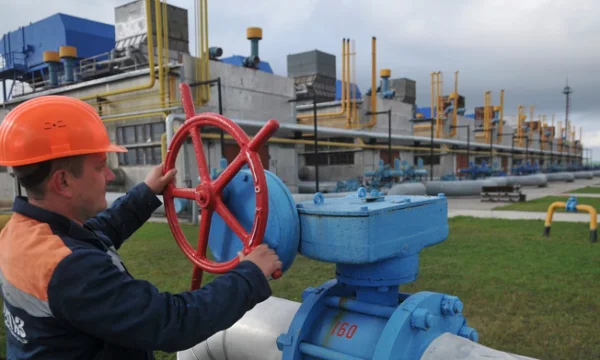
Periskopi(a year ago)
(a year ago)The supply of Europe with Russian gas through Ukraine ends on January 1st, after Ukrainian company Naftogaz refused to renew the five-year contract with Russian company Gazprom. Despite the war between the two countries, Ukrainian President Volodymyr Zelenskiy said on December 19th that Kiev could consider allowing the passage of Russian gas if the payments for Moscow [...]
The supply of Europe with Russian gas through Ukraine ends on January 1st, after Ukrainian company Naftogaz refused to renew the five-year contract with Russian company Gazprom.
Despite the war between the two countries, Ukrainian President Volodymyr Zelenskiy said on December 19th that Kiev could consider allowing the passage of Russian gas if the payments for Moscow are suspended until the fighting is over.
A week later, Russian President Vladimir Putin said there was not enough time left to sign a new agreement.
What would be the possible options after Russian gas is stopped via Ukraine.
SA IS IT VOLUM?
The supply from Russia and Europe has dropped dramatically following the military attack in Ukraine in February 2022, which prompted the European Union to reduce dependence on Russian gas.
Moscow invested for nearly half a century to take place in the natural gas market in Europe, where it reached up to 35% of the market, but has already dropped to about 8%.
As of December 1st, the EU received less than 14 billion cubic metres (bcm) of gas from Russia via Ukraine from 65 bcm a year when the last five-year contract began in 2020.
The European Commission has said that this volume could be fully replaced by imports of liquid natural gas and gas imported from other sources.
Moscow has lost its share in the market in the face of other rival countries, such as Norway, the United States and Qatar.
Russia may have won in 2024 about $5 billion from gas sales through Ukraine, given an average forecast of the Russian government's $39 gas price for 1,000 cubic metres and according to estimates made by Reuters news agency.
Ukraine earns between 800m and $1 billion in transit fees annually.
Gas prices in the EU rose in 2022 to record levels following the loss of Russian supplies. While the supply is already expected to stop completely, EU officials and commercial companies say a repeat of price growth is unlikely to occur, given already modest volumes and the small number of remaining customers.
KU S PRECKET?
The pipeline passing through Ukraine supplies Austria and Slovakia.
Austria received most of its gas via Ukraine, while Slovakia receives about 3 bcm annually from Gazprom - about two-thirds of its needs.
Russian company Gazprom halted supply for Austrian company OMV OMVVV. VI in mid-November due to a dispute over the contract, but supply volumes remained stable after other buyers were brought into play.
Slovakia has said that the loss of Russian supply would not hit its consumers and that it has dismantled supply contracts. Its main gas buyer, the PPP, has contracts for gas supply from other sources, with companies such as BP BP. L, Annie Eni. MI, ExxonMobil XOM. N, RWE RWEG. DE and Shell S.EL.L.
WHAT OPTIONS WHICH WHICH?
Most of the other Russian gas pipelines to Europe are already closed, including the Yamal-Europe pipeline, which runs through Belarus and that Nord Stream under the Baltic Sea.
One option is the TurkStrem gas pipeline that runs from Turkey under the Black Sea towards Bulgaria, Serbia or Hungary. However, capacity is limited.
Slovakia's gas supply could take place by Hungary, approximately one third from Austria and the rest from the Czech Republic and Poland, according to Austrian energy regulatory agency E-Control.
Austria should not face interruptions as it is prepared to change its supply source, its regulatory agency has announced.
The Czech Republic will likely benefit more from German pipelines, profiting from an exemption from German gas taxes starting on January 1st.
The Czech Republic has said it is ready to provide Slovakia with transit capacity and gas storage.
Russia supplies Moldova with about 2 bcm of gas per year. Gas is sent via Ukraine to the separatist region of Transnistria, where it is used to produce free energy, which is sold to parts of Moldova controlled by the Moldovan government.
Russian company Gazprom announced it plans to suspend the supply on January 1st, citing unpaid bills as a cause.
Moldovan Prime Minister Dorin Recean has condemned the verdict, but said his country has various sources of supply. Moldova plans measures to reduce consumption by at least a third of January 1st.
As for Ukraine, the security of its supply will not be affected because it does not use Russian transit gas, the European Commission said.
FROM V GAZY?
The Soviet-era Urengoy-Pomary-Uzhgorod pipeline transports gas from Siberia through the town of Sudzha, in Russia's Kursk region, which is already under the control of Ukrainian military forces.
The pipeline runs through Ukraine to Slovakia, where the pipeline is divided into other branches towards the Czech Republic and Austria.
Transnistria borders Ukraine and also takes Russian gas through Ukraine. / VOA/