9 hours ago
EU urges Kosovo to postpone law on Serbian Orthodox Church
Periskopi(a year ago)
(a year ago)European Union spokeswoman Anita Hyperper has said the EU Special Representative's mandate for the Pristina-Belgrade Dialogue, Miroslav Lajcak, remains in effect until the end of January. At a media conference, Hyper said the process of selecting his successor is currently under way. Asked about the church's <x0status [...]
European Union spokeswoman Anita Hyperper has said the EU Special Representative's mandate for the Pristina-Belgrade Dialogue, Miroslav Lajcak, remains in effect until the end of January.
At a media conference, Hyper said the process of selecting his successor is currently under way.
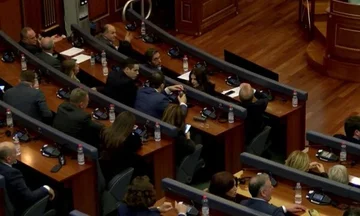
Asked about the “status of the Serbian Orthodox Church in Kosovo”, the EU spokeswoman said this law is in the interest of all communities here, and invited MPs to support his adoption in the Assembly.
EU Special Representative Miroslav Lajcak's “mandate remains in force until the end of January. And the process of selecting his successor is currently under way. And for the Serbian Orthodox Church bill, we seek his approval in Kosovo. This law is in the interest of all communities and we invite the Parliament deputies to support the adoption of law”, Hyper said at the media conference.
Point 7 of the EU plan is considered the most problematic for Kosovo. In addition to a proper level of self-management for the Serb community in Kosovo, at this point it is also about the formalism of a new status of the Serbian Orthodox Church.
In Article 7 of the Brussels Agreement [February 27th, 2023], Kurti has agreed to ensure a proper level of self-awareness for the Serb community in Kosovo and to formalise the status of the Serbian Orthodox Church in Kosovo.
In the first part of this article, it says that the two sides commit to creating specific agreements and guarantees, in line with relevant instruments of the Council of Europe and relying on existing European experiences, to ensure a proper level of self-management for the Serb community in Kosovo and the ability to provide services in specific areas, including access to financial support from Serbia and a direct channel of communication to the Serb community with the Government of Kosovo<x1.
Meanwhile, in the second part of the same article, “Piles will reportedly formalise the status of the Serbian Orthodox Church in Kosovo and offer strong level of protection for Serbian religious and cultural heritage objects, in line with existing European models”.