7 hours ago
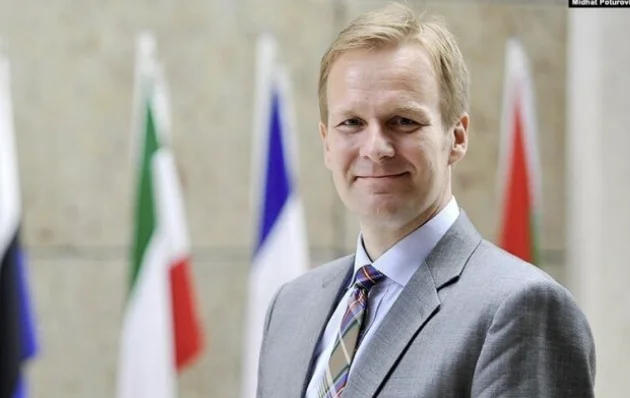
New dialog man: What can we expect from Peter Sorensen?
Periskopi(a year ago)
(a year ago)For the first time in five years, negotiations between Kosovo and Serbia will not be mediated, Miroslav Lajcak. The European Union has decided that its new minister for dialogue will be Peter Sorensen. Officially, it begins work on February 1st, and will only deal with dialogue between the two neighbouring countries, not with regional issues [...]
For the first time in five years, negotiations between Kosovo and Serbia will not be mediated, Miroslav Lajcak. The European Union has decided that its new minister for dialogue will be Peter Sorensen.
Officially, it begins work on February 1st, and will only deal with dialogue between the two neighbouring countries, rather than with regional Balkan issues, like its predecessor.
Since Sorensen's name was beginning to bend in the media weeks ago, the atmosphere for him has been positive.
One of the most frequent arguments has been that 57-year-old knows the region.
And indeed it is. Diplomats for many years had been engaged in Kosovo under the United Nations Organisation (UNMIK) Mission, as well as other roles in Serbia, Northern Macedonia and Bosnia and Herzegovina.
As political connoisseurs say, he does not need to be informed in advance of the people or the historical facts of the region because he has already had the opportunity to create a mirror closely.
Another argument that has been cited as positive by officials in Pristina is that he is from Denmark, a country that recognises Kosovo's citizenship, and will have equal access to dialogue.
The removal of an mediator has become a very important element since Lajcak took that position, while he kept the EU's top diplomat Josep Borrell.
Being one from Slovakia, and the other from Spain, both non-recognitional countries of Kosovo's citizenship, they have repeatedly pursued a black shadow. From Kosovo's simple citizen to the country's president, Vjosa Osmani, the pair has been accused of bias and alignment, occasionally from Serbia.
Both have repeatedly denied the accusations.
This problem will not exist now. However, problematic is considered the period at which Sorensen begins his work.
Launched by elections in Kosovo, and political uncertainties in Serbia following the prime minister's resignation there, connoisseurs of political developments expect little progress, especially in the first six months of the Danish mandate.
Adnan Qerimagic, analyst at the European Initiative for Stability, fully believes Sorensen's commitment to doing his job, but that's not enough.
His “success in fulfilling the mandate will depend on his approach, the context in Kosovo and Serbia. But, most importantly, also what the EU can offer to reinforce the” mandate, he tells Radio Free Europe.
Slovenia's Foreign Minister, Tanja Fajon, said days ago that by Sorensen's election the message is being sent that dialogue remains high on the agenda of the European bloc.
The Role of Germany and France
And what does the EU have to offer the two countries, actually? A little, if anything.
The enlargement process is blocked. The EU has no readiness to unlock it now. Kosovo's European road is not being dealt with seriously. Without having the main components, each individual in that position would have an extremely difficult task to carry out”, Qerimagic estimates, citing even Serbia's impasses in European integrations.
Radio sources Free Europe in Brussels claim that real success in the dialogue will depend on the pressure and energy that will spend the main states of the European bloc on dialogue, especially Germany and France. But they are now facing internal political crises and, therefore, Sorensen will not have the political power behind him that he would probably like.
However, according to these voices, one thing is certain: There will be no turning back from their obligations, both Kosovo and Serbia, and they will have to work on implementing preliminary agreements.
The agreement reached in 2023 in Brussels for normalisation of relations, and an annex for its implementation, is considered key to the road ahead.
Some blame Lajcak for failing to convince the parties of her signing, while his mandate as mediator describes him more for crisis management.
American Includement
Another definition of success in the dialogue has to do with American involvement.
Random, the United States envoy for the Western Balkans, has provided support for the process.
Alexanader Kasanoff currently holds this position. Through public statements, he has called on both sides to fulfil all commitments they have undertaken.
Their commitments date back to years. The sides have negotiated since 2011 and reached a host of agreements, but not all have been implemented.
The EU reminds both sides often that advancing the dialogue process is linked to their path towards Euro-Atlantic integration.