8 hours ago
Chief NATO expects Kosovo elections not to influence destabilisation of situation
Periskopi(a year ago)
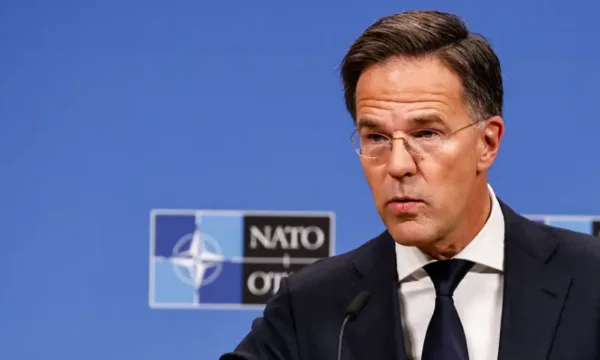
(a year ago)Secretary - General NATO, Mark Rutte, said the Western military alliance is in contact with Kosovo and Serbia to make sure there is no destabilisation in Kosovo during parliamentary elections. Rutte has called the situation in Bosnia and Herzegovina and reports between Kosovo and Serbia as key issues in the Western Balkans region. [...]
Rutte has called the situation in Bosnia and Herzegovina and reports between Kosovo and Serbia as key issues in the Western Balkans region.
Those statements he made on 13 January during a debate that took place at the European Parliament's Commission for Foreign Policy and Defence in Brussels.
Of course, we have some concerns there, especially about the situation in Bosnia and Herzegovina, but also reports between Serbia and Kosovo”, the chief said. NATO.
He added that the alliance would not allow any security vacuums, either in Bosnia and Herzegovina or elsewhere in the Western Balkans region.
“Anyway, we are in contact with Kosovo, but also with Serbia, to ensure that elections that will later take place in Kosovo in February do not lead to destabilisation. This is key. In the Western Balkans region, we should really remain committed to the nearest, because it is a main neighbourhood for us”, Rutte said.
Kosovo will hold regular parliamentary elections on February 9th.
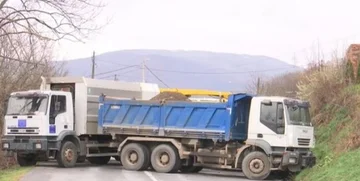
Votering is taking place at a time when in the past two years tensions have been high in the northern part of the country, inhabited by Serb majority.
In September 2023, in northern Kosovo a group of armed Serbs attacked the Kosovo Police, killing a sergeant. During the subsequent shootout in Zvecan Banjska, three Serb attackers were also killed.
The responsibility for the attack, which Kosovo considers a terrorist, took over by Milan Radojic, former deputy chairman of the Serbian List, the main party of Serbs in Kosovo that has Belgrade's support.
Kosovo has blamed Serbia for the attack, but Belgrade has denied having a finger on it.
Meanwhile, an explosion occurred in November last year in the Iber-Lepenci channel in Zubin Potok.
This channel supplies water to several Kosovo municipalities, and its water is used for cooling thermal power plants.
Kosovo again blamed Serbia for the attack, but Belgrade denied involvement and said it would investigate the case.
Meanwhile, during the debate at the EP, the coalition chief said that in these dangerous times it is necessary for the European Union and NATO to strengthen co-operation.
According to him, Russia is making efforts to destabilise the alliance member states and the European bloc.
“We are deeply concerned about security in Europe. We are not at war, but we are not at peace”, he said, demanding that investments in security and protection from member states increase.
Under the previous plan, all coalition member states must invest in defence at least 2 per cent of Bruto Local Production. Although reconciliation was made more than ten years ago, this goal has not yet been achieved by all member states, despite the start of Russia's war against Ukraine, defence investments have increased.
We now spend at least 2 percent of the BPV on defence. But that's not nearly enough. For a proper defence, much more” is needed, the NATO chief stressed. / REL/