18 minutes ago
Former VV President Florin Krasniqi indicts Montenegro, asking for more than 28m euros

Periskopi(2 years ago)
(2 years ago)Kosovo-born American businessman Florin Krasniqi indicted Montenegro for halting the construction of two small hydropower plants on the Djurica River in Plav the northern part of Montenegro. It calls for more than 28m euros, Free Europe Bojana Qirovic, protector of property and legal interests [...]
Kosovo-born American businessman Florin Krasniqi indicted Montenegro for halting the construction of two small hydropower plants on the Djurica River in Plav the northern part of Montenegro.
It requires more than 28m euros, Free Europe told Radio Bojana Qiroviq, protector of Montenegro's property and legal interests.
The state was indicted by legal persons [ Krasniqi companies] for allegedly damaging 1.2m euros and lost profits of 27m euros, in connection with a contractual concessional relationship for the construction of small hydropower plants in Plav”, Crovic said.
The contract for concessions with Krasniqi's company, for the construction of small hydropower plants, was signed in 2014 by the Government of then Montenegrin Prime Minister Milo Djukanovic.
At the time, concessions were granted for 30 years.
The data on when the contract was terminated is contradictory: The government says late 2020, and according to Krasniqi, it is about the end of 2019.
Radio Free Europe, not even after seven days, received answers to questions sent to lawyer Ana Djukanovic, Milo Djukanovic's sister, who represents Krasniqi in the dispute with the Montenegrin state.
Cutting off the contract also contributed to local and nongovernmental sector protests in northern Montenegrin municipalities against this government project.
In addition to concessional contracts, the government granted investors high state subsidies, which, until the summer of 2019, paid citizens under monthly electricity bills.
Why the contracts?
According to official documentation, which the REL saw, the Kosovo company Krasniqi “Triangle” received a concessional contract for construction of two small hydropower plants on the Djurica River in Plav, in June 2014.
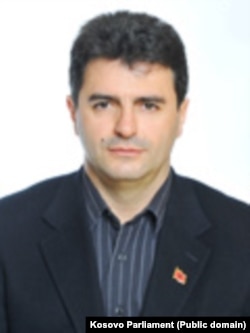
However, his company claims to receive the contract three years later, in April 2017.
Government documents show that Krasniqi's company “Plava Hydro Power”, headquartered in Ulcinj, submitted a request in the Montenegrin government in 2014 for providing urban and technical conditions for the construction of small hydropower plants.
In the next four years, this company received one of the two necessary building permits from authorities, and on October 18, 2018.
And, meanwhile, the construction of hydropower plants was rejected by local populations and the environmental non-governmental sector.
In protests in Plav and other cities north of Montenegro, they said that the “introduction of rivers into the pipeline” would jeopardise the environment and “would leave drinking water”.
They also supported international organizations. Balkanwatch, headquartered in Prague, said in September 2019 that <x0 people close to Djukanovici or his Democratic Party of Socialists benefited from the construction of small hydropower plants”.
The government surrendered in the face of protest pressure, and at the October 17th, 2019 session, it decided to launch procedures to cut the contract.
“Taking into account that the concession was having problems with the local population, the Government found that the process of completing the” agreement should begin, the government announced.
In the case of Krasniqi's company, the government said no contractual deadlines were respected either.
What does Krasniqi's company claim and what does the government of Montenegro claim?
Krasniqi's company claims the state of Montenegro is guilty of cutting off the contract.
According to her, Montenegro's Ministry of Economy, on December 9th, 2019, has announced with a letter that the Government has charged it with starting the process of breaking the agreement.
“The government launched the negotiation process for breaking the deal and chose the unauterable judicial process”, Krasniqi's company said. Free Europe Radio.
The official government documentation, on the other hand, mentions December 2020.
As it says, Krasniqi himself, through his legal office, announced the state's conclusion of the concession agreement on December 4, 2020.
That day, otherwise, the new Montenegrin government, led by Zdravko Krivokkapiq, was elected after Djukanovic's Democratic Party of Socialists lost the elections three months earlier.
The contract cuts process was completed by the Krivokapiki government on December 30th, 2020, when information was approved that “consistire did not provide bank guarantees in the amount and deadline set in the contract” and therefore “conditions for the cut off of the contract have been met”.
Krasniqi, then, filed charges against Montenegro.
What is said in court processes?
Despite several-day efforts, Radio Free Europe failed to get any comment from Florin Krasniqi.
His company did not specify the amount Krasniqi requires from Montenegro.
Our response is clear. The amount will be determined by the court-appointed expert”, the company for Radio Free Europe said.
The expertise showed that, due to the suspension of construction, the company “Plava Hydro Power” of Krasniqi lost about one million euros in real profits and over 21.5m unfulfilled, because the concession was for 30 years.
Representatives of state interests in this dispute rejected this conclusion.
Crovic said he has requested additional expert reports, which the court has approved.
“The expertise procedure is in progress of”, Qirovic said.
The next trial was scheduled for late May.
What do Plav residents say about this conflict?
Ramo Gutiq, director of the nongovernmental organisation “T, maintains the rivers of Montenegro”, simultaneously residents of Plav and participants in the protest against construction of small hydropower plants on the Djurica River, believes Krasniqi has no legal basis for seeking compensation from Montenegro's state.
“... because the source of the Djurica River, where Krasniqi wanted to build two hydropower plants, supplies the entire Plav population with drinking water. That's the only fact that says to all”, Gutic says to Radio Free Europe.
Gutic says all concessional contracts and investor supporting documents, including Krasniqi's, are invalid because they do not correspond to the situation on the ground.
This documentation is not made according to the rules and conditions on the ground, but for before”, he says.
Gutic says, too, that those who signed them should be held responsible for the permits given.
They say that, despite their war, two small hydropower plants are being built in Prokletije National Park.
“One is in Baban Paule, and the other is in the Yara region, east of Plav, on the border with Kosovo. The sources and water collectors of those small hydropower plants are in the area of Prokletije” National Park, Gutic says.
A number of indictments
Florin Krasniqi is not the only one who indicted Montenegro for its unmet business with small hydropower plants.
So far, nine former concessions have indicted the state, confirmed by the Montenegrin Economic Court.
Nine civil proceedings are under way to prove contract cuts, compensation of actual damages and lost profits. Given that there are issues that have not been legally concluded, we cannot provide more detailed information”, said the spokesperson judge, Valjmir Bulatovic.
He is also the judge in the Krasniqi case.
Who is Florin Krasniqi?
Krasniqi also deals with electricity production in Kosovo. It operates through the company “Triangle”, headquartered in Pec.
Born in 1963 in Kosovo, he left for the US in the 1990s.
According to the REL's unofficial sources, it has a developed construction business in New York and established the Brooklyn-based “Triangle”.
Krasniqi returned to Kosovo before NATO bombings in 1999.
He was a member of the Kosovo Liberation Army, then a member of the Vetevendosje Movement in the Kosovo Assembly.