7 hours ago
South Korean president's dismissal motion fails
Periskopi(2 years ago)
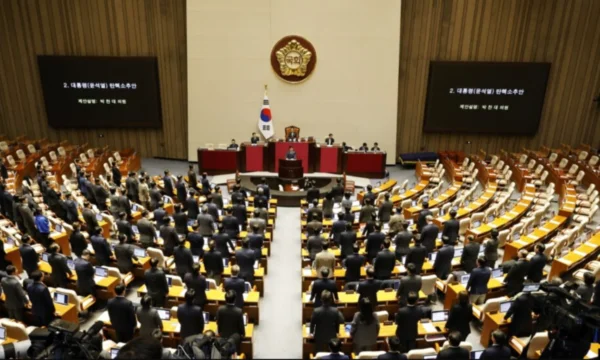
(2 years ago)The motion for the dismissal of South Korean President Yoon Suk Yeol has failed to be approved in Parliament on December 7th, after MPs from his party boycotted the vote. The motion was initiated by opposition parties following Yoon's decision earlier this week to declare war conditions. Only 195 MPs voted, out of 200 times [...]
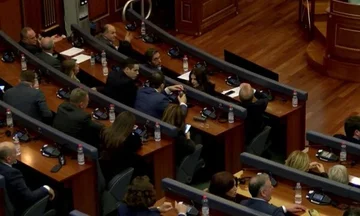
The motion for the dismissal of South Korean President Yoon Suk Yeol has failed to be approved in Parliament on December 7th, after MPs from his party boycotted the vote.
The motion was initiated by opposition parties following Yoon's decision earlier this week to declare war conditions.
Only 195 MPs voted, out of 200 as long as the motion was required to be successful.
THE entire nation is seeing the decision being made at the National Assembly today. The world is looking at”, Parliament Speaker Woo Won-speech said, adding that it is a pity the motion did not pass.
The main opposition Democratic Party has earlier declared it would again initiate the motion for the president's dismissal next week, if such a motion would not be passed on December 7th.
Before the vote was held in Parliament, Yoon has apologised during a televised address to his decision to declare the situation of war, as thousands of protesters gathered outside the Parliament.
Yoon shocked the country and the international community Tuesday evening when he announced the state of war. This was the first time in more than four decades that the state of war was declared and after the president's announcement, troops and helicopters were deployed in Parliament.
However, lawmakers managed to vote to abolish the decree, forcing Yoon to withdraw his decision Wednesday morning.
“The announcement of the state of war came from my despair as president”, he said during a television address, which is his first address to the public since he brought the state into political chaos.
I have caused anxiety and concern to the public. Honestly, I apologize to you”, he said.
The opposition and key members of his party have called on the president to resign.
Thousands of protesters gathered outside Parliament on Saturday, before the launch of the session for the president's dismissal.
Yoon did not resign during his address, but said he entrusted <x0partia with steps to stabilise the political situation, including for my mandate as president”.
Yoon's People's Power Party, before the president's dismissal hearing was held, was divided as to how it would vote on the issue.
A day earlier, the leader of this party, Han Dong-hoon, has declared Yoon must leave or Seoul risks facing more political chaos.
The normal exercise of the president's duties is impossible under current circumstances, and a president's resignation is inevitable”, Han Dong-hoon said earlier Saturday.
The opposition bloc has 192 seats in the 300-seat parliament, and Yoon's party has 108 deputies.
For the motion for the president's dismissal to be approved, two-thirds of the vote was required and Yoon would then suspend duties as President and the final decision on his dismissal would then be made by the Constitutional Court.
Police have begun investigating the president and others for the alleged uprising.
“I will not avoid the issue of legal and political responsibility in terms of declaring war situation”, Yoon said during his address.
Opposition leader Lee said Yoon's speech was “very desperate”, given the public's request that the president resign.
Some protesters have stayed in front of the Parliament during the night, despite low temperatures and some opposition MPs have also stayed inside Parliament overnight, fearing Yoon might try to take some desperate measures in order to retain power.
When declaring the state of war, Yoon claimed that such a decision “would eliminate antistate elements that are hindering the freedoms and happiness of the people”.
Security forces surrounded the National Assembly, meanwhile, helicopters landed on the roof of the building. Almost 300 soldiers tried to block the building. But the Parliament staff managed to prevent the entry of soldiers into the building, and within parliament there were sufficient number of MPs who voted against Yoon's decision.
Lawmakers from the ruling party and opposition said soldiers were ordered to arrest the main politicians, while special police units reportedly were ordered to withdraw MPs from parliament. / REL