8 hours ago
What is Kosovo's critical infrastructure, and who keeps it?
Periskopi(2 years ago)
(2 years ago)Energy, transport, banking system, financial markets, health, drinking water and sewage, digital network, public administration, as well as production, processing and food distribution are sectors that make up Kosovo's critical infrastructure. This infrastructure is vital to the functioning and security of the state as well as its citizens. Kosovo has law on defence [...]
Energy, transport, banking system, financial markets, health, drinking water and sewage, digital network, public administration, as well as production, processing and food distribution are sectors that make up Kosovo's critical infrastructure.
This infrastructure is vital to the functioning and security of the state as well as its citizens.
Kosovo has law on its defence, but some security experts say it is not implemented properly.
For Mentor Vrajol, from the Kosovar Centre for Security Studies (QKSS), the increase in measures is urgent, at a time when threats -- “cyberspace and terrorist” -- have increased to a global level.
Last week, on the Iber-Lepenci Canal in northern Kosovo ʹ that supplies water to several cities and thermoelectrics in the country, a powerful explosion occurred that caused considerable material damage.
As a result, regular supply of water and electricity was cut off for some time.
Kosovo Prime Minister Albin Kurti accused Serbia of this attack, saying the goal was to cause irreparable damage to the critical infrastructure of the Republic of Kosovo.
Serbia's president, Aleksandar Vuciq, denied any kind of responsibility and condemned the attack.
What does the law foresee?
Kosovo has the Law for Critical Infrastructure since 2018.
Its goal is “to preserve and protect critical national and European infrastructure, protect the citizens of the Republic of Kosovo, prevent incidents and minimize the potential damage to this” infrastructure.
On November 27th, just two days before the attack on Iber-Lepenc, the Kosovo government adopted some changes in the law, melting some sectors of critical infrastructure into one.
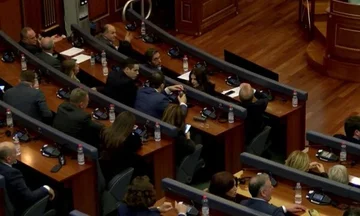
These changes are now pending voting by Kosovo Parliament deputies.
Otherwise, the primary authority for monitoring the implementation of this law, as well as policies for identifying and protecting critical infrastructure, is the Ministry of Internal Affairs and Kosovo.
It has the capacity to conduct field inspections and ensure, even, the proper physical protection of critical infrastructure spaces.
This ministry did not respond to Radio Free Europe's requests to comment on the oversight and protection of this infrastructure.
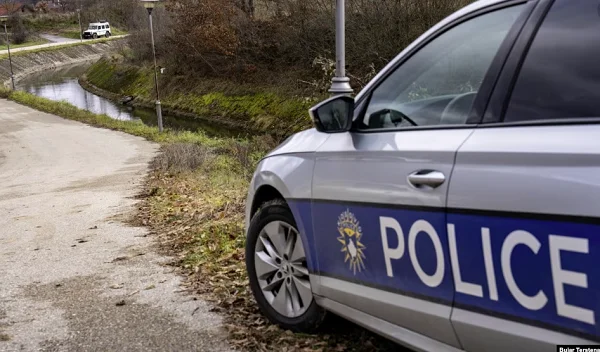
But, after the explosion at Iber-Lepenc, the Kosovo Security Council adopted several additional measures to strengthen the security of critical infrastructure, whether on bridges, traumas, antennas, lakes, etc.
To that end, the Council urged Kosovo Police and the Kosovo Security Force to activate on the ground.
How is critical infrastructure maintained?
Former Kosovo Deputy Minister of Internal Affairs Izmi Zeka says no specific case to take action should be expected.
According to him, there are some sectors that need constant physical security.
Among them, it separates water, food, and electricity.
“
REL questions about the physical security of their facilities did not answer KEK, nor did the Kosovo Electricity Distribution Company KEDS, nor did the Regional Waters “Pristina”.
Bashkim Kurti, chief executive of the Regional Waterwork “Mitrovica”, said that in water treatment factories, there are guards at all times.
The company has two factories: one in Shipol and one in Balnica. There are 24 hours of security in these two spaces. They are company employees and care for security issues, both on operational issues”, Kurti told Radio Free Europe.
After the attack on Iber-Lepenc, Prime Minister Kurti said this channel is almost impossible to monitor at all times.
“Iber-Lepenc Canal is a channel over 50 kilometers and, of course, it is extremely difficult to control and be under surveillance 24 hours per seven days of the week, throughout its entire length”, he said at a news conference on December 1st.
“respected law”
Vrajolli from the QKSS says the destruction of critical infrastructure could undermine the functioning of the state.
So, according to him, measures should be taken as early as possible, in accordance with the law.
In this respect, he recommends that Kosovo compile a list of names of institutions, companies or private operators, which would monitor and preserve critical infrastructure.
Be sure that in this period, when global threats have increased markedly, we have the necessary measures to prevent any attacks on this infrastructure”, Vrajolli says, citing both the option and the location of the cameras around it.
He adds that Kosovo does not have sufficient framework for law enforcement, but that “can create”.
Inter-institutionary co-ordination, according to him, is necessary because critical infrastructure is not only in public ownership, but also in private, and it is not only physical but also virtual.
The state must identify and protect it, especially now when it is an uncertain period, when there are many actors willing to create instability worldwide”, Vrajolli says.
Addressing reporters on December 1st, Kurti mentioned Russia and said the attack on Iber-Lepenc “appears to have links” to the Russian Federation's attacks on Ukraine's energy infrastructure.
To reinforce these claims, he displayed a photograph, which he said shows the emblems of Russian military units confiscated by Kosovo Police in the country's north.