8 hours ago
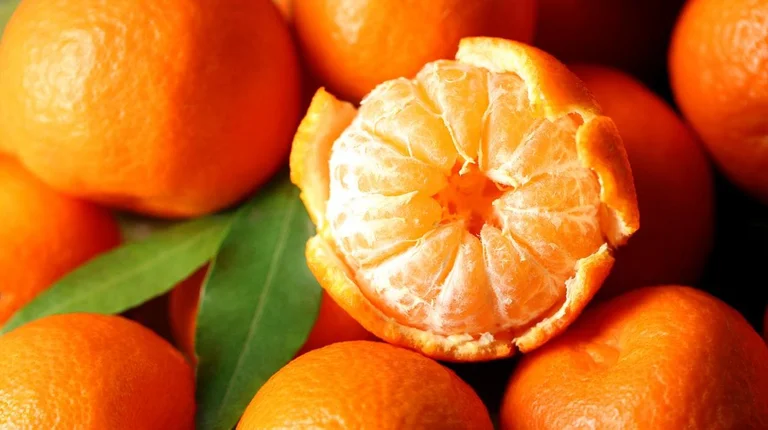
EU bans amount of Albanian Mandarin, deemed dangerous
Periskopi(a year ago)
(a year ago)On Wednesday, president of Albania's Professional Veterinary Order ( U n Ervin Resuli, wrote in a post on his Facebook page that an array of Mandarins originating from Albania targeting the European market has been banned by foreign authorities due to a high level of pesticides banned from countries [...]
“Over November 29th, December 11th 2024, the European food safety system RASFF has reported three cases of waste pollution of Chloryrifos and Phosmet in cargo Mandarins originating from Albania. These substances are dangerous to human health and banned in the European Union because of their long-term damage”, Resul said.
Apart from reporting for blocking loads, he has accused the agriculture ministry of hiding the case.
“The Ministry of Agriculture has made no announcement as to whether these products have been consumed on the domestic market or are eliminated under law”, the head of the bill said. UPMVS in this post.
In this regard, the country's Ministry of Agriculture and Rural Development has also reacted, which by naming the news as true, writes that it has begun taking measures related to the shipments of backwards-turned exports.
Also, the ministry suggests that specifically it is about three shipments of Mandarin elements exported by food collection subjects located in Berat and Fier. According to the Ministry, two of the shipments have arrived at the country of origin.
“It's about three shipments of Mandarin elements exported by food storage subjects with locations in Berat and Fier. Two of the shipments have arrived at the country of origin. One of these charges has been sent by the AKU Border Inspection Point, on the export subject and cargo has been eliminated from farmers at the address of the village of Goricaan, the Dimal municipality, Berat County and the village of Mursi, Konispol municipality, Vlora County. After tracking and obtaining the accompanying information, we explain that laboratory analysis with no. 24112916,001, on the date 14,11,2024, with the aim of autocontrol by the exporter subject, was conducted in a laboratory in Bari, Italy. According to the test report, the product has resulted in conform on the level of pesticide waste”, the ministry said.
MBZR emphasises that the next shipment is currently trapped in the collection subject located in the Fier District and the waste procedure will be carried out by this Food Business Operator in collaboration with Regional Tax Directors, National Food Authority and National Environment Authority.
This shipment, according to the Ministry, has not been accompanied by a laboratory report, as it is not the legal obligation for export subjects that conduct this process under control.
The third shipment announced by remains on the price of Plant Protection Products, the ministry says it has not yet arrived in the Republic of Albania. This cargo hasn't even been associated with an analysis sheet”.
“Linked to the first shipment mentioned above, we suggest that the National Food Authority has immediately taken steps for administrative counter-institutions on the relevant subject located in Berat by fined and blocking subject activity for failing to implement legislation in force. In co-operation with the National Veterinary Authority and Plant Protection, measures are being monitored and taken for farmers who have used products to protect forbidden plants in the Republic of Albania”.
The Directorate General of the National Food Authority is said to have taken immediate measures by establishing working groups for analysis, assessing the situation on co-ordination for pursuing procedural action in any link to implementing the official control of the case.
The Ministry of Agriculture called on Albanian farmers and producers to meet the legal obligations, as well as to respect good work practices throughout the farm production chain using only allowed products, under professional supervision and respect of card time, to ensure domestic production for Albanian consumers and international markets.
Albania's Professional Veterinary Order President (UPMVSH), Ervin Resuli, also said Albanian legislation has harmonised with that of the EU, but reality on the ground indicates a total lack of supervision and transparency.
“EU blockloads show that these pesticides still circulate and are used locally. The Ministry of Agriculture has made no announcement as to whether these products have been consumed on the domestic market or have been eliminated by law. Businessmen and farmers continue to use banned products, endangering public health and the reputation of Albanian exports”, it said, among other things.
But today, Resuli himself came out with a new post, saying that the quality and standard of Albanian Mandarin are already known in European markets since its analyses have been published in the European RASFF system.
He says that any state of Europe and beyond can access the data and verify the situation of Albanian products.
The internal default does not undermine the image of Albanian Mandarin, rather, it aims to promote awareness and institutional responsibility. The problem with the use of Clorpirifos has been made public and it is the responsibility of the Ministry of Agriculture to act in time to prevent such cases, rather than behave like firemen who intervene only after alarm”.
“The viewing of information and lack of transparency for consumers is unacceptable. The ministry must ensure that inappropriate products are eliminated and taken clear preventive measures. Food security should be a priority and citizens have the right to be informed in time of the measures taken by”, Resuli said.
What is chloryrifos?
According to Ervin Resulit, Chloryrifios-ethyl is a pesticide that:
It affects the brain development of children, especially in early stages of life. It causes nerve damage and endocrine system disorders. Increase the risk of cardiovascular disease and cancer.
Resuli says Chloryrifos has been fully banned in the EU for use and trade with the 2020/18 Commission's Implementation Rule / The EU, January 10th 2020, which took effect on February 16th 2020.
In Albania, he says the ban on his use was made on the Order of Minister No. 26, the date 22.1.2020, setting that: “should unregister plant protection products containing Chloryrifos within February 16th, 2020”.