7 hours ago
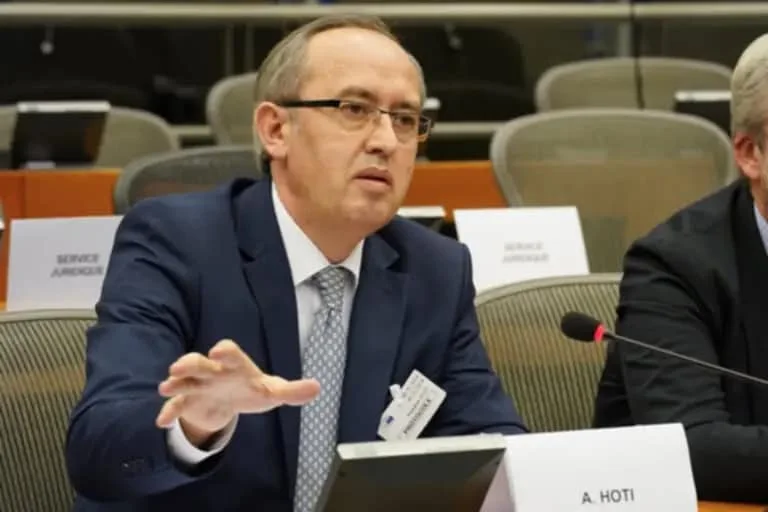
EP Hoti: It is imperative that dialogue be placed on track leading to mutual recognition
Periskopi(2 years ago)
(2 years ago)Former Prime Minister, LDK MP Avdullah Hoti has once attended the European Parliamentary Commission for Stabilisation and Association joint meeting EU-Kosovo He cites dialogue with Serbia, stressing that there are three actions of Serbia that continue to remain unpunished by the EU, except political statements that have been made long after [...]
He cites dialogue with Serbia, stressing that there are three actions of Serbia that continue to remain unpunished by the EU, except political statements that have been made over and over again.
The good neighbour and dialogue are European and civilising values in interstate relations. There is no other way than to implement European good neighbourly standards and dialogue, which are essential for the European integration of the Western Balkans. Only through good neighbourlyity and European integration does the political uncertainty that is holding the whole region back from democratic and economic development.
But good neighboring results only when applied by all sides. There are three Serbian actions that continue to remain unpunished by the EU, except for political statements that have been made from time to time:
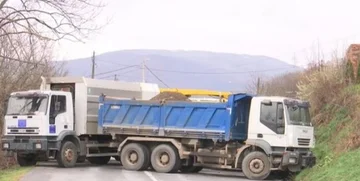
(i) The inclusion of Serbian state institutions in ongoing terrorist attacks in northern Kosovo, which testify, among other things, with the non-compliance of measures against persons who are clearly aware to have been involved in these attacks,
(i) Serbia's continued pressure on the Serb community in Kosovo not to integrate into Kosovo state institutions, as well as:
(ii) The continued atonement for residence addresses by the Albanian civil registry in the Presevo Valley of”, Hoti said in his address.
As for Kosovo-Serbia dialogue, Hoti says how the LDK, which has borne state responsibilities for many years, believes dialogue is the only mechanism to resolve differences.
Kosovo has shown readiness for dialogue since 2011. From then until 2017, many agreements have been reached, even though many have not been implemented. Those agreements that have been implemented have improved the lives of citizens in both states”, continues.
Hoti claims that in 2020, in the preliminary government, dialogue began on the final agreement for mutual recognition and normalisation of relations between the two countries. But, unfortunately, that framework of dialogue was abandoned in 2021”.
According to Hoti, dialogue during the period 2021-2024 has produced no concrete results.
“over this period, the negotiating parties agreed to closed meetings, as soon as they appeared in public they denied everything. This has been the Serbian side's permanent approach to the dialogue mediated by Brussels, but recently the Kosovo side is behaving equally”.
Hoti strongly believes that unless the main problem between the two countries -- which is mutual recognition -- is addressed, relations between the two countries cannot be normalised.
All problems in interstate relations between Kosovo and Serbia, which are being addressed within the Brussels dialogue, stem from the lack of mutual recognition. Therefore, it is imperative that dialogue focus on reaching the final agreement for mutual recognition and normalisation of relations”.
Furthermore, the former prime minister said how the opposition continues to support dialogue, but according to now, it is now clear to everyone that this form of dialogue does not produce results.
“Transparency for dialogue has no citizens or opposition. The EU mediator is enough with the fact that the parties are meeting in Brussels and agreement is being reached on continuing meetings. The necessary political attention to dialogue from high EU levels comes only when problems occur on the ground, thus turning dialogue into mechanism for resolving problematic situations rather than addressing the main problem among countries that are mutual recognition”.
“We expect and engage in Kosovo-Serbia dialogue to be reformed by the new leaders of EU institutions”.
Hoti hopes to see new energy in this process and orientation towards reaching the final agreement for mutual recognition.
“It is necessary for dialogue to be placed on tracks that reach mutual recognition. Any other approach only postpones the region's European integration, creating political uncertainty with serious economic, social and security consequences for the entire region. Keeping the Western Balkan region out of the EU without any clarity for the timeframe of integration contributes to the economic and demographic collapse of all countries, which could result from lack of investment and development, as well as the migration of the workforce, creating a vicious circle of non-economic and political stability”, he said.