a minute ago
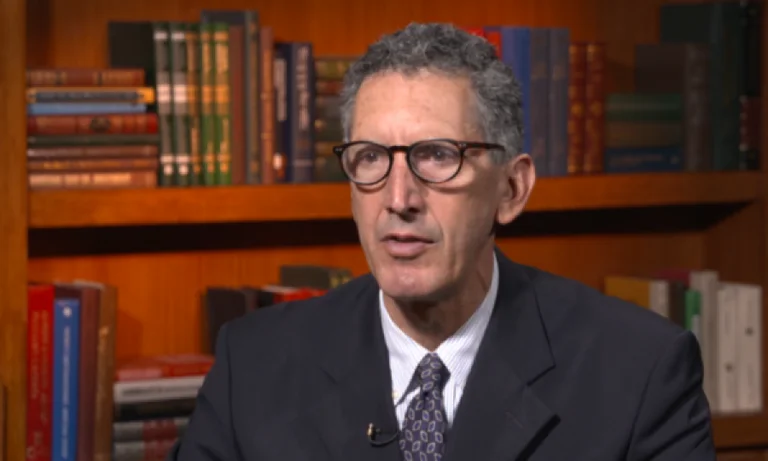
Edward Joseph: Serbia has greater responsibility for Kosovo situation than Kosovo
Periskopi(a year ago)
(a year ago)Balkan expert Edward Joseph has said in an interview with the Macedonian Radio Free Europe Service that, in the Balkan region, harmful actors are looking forward to signals for Russian President Vladimir Putin's reinforcement, and weakening Western, so the consequences of Russia's war in Ukraine are seen [...]
Balkan expert Edward Joseph has said in an interview for Macedonian Radio Service Free Europe that, in the Balkan region, there are harmful actors who look forward to signals for reinforcement of Russian President Vladimir Putin's position, and weakening the West, so the consequences of Russia's war in Ukraine are seen even in this region.
He has spoken of the region's integrations into the European Union, the fight against corruption in northern Macedonia, and the recent decisions by American authorities to introduce other officials to the blacklist.
Radio Free Europe: Mr. Joseph, the first former deputy prime minister from the Democratic Union for Integration party (BDI), Artan Grubi, as well as another judge, were the last people to be placed on the US blacklist. How do you see the effect on North Macedonia by these US State Department sanctions?
Edward Joseph: See, in a way, this is positive, it's constructive, and it's an understanding step. At the same time, after so many years, from what is called transition, to see the need for the United States to make these necessary and accurate movements, of course, is disappointing. So let's get to the first half. The best indicator that this was a fair decision by the US to unfortunately put former Deputy Prime Minister Artan Grubi on the blacklist is that DUI itself said it respects that decision. So the fact that DUI said that and stressed the importance of relations with the United States is a positive step.
Radio Free Europe: Yes, these were the actions taken by the United States. But how do you see the fight against corruption in northern Macedonia?
Edward Joseph: You have a relatively new government. They've made some initial moves, but they have to do more. I want to stress here, and I also noticed the reaction of Prime Minister Hristian Mickoski, who also reacted and supported the United States movement. But again, we look at the accent and heard Ambassador Angela Aggeler's warning, who said: “Hey, this evidence is available to all of you. It's not the special evidence that only we have in the United States”.
So my answer to your question is: for Prime Minister Mickoski, we need to see Government take steps, for prosecutors to act, and for justice, justice system and judges to act against corruption. And, I'll use my hands here again, for the entire political spectrum, for the entire ethno-nationalist spectrum. So it's not just selective.
Radio Free Europe: Yes, corruption is an important issue in terms of northern Macedonia's integration into the European Union. The dispute with Bulgaria is hindering Skopje from starting EU membership negotiations. The government says it is trying to change the conditions for starting negotiations. Is that possible?
Edward Joseph: The short answer is I don't actually know. Listen, EU officials and even US officials say you can't change that. I don't know the right answer. Of course, we know Bulgaria is in a strong position because it is an EU member. At the same time, Bulgaria is in political chaos, completely contrary to northern Macedonia, where you have a very clear political situation.
There may be statements and guarantees from the European Union for this to make every effort to ensure Bulgaria will not continue to increase its demands, so as not to say: “Okay, including Bulgarians in the Constitution, there is now another”.
So maybe there are some political guarantees. Also, I have been a supporter of the idea, through scriptures, that the United States can take unilateral steps to protect Macedonian identity and warn Bulgaria.
Radio Free Europe: So you expect the United States to engage more actively and prevent another bilateral dispute from hampering the integration of Northern Macedonia into the European Union?
Edward Joseph: Yeah, actually, that's a great question. You did very well. I expect the United States to intervene when the European Union itself, because of its rules, cannot act. I think even individual EU states can offer guarantees and signals of a strong commitment that, when met, they will no longer tolerate other demands. And, I think that's right and right. And, again, the EU process, the opening of these negotiations, is extremely important for all citizens of Northern Macedonia.
“expects negotiations for the war in Ukraine but not the end of war”
Radio Free Europe: Do you expect Donald Trump's inauguration to bring a quick end to the war in Ukraine, as he stated during his campaign?
Edward Joseph: No. The answer is no. I don't expect this. If it happens, as long as it was in favour of Ukraine and the West, that would be excellent. But I don't think Vladimir Putin is in that position right now. I think he still wants a victory.
It's very important that people in this country understand this: Vladimir Putin has put Russia in a catastrophe, a catastrophe that will harm, not only Ukraine by killing so many Ukrainian civilians and soldiers, and by deliberately destroying so many Ukrainian infrastructure, but also Russia itself. That's what Vladimir Putin did.
I think we see this situation in Syria, with Assad's rapid decline, even with support from Russia and Iran, but we're seeing the collapse. This is another proof of Russian weakness, of its inability to do anything because of the trap it created with its aggressive attack on Ukraine. But I do not expect Donald Trump to be able to negotiate immediately a fair solution to this war.
Radio Free Europe: Do you have any idea how long this process can take? You expect peace negotiations to start soon, talking about the war in Ukraine?
Edward Joseph: Yes, I do. I believe some of Trump's main advisers are determined to try to achieve some kind of war outcome as soon as possible, because their main focus is China. And they would like to speed up and go to war. Anyone would want to do that, who would want to see people die? The question is, under what conditions? Because that's what matters. It is important not to give Vladimir Putin a victory that will have major consequences for Ukraine, Europe, including the Balkans, and also for China. Because if China sees that the U.S. is willing to withdraw, and give up Ukraine, it would say: “They gave up Ukraine. They will also give up on Taiwan”.
Radio Free Europe: How much will the ban or the continuation of the war in Ukraine affect the Balkan security situation? And for resolving open issues in the region.
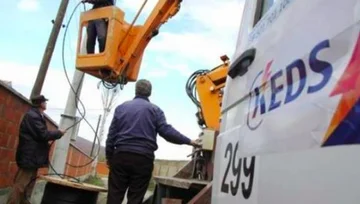
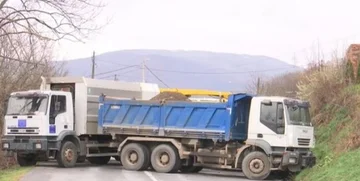
Edward Joseph: Here again, I see great consequences. We can't have this in the region. That's still unclear. There are still tensions, you see between Kosovo and Serbia, the latest terrorist attack, which was declared such by Kaya Kallas, the EU's chief diplomat. Even the US said this is a criminal and terrible attack on Kosovo, aimed at destroying the water supply system, affecting water supply and electricity for all of Kosovo.
Of these kinds of threats, we see that there are actors in the region, that everything they want, is a signal that Russia has somehow returned to the United States and the EU to surrender and agree on a similar agenda here in the region to take territories, divide borders, force peoples to move and undermine the sovereignty of states, not only of Kosovo, but also of Montenegro, Bosnia and Herzegovina. So it would be very dangerous to have such surrender to Putin.
Radio Free Europe: You said in one of your statements that the crisis between Kosovo and Serbia benefits leaders on both sides. Do you see a similar situation now in northern Macedonia, as politicians -- from the Macedonian and Albanian blocs -- are increasingly talking about destabilisation?
Edward Joseph: No, I don't compare these two situations. I don't and I wouldn't do that. The situation within northern Macedonia is completely different from that in Kosovo and Serbia. And, let me be very clear here: Serbia and Kosovo are not equally responsible. They are not equally responsible for the situation. Serbia refuses to recognise Kosovo, and Serbia accepts the status quo to keep Kosovo in this uncertain situation. So Serbia has a greater responsibility for the situation in Kosovo than Kosovo. But, of course, Prime Minister Kurti has his responsibility. He, too, should show that Kosovo Serbs are actually full citizens of Kosovo and that the Government in Pristina respects and treats them as such.
Radio Free Europe: DUI believes the initiative at the Constitutional Court on the Law on Language threatens the Ohrid Agreement. What is your comment?
Edward Joseph: The only future to preserve the Republic of Northern Macedonia as a sovereign and independent state, as well as the heritage of Macedonians and Albanians living here, is to preserve this respect for this country as a united and sovereign state. And that's what the Ohrid Agreement does. In the Ohrid Framework Agreement, there is no territorial agreement. No cantons, no entity.
We see Bosnia and Herzegovina and consider it a disaster. Also, see Kosovo with the attempt to divide and situation in the north, as well as refusal to recognise this catastrophe. Northern Macedonia cannot afford to become another third Balkan disaster. The Ohrid Agreement is an excellent agreement. It's a fair deal. If there are disagreements about it, discuss it. Consult your friends, the United States, the European Union, and reach sound solutions. And I'm sure they can be achieved.
Radio Free Europe: And to what extent will resolving open questions in the Balkans depend on the process of European Union enlargement?
Edward Joseph: They play an extremely important role. Imagine the Thessaloniki summit in 2003, where they said, “We opened the door to Balkan countries” and since 2003, ten years later, Croatia became a member in 2013, and then, basically, nothing. The rest of the Western Balkans, six countries, made no progress. The EU itself changed its mind. Vladimir Putin reopened the possibility of EU enlargement by threatening all of Europe. Finally, the European Union woke up and said, “We actually have to deal with the Balkans seriously and create realistic opportunities to membership”.
Montenegro certainly has that opportunity, and if its political situation -- both domestic and external -- is resolved, there is a way ahead. Northern Macedonia can have that path. Of course, it has this blockade with constitutional changes from Bulgaria, but that is essential.
See Croatia, see the positions Croatia has. This is not a perfect place. Even many older EU member states, none of them are perfect. But, compare Croatia's situation to neighbouring countries, with Bosnia and Herzegovina, with Serbia. There is absolutely no comparison in any way. So the advantages are clear to join the European Union, and this obstacle with Bulgaria, I think that the Government, by co-operating with the United States and the main European Union chiefs, can overcome this.