8 hours ago
Chancellor Scholz's delay in Bundestag
Periskopi(a year ago)
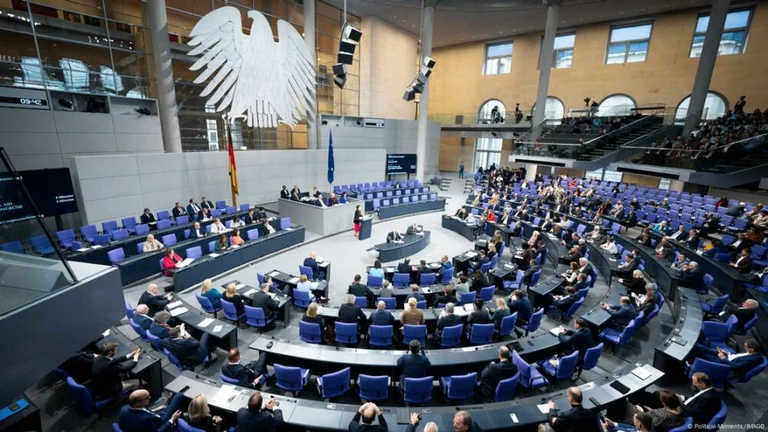
(a year ago)On Monday, Bundestag decides on the question of vote of confidence filed by German Chancellor Olaf Schelz. Early elections are scheduled on February 23rd. The early elections scheduled for February 23rd are debated throughout Germany. But their development requires following specific procedures related to Germany's electoral framework. Key steps: [...]
The early elections scheduled for February 23rd are debated throughout Germany. But their development requires following specific procedures related to Germany's electoral framework. Key steps: The Chancellor first settles the question of confidence in Bundestag, and must lose it, which is expected to happen Monday. (16.12.) Then the federal president distributes parliament. As a result, new elections must be held within 60 days.
How does the vote of confidence work, what happens next?
In line with Article 68 of the basic German law, the federal Chancellor presents a motion in Bundestag to demand a vote of confidence in him. Olaf Scholz did so in writing on December 11, 2024, and sent it to Bundestag President Bärbel Bas.
Under Article 68 paragraph 2 of the basic German law, voting for the Chancellor's request could take place no sooner than 48 hours after its accession. Lately, confidence takes place Monday in Bundestag. If the Chancellor did not get an absolute majority of 367 votes in this vote, it would mean losing confidence. Possible restrictions by MPs would have the same effect as a vote against. There must be a formal vote, and it is publicly known which MP and how he has voted. After losing confidence, the Chancellor may suggest the Federal President disperse the Bundestag. Scholz has already announced he will. Federal president has to do this Monday in 21 days.
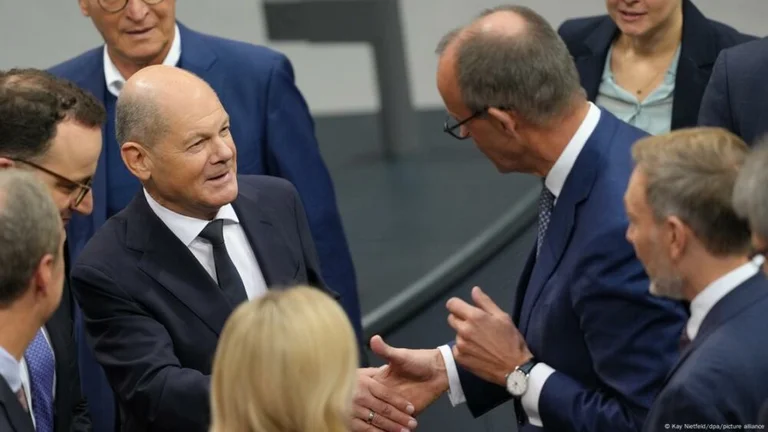
Chancellor Scholz and opposition leader, CDEU, Friedrich Merz photo: Kay Nietfeld/dpa/picture alliance
Federal President Steinmeier can do that, but not necessarily. The main criterion is if a politically unstable situation develops. In his speech on November 7, 2024, shortly after the coalition collapsed, Federal President Frank-Walter Steinmeier said that a stable majority and a government capable of acting would be reference points for his decision. This may conclude that it tilts toward the dissolution of Bundestag.
If Federal President distributes Bundestag, there must be new elections within 60 days of his breakup. So says Article 39, paragraph 1, sentence 4 of the fundamental law. Federal Election Day is officially defined by the Federal President in accordance with Federal Election Law. February 23 is scheduled for Germany.
Will the Chancellor continue office after losing confidence?
Loss of confidence and the breakup of Bundestag do not change the fact that the Chancellor and his government are in office as usual. The federal Chancellor's function ends only when a new Bundestag meets after new elections (point 69 of fundamental law). Even then, Chancellor Scholz remains in office at the request of the Federal President until a newly elected Bundestag has elected the new Chancellor. / DW