4 minutes ago
Former American Emissary: Kosovo must be NATO membership candidate for Serbia to accept country's sovereignty
Periskopi(a year ago)
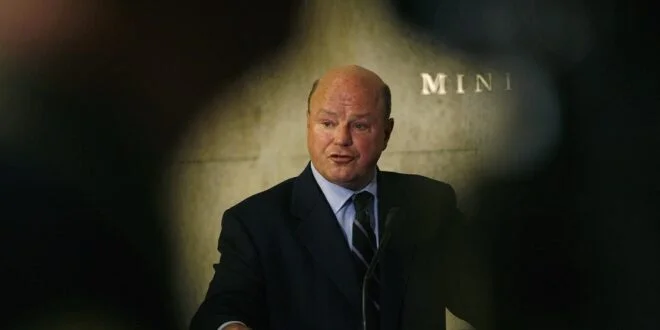
(a year ago)Former United States family in Kosovo status talks, Frank Wisner, says Kosovo today is a mixed story -- “ -- has not achieved everything it wants, but has built itself as a sovereign state in the European family”. In an interview given Radio Free Europe, Wisner says Serbia still [...]
In an interview given Radio Free Europe, Wisner says Serbia, still this day, is unwilling to accept the reality of an independent Kosovo, and the agreements reached between the two countries, according to him, are not functioning.
For its reasons, it says Kosovo should create the Association of Serb majority municipalities, but with the highly limited “responsibility”.
Wisner believes it is still early to say what the American President-elect Donald Trump's administration can expect about the Western Balkans.
The previous Trump administration has had a number of ideas aimed at reaching a territorial agreement... Any movement towards this objective would only cause trouble in the Western Balkans. I hope this will not tempt the new administration”, he says.
Radio Free Europe: Ambassador Wisner, two decades ago, you were a key figure in the Kosovo status negotiations. Over 25 years from the war and on the eve of Kosovo's 17th anniversary of independence, how would you assess its progress over the years?
Frank Wisner: Kosovo has achieved its independence a promising dream it has built itself as an independent nation and entered in part into the family of nations. But it has been repeatedly opposed by Serbia, which has not recognised its independence. As a result, Serbia has managed to block its membership in the United Nations and a number of states have not recognised it.
But, at the same time, Kosovo has managed as a new country to improve its economic situation and improve its political institutions.
Radio Free Europe: In retrospect, do you believe that Kosovo could do anything different, that could have improved its situation today?
Frank Wisner: No. I have often thought about it, but Serbia has been very determined to block Kosovo's independence. It has been impossible to overcome that obstacle. Its opposition to Kosovo's independence has not cooled down for a minute during these years.
And until Serbia accepts the fact that Kosovo is sovereign and independent and is willing to develop good neighbourly relations with it, I do not expect any solution between them.
European institutions have tried hard to help the two sides accept each other and have failed. The United States has not succeeded. Until Serbia is convinced that it is in its interest to allow Kosovo to be a fully independent country, nothing will happen, the final status will not be achieved.
Radio Free Europe: International mediators have said the two societies are not yet ready for final agreement. You think there's a way out?
Frank Wisner: Serbia, in particular, is not ready to admit that Kosovo is no longer part of Serbia and to accept its independence. Until this is achieved, I see no solution to final status.
Radio Free Europe: How? Do you think the Ahtisaari Plan is still the best framework for Kosovo-Serbia relations? Or should there be new proposals?
Frank Wisner: I think the Ahtisaari Plan was good. There's nothing wrong. The problem is not the plan, but Serbia's unwillingness to accept the fact that Kosovo is independent. Kosovo will not be satisfied with anything less than independence.
“Action with limited responsibilities”
Radio Free Europe: The formation of the Serbian majority municipalities' association is an agreement reached in dialogue, but has not yet been implemented by Kosovo. The current Kosovo government fears it may look something like Republika Srpska. Do you justify such fear?
Frank Wisner: I believe that the idea of [a majority] Serbian municipalities, to work together, to co-operate, to preserve cultural institutions, is quite good. But, I have never been fully convinced that Serbia views that agreement as part of an independent Kosovo. It more views it as a way to reduce Kosovo's position as an independent state.
So the idea in principle remains good, but until I see a greater will of Serbia to live with an independent Kosovo, I do not expect any agreement to function, be maintained, or be successful.
Radio Free Europe: So, do you think Kosovo should form association?
Frank Wisner: I think Kosovo, for its reasons, should create one Association of Serb majority municipalities, with very limited responsibilities in culture, education, tax and such things, but with no sovereign status that would undermine the functioning of the state of Kosovo.
Radio Free Europe: The US, as Kosovo's closest ally, has been critical of the current government, mainly because of some of its actions in northern Kosovo, such as the removal of the Serbian dinar, the closure of parallel Serbian institutions... The government has named them steps as extension of legal authority, but the US and the rest of the international community have said it is not the right time for them. What do you think?
Frank Wisner: I think it's time to extend all the sovereign responsibilities of an independent country. Kosovo, even, is late.
All these things are designed by Serbia to undermine the sovereign status of Kosovo. I, simply, do not see Serbs willing to give up on them without a big blow.
So I return to my core point: until in Belgrade there is a political decision to accept Kosovo's sovereignty, I see no way out, everything else is a secondary issue.
Radio Free Europe: How did you find the solution for northern Kosovo?
Frank Wisner: This is a complicated question, because the north of Kosovo is inhabited by Serbs, but it is part of sovereign Kosovo and must be integrated into Kosovo state institutions. This has not happened fully, because Serbia sabotages that integration.
“Western Balkans won't be the priority of the Trump” administration
Radio Free Europe: A new administration is expected to take office in the United States. There are many issues in the world that will attract immediate attention, but how do you see the commitment and approach of the new administration to the Western Balkan region?
Frank Wisner: I don't know. I think it's too early to talk. The Western Balkans will not be the top foreign policy priority in the new administration.
The previous Trump administration has had a range of ideas aimed at reaching a territorial agreement. I think they've failed.
If the new administration were to go back to those ideas, I think it would fail again. If you consider the territorial integrity of the countries, you open Pandora's Box, open a crisis across the region, where Balkan states and their ethnicities run into where borders should be placed.
Serbia has spoken of re-creating a major Serbia, which would be a curse for stability in the Balkans. Any movement towards this objective would only cause trouble in the Western Balkans. I hope this will not tempt the new administration.
Radio Free Europe: To what extent will the new administration engage in Kosovo-Serbia relations?
Frank Wisner: As I said before, it is still early to predict. Its staff has not yet moved to the Senate and defined policies. There are larger fish for cooking, in terms of the challenges of the new administration in Asia, Ukraine, and the Middle East. All these issues must be addressed before any progress prospects in the Western Balkans are seen.
Radio Free Europe: How should the future Kosovo government be positioned in the face of the new administration in the United States?
Frank Wisner: I think it should ensure that its lines of communication are open, that it continues its insistence on state independence and co-operate with any reasonable negotiating initiative undertaken.
“Kosovo must be candidate for NATO membership”
Radio Free Europe: With tensions rising in the Balkans and increasing foreign influences from Russia and China, how vulnerable is Kosovo to destabilising efforts?
Frank Wisner: Kosovo is a small country. There are no powerful structures, and if there are goals set on the outside to destabilise it, it is vulnerable.
Yet, it has survived so far, and this gives me hope for the future.
Radio Free Europe: Should Kosovo be offered a clear path towards NATO membership, and would it affect stability in the region?
Frank Wisner: In my opinion, Kosovo should be a candidate for NATO membership, and that would add a more convincing reason for the region to accept it, for Serbia to accept Kosovo's sovereignty.
Radio Free Europe: What advice would you give to the leaders of Kosovo and Serbia, but also to the international community regarding disagreements in this region?
Frank Wisner: The only way to deal with disputes in the region is to talk about them and address them.
For example, I do not expect Serbia to accept Kosovo's independence. She has to, but she won't.
What can happen is partial trade agreements, human movement, cultural co-operation. These would be practical steps for co-operation between Pristina and Belgrade, and it is worth pursuing.
So, I'd say it's a mixed story. She has not accomplished everything she has wanted, but, of course, she has built herself as a sovereign state in the European family. /Radio Europe Free