10 minutes ago
Election through petition not expected to solve situation in northern Kosovo
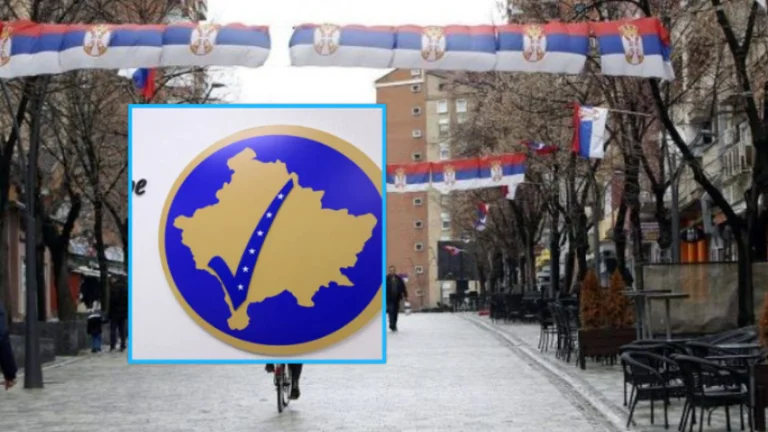
Periskopi(3 years ago)
(3 years ago)The Kosovo government is expected during the next week to complete the underground acts that pave the way for the petition for the dismissal of mayors in northern Kosovo and the proclamation of new elections. By this document, rules on how to organise the petition are expected to enable citizens of municipalities to sack [the] mayors.
The Kosovo government is expected during the next week to complete the underground acts that pave the way for the petition for the dismissal of mayors in northern Kosovo and the proclamation of new elections.
Through this document, rules on how to organise the petition are expected to enable citizens of the municipalities to sack their mayors.
But Albanian and Serbian analysts say the petition is not expected to solve the problem in northern Kosovo.
Serbian politician from Northern Mitrovica Ognjen Gogic tells the Voice of America that Serbs will not submit to the petition, because according to him they do not want to participate in any election without their demands being met.
“So the Serb community in the north does not want to participate in the new elections regardless of how it will go through petition or whether through the resignation of mayors. As for the petition Serbs will not participate in collecting signatures because it means returning to Kosovo institutions, which still does not want why some conditions that have been presented” have not been met, he said.
Eugen Cakoli from the Kosovo Democratic Institute says the government document is not sufficient to enable the development of procedures and that it conflicts with the law on local self-government. He says going to the polls through the petition will delay the election process as a whole.
“Problemic is the fact that it takes to manage such a process as a whole and to have new mayors in northern municipalities can take at least four to six months if all nominal procedures are followed as provided with administrative guidelines and then on the basis of international norms and standards on what period the voting process for the removal of”, he said.
The new elections in the north are part of steps to reduce tensions that erupted after Albanian mayors who emerged from the April 23rd elections boycotted by Serbs were sent to northern municipal offices with police support.
Calolli says the best solution would be to resign the current mayors, since through the petition there is no guarantee that Serb community's participation in the departure of the mayors could be followed even by participation in the election of new mayors.
“We will thus be able to reach the point when even though a voting process is administered and procedures are carried out in fact only go back to the same point where new leaders are potentially elected from the ranks of other communities other than the Serb communities and who are then expected back to be dismissed on the part of Serbian citizens, given how compact they are in demographic terms but also that of pushing from the Serbian List or Belgrade's officials to vote for the removal of the current mayors”, he said.
Early in June, the European Union called for lowering tensions through the suspension of police operations in the north, the shift of mayors to alternative offices, and the proclamation of early elections with unconditional participation of Kosovo Serbs.
The Kosovo government has already halved the presence of police units in municipal buildings in the north and has agreed to organise new elections.
Politologist Gogic says Kosovo and Serbia leaders are wanting to keep the crisis in the north as long as possible so as not to meet the obligations they have pledged.
So this situation, as it's not much more dramatic, so it's now patient, it's not at the level that some violent incidents can occur, I think that's for Pristina, Serbs in the north and Belgrade because this situation in the north allows both Belgrade and Pristina not to meet the obligations that come out of the Brussels and Ohrid” agreement, he said.
Gogic says the best way to overcome the crisis in northern Kosovo is through increasing pressure from Western countries by suspending visa liberalisation for Serbia and Kosovo.
The European Union has warned for 14 September a high-level meeting between Kosovo and Serbia in Brussels, where solutions to the current situation between the two countries will be sought. / VOA