23 minutes ago
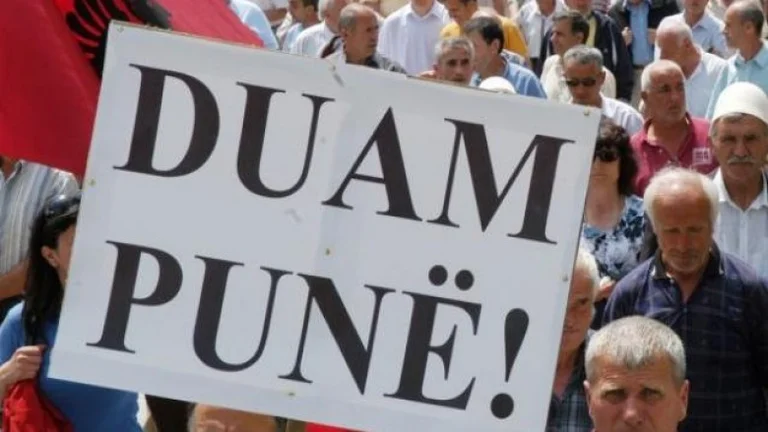
In Kosovo unemployment, lack of workers and people who refused to work
Periskopi(3 years ago)
(3 years ago)A May International Labor Day finds Kosovo at the lowest unemployment rate compared to previous years, but with a lack of workers in some sectors. From 45% the unemployment rate in 2008, when Kosovo declared independence, it has dropped to nearly 17 percent in [...]
From 45% the unemployment rate in 2008, when Kosovo declared independence, it has dropped to nearly 17 percent in the first quarter of 2022, the latest data of the Kosovo Statistics Agency (ASK) shows.
Data for the whole of 2021 shows that unemployment rates have been over 20 percent.
According to the AKS, out of over 1.2 million working-age citizens, over 380 thousand are employed, over 77 thousand are unemployed and over 750 thousand are economically inactive, which means they are not employed, nor are they registered as unemployed, nor are they looking for jobs.
In spite of these figures, employers have reported especially in recent years difficulties in finding workers for certain positions.
Businesses in the agriculture, gastronomy, construction and textile sector have mostly faced this problem.
On online platforms that require workers, there are currently thousands of free jobs.
Only on the Kosovo Government's éuperpuda platform, which has been set up in February for youth employment, have nearly 5,000 free jobs been issued within two months.
Business doors and windows have also become frequent proclamations that require workers.
What's the interest in working?
With a lack of workers especially facing the private sector, which is also the largest employer in Kosovo with over 220 thousand workers.
The citizens' interest in working in this sector has dropped for several reasons. According to Labour Inspectorate data and some surveys conducted by private sector's Radio Free Europe workers, they have complained of low wages, disrespect of working hours, deprivation from rest, etc.
Over the years, we have warned that the private sector is not being treated closely either under the Law. In a lack of respect for rights, many workers have resigned from work”, has told Radio Free Europe, Yusuf Azemi, chairman of the Independent Private Sector Union.
About 105 thousand workers receive minimum wages
The minimum wage in Kosovo ranges from 130 to 170 euros. According to a study conducted in 2022 by the Institute for Advanced GAP Research, an estimated 105 thousand workers are paid.
They mainly work in the retail and trade sector, in the processing industry, in gastronomial, in financial and security activities, in construction, etc.
The Kosovo Assembly, on 14 June last year, has voted in principle a bill that paves the way for the growth of the minimum wage -- from 130-170 euros as it currently is, to 264 euros gross, or 250 euros net.
This bill has not yet been adopted in the Kosovo Assembly.
According to the European Statistics Agency dealt with Eurostat, Kosovo is the country with the lowest minimum wage in Europe.
The average salary in Kosovo in 2021 was 484 euros.
In early February of this year, the new Law on Salaries has been enacted in Kosovo, which has brought growth to nearly all public sector employees. Authorities have said that by this law, the average salary will reach up to 730 euros.
Skilled in Kosovo, Targeting EU Market
Many young people in Kosovo, over the years, have been skilled in various professions at the Employment Agency . .
Through its seven centres in different Kosovo municipalities, this agency provides training for over 30 profiles of various professions, including moth, bricklayers, plasterers, cooks, bakers, then for welding, business management, hairmaker and others.
But many young people who are skilled at these centres leave Kosovo to work abroad.
Leaders of these centres have declared for Radio Free Europe that many of them target the European Union market.
The trend of migration of Kosovo citizens, according to official figures, is on the rise.
According to the AKS, in 2021, over 42,000 residents left Kosovo. In 2020, when the Corleone pandemic broke out, over 8,000 emigrated from Kosovo; in 2019 over 34,000; in 2018 over 28,000.
The reasons for migration have been different among them, including employment.
Lack of workers has then forced some businesses in Kosovo to seek workers from abroad.
In October of last year, Radio Free Europe has reported to the company BARViprit '% from Mitrovica, which has employed workers from Bulgaria, Turkey and India to provide printing services.
How does the lack of workers affect the economy?
Economic associations in Kosovo, which represent businesses, have warned that lack of workers will become one of the main obstacles to economic growth in Kosovo.
“To ease the problem, efforts must be made from all over ʹfrom institutions to employers, who have to examine, above all, the salary level”, the executive director of the American Economic Ode in Pristina, Arian Zeka, has told Radio Europe Free.
Kosovo has been facing economic problems for years. Economic growth in 2022 has been 3.5 percent.
According to World Bank Group data, Kosovo is expected to grow 3.7 percent in 2023.
Promoting economic development is expected to mainly be private consumption, exports and public investments.