6 minutes ago
EU enlargement: Attitudes for Serbia, Kosovo
Periskopi(3 years ago)
(3 years ago)The EU will speed up the membership process for the six Western Balkan countries. But there are major obstacles: slow reforms, old hostilities and the reluctant EU. The BE foreign ministers at the meeting in Brussels invited their six counterparts from Western Balkan countries for an informal lunch. The theme is the same [...]
The EU will speed up the membership process for the six Western Balkan countries. But there are major obstacles: slow reforms, old hostilities and the reluctant EU.
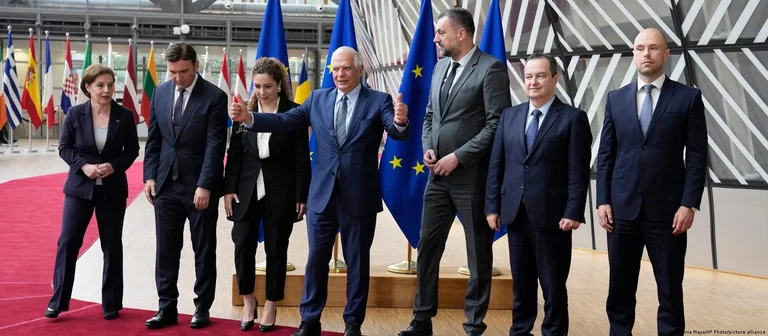
The BE foreign ministers at the meeting in Brussels invited their six counterparts from Western Balkan countries for an informal lunch. The theme is the same as always: How can membership talks, lasting for years and decades, be accelerated?
Monday's lunch (22.05) was also held under this motto and was important for a serious assessment of the situation, especially in the context of the EU summit with candidate countries for membership and their neighbours, which next week in Moldova. “Perhaps we should do it more often this”, EU foreign policy officer Josep Borrell said, but also while also drawing attention to Serbia and Kosovo.
Pro-rus residence excludes membership
Serbian Foreign Minister Ivica Dacic stressed that close relations with Russia no longer adapt to EU membership. Russia, which wage war against Ukraine, will face tougher sanctions from the EU, which will not be accepted by Serbia. “You hurt your national interests, but the stance is not in line with the enlargement process”, called attention to Josep Borrell. “Close relations with Russia no longer go, and that is not only for Serbia. ”
With Serbia, Montenegro, Albania and Northern Macedonia, the EU is holding membership talks. Bosnia and Herzegovina is a candidate for talks, but is still seen as unstable. Kosovo has not yet been recognised by either Serbia or the five EU member states, so it is only a possible candidate for membership. For some of you, there will be <x0 strategic decisions” of the EU, Josep Borrell said, but not for those who accept Russian aggression policy.
Finally become “enemies and partners”
The conflict between Serbia and Kosovo in recent months has escalated from time to time and, in Borrell's opinion, blocks any progress in membership talks. The EU states are unwilling to accept states, which are unable to resolve their conflicts, are said by EU diplomats in Brussels.
Borrell said he told both sides that states that in the past have fought each other can become friends and partners. It's about coexistence. Therefore, Pristina and Belgrade must finally implement the EU-brokered agreement.
A lesson from Ukraine?
At the summit next week, new candidates for Ukrainian membership and the Republic of Moldova will also be represented, which due to the Russian offensive war last year received the candidate country's preferential status in record time. Governments in Kiev and Chisinau hope that official membership talks will also be launched during the year. If this is achieved, then Ukraine and Moldova within 20 months will realise what the Balkan countries have not achieved in 20 years, EU diplomats in Brussels say.
This could create a kind of envy or competitive position in countries in the membership process. The EU Commission in the progress report estimates the remarkable progress Ukraine and Moldova have achieved in fighting corruption and legal state reforms. In the Balkans it seems that they have all lasted much longer. “Ukraine is advancing, others must follow this path and take advantage of the” perspective, the EU's foreign policy officer stressed.
German Chancellor Olaf Scholz in his address to the European Parliament in Strasburg in early May called for speeding up the membership process. Such a process cannot be accepted for 20 years. This is also about credibility with EU promises, according to him. The Chancellor also stressed that the EU itself must be reformed to be able to afford enlargement. / DW