23 minutes ago
Ker-Lindsey: Agreement hard to reach between Kosovo and Serbia without mutual recognition
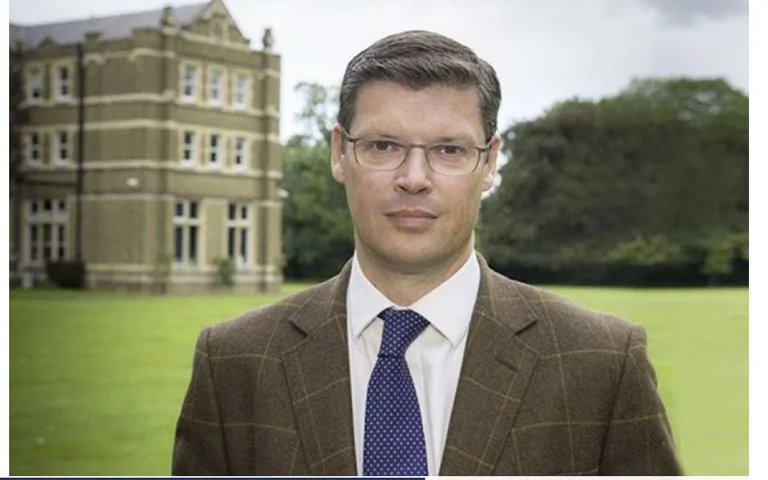
Periskopi(3 years ago)
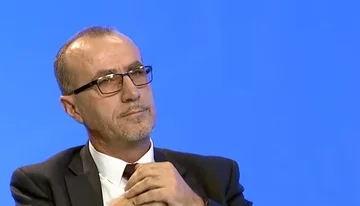
(3 years ago)The mutual recognition between Kosovo and Serbia should be the focus of the agreement between the two countries, James Ker-Lindssay, professor at London School of Economics, said in an interview for the Balkan Radio Free Europe Service. He believes the European Union's current plan for normalising relations is not a step towards achieving [...]
He believes the European Union's current plan for normalising relations is not a step towards reaching a final and sustainable agreement.
The European Union's proposal, known in public as the Franco-German plan, has been handed over to authorities in Kosovo and Serbia late last summer.
This proposal, in which there has been access to Radio Free Europe, envisions equal rights for Kosovo and Serbia, respect for territorial integrity, border invisibility, recognition of state symbols and a special arrangement for the Serb community in Kosovo.
Radio Free Europe: Joint efforts by the European Union and the United States have intensified recently so that Kosovo and Serbia can accept the proposal for normalisation of the reports. Serbia's President Aleksandar Vuciq will participate in a parliamentary session, where he will try to create consensus with opposition parties on the plan, while Kosovo Prime Minister Albin Kurti sees the plan as the initial framework for negotiations. According to you, how close or far are Kosovo and Serbia to reach the final agreement?
James Ker-Lindsey: It's obviously hard to say, and I think the next point to be raised is that, even if the plan goes away, it's not exactly the final agreement. I mean, I still leave Serbia's position on Kosovo open. It doesn't solve it. Some may say that it is a step forward. I know that argument. I'm actually pretty critical of this plan, because I don't think it's quite ambitious. I think I understand why both Serbia and Kosovo will feel very unhappy about this.
Some would say, well, look, this is actually a really good basis for another step. If both sides say, well, that's not really what we would like, but we think it's something that's moving things forward. See, the European Union, the United States can see this as a positive result, especially, in my opinion, because they feel that the parties do not want it.
But after all, I don't think this is a particularly effective agreement. I see it as something that was created more by disappointment than anything else, as Europeans see this as an important issue of concern about Russia's influence in the Balkans, and have said to try and see what we can do. But I really understand why both sides will be dissatisfied with him.
The question is, of course, by the Serbian side, if the president [Vuchic] thinks he can convince the opposition of this, because it will effectively be a very significant step if it is to take place, which will leave Serbia in a nominal position [...general ideas are just names without any relevant realities...].
But I can also understand why Kosovo is very unhappy about it, because it is not giving them the guarantees of recognition they definitely want to have. So a very long answer, but I would say it's very difficult to say how close the parties are to a final agreement, because that's not really a negotiation between the parties. This is a negotiation between Serbia and the European Union of the United States, and between Kosovo and the European Union and the United States. It is not a essentially agreement between Serbia and Kosovo.
Radio Free Europe: Yes, but we are witnesses, especially at the end of 2022, that a number of European Union and United States officials have underlined that Kosovo and Serbia, instead of sitting down and negotiating, are going from one crisis to another, without any concrete steps in dialogue. Could this then be an incentive that would actually change this situation and bring both sides to the table to negotiate with each other?
James Ker-Lindsey: See, in my view this is a plan that has no ambition within itself. Clearly, we have a problem between Kosovo and Serbia. We are on the eve of the 15th anniversary of Kosovo's declaration of independence by February 2008. I don't think anyone thought we'd find ourselves in the situation we're in today.
So you know, if you'd asked me 10 years ago, the situation seemed much, much more promising than today. I also think that the situation is at the point where someone can say this proposal is a step forward. But I really don't think this works for the final issue. Both Serbia and Kosovo need a final solution. And that should mean that both sides must accept the reality before their eyes. What I mean is that whether Serbia likes it or not, and I believe most senior officials in Serbia know it well, is that Kosovo has lost it.
The best and most reasonable result is to be able to accept this and say, well, okay, we will recognise Kosovo. It's a painful decision, but we will. But in exchange, we should have iron guarantees that the status of Serbs in Kosovo will be protected, that they will be allowed to have a special relationship with us, and that religious objects will also be protected.
And I think the European Union, instead of pushing for this kind of piece, should say, well, okay, the association will rise, but there will be no recognition issues. I can understand why many in Kosovo are disappointed, but I also understand why many in Serbia are very unhappy with the idea that Kosovo will join more international organisations, potentially the United Nations.
Because if we are really honest, if Kosovo enters the United Nations, then if Serbia does not recognise it, Serbia will seem ridiculous. I mean, effectively, it will look like someone sitting in a corner, while Kosovo enjoys the party.
It will be, with all intentions and goals, a fully recognised state on the world stage, and Serbia will be the only country that does not recognise it, which would be a very strange and ridiculous position for Serbia. So in many ways, it would make much more sense if the European Union had entered and been more ambitious and meant, well, what can we do to put a line on this issue?
Says what to do? Serbia, we need to move to the position that you should recognise [Kosovo independence] and that we know how difficult it is, but what we can do about it. What can we do in Kosovo? What we can do to speed up the path to EU membership. What can we do to increase investments in Serbia? So, a big plan to solve this. Because I don't think this plan we have on the table solves anything. It will give neither Serbia nor Kosovo what they want. So, I think it's a temporary solution, but it doesn't solve the problem.
“Both sides are under considerable pressure”
Radio Free Europe: However, with both sides, as you said, dissatisfied with the decisions they must make to accept this plan, would that not, in fact, be the definition of compromise? Meanwhile, both senior officials said there is some kind of pressure on them, in fact not pressure, but now we have details. So Kurti and Vuchchi agreed that there is pressure on them to accept the deal. Which part is under greater pressure? Serbia or Kosovo, do you think?
James Ker-Lindsey: Well, I think it's important to mention that I say this as someone who has worked on many peace processes over the years and I have a lot of practical experience in this, and that this is my academic field of study, conflict resolution. So I think it's important to say that some are going to say, good “, if they're both unhappy, then that's a good sign”. No, I think it's a little more sensitive than that. We have peace processes where science comes out and says, look, we're unhappy with X, Y and Z, but in general, we can live with it. That's not the kind of deal. I think what we're going to see here is dissatisfaction, which actually doesn't solve the problem, rather, raises problems.
It doesn't solve this case. It simply offers a short-term way to try and alleviate the situation. We need a great solution where, as I say, both sides can come out of it and say, look, this is not necessarily exactly what we would like, but we can live with it. There are elements we don't like. But in general, you know what? That solves the problem. And Serbia, and in this case, Serbia and Kosovo can continue and simply start living as neighbours and work with each other and set a line on the whole issue.
And I just don't think this [US-EU] plan meets the need.
As for which side is under more pressure, I think both sides are under considerable pressure on this. I think it's a question of which side you think is more willing to compromise, given this pressure. And for now, it's probably going to seem like Belgrade is the one that looks more open to say, look, you know what, we really don't like that. But the alternative, the loss of investments, is very serious.
Kosovo, on the other hand, wants to say that the statements we are looking at by Prime Minister Kurti may not seem to feel he is not in this situation. He's taking a much tougher position. It could happen that Belgrade will see it [the Kurt] and say, it will block it, and if we say we will continue with it, then maybe this is a chance for us to gain some praise and support in European capitals by appearing as a more moderate party, knowing how much Pristina rejects this agreement.
I'm not generally impressed by all of this. I see a lot of problems in implementation, even if it goes forward. I don't think it's the end of the road, I think we need a big deal that actually solves all these issues, and makes both sides sit down. I believe that both Belgrade and Pristina, and the international community, should think about what the fundamental issues are, what are the fundamental problems, that are not really addressed in this situation. And then say what we can really offer both sides so that they can line this issue and accept each other as equal states, respecting minority rights, which Serbia will see in its community in Kosovo.
“Note would be a key part of each solution”
Radio Free Europe: If mutual recognition were within this proposal that is on the table now, would you consider it more applicable, optimistic? Do you see that mutual recognition should be focused right now, and that is, let's say, the starting point for the final agreement?
James Ker-Lindsey In a word, yes. I think we should aim for this. Now, I know how difficult this is for Serbia. I have written a lot about Kosovo. I have written about Serbia's campaign to prevent recognition of Kosovo.
But I think the reality now is that after 15 years, after Kosovo was recognised by half of the United Nations countries, and if we are to be honest, that even if it is possible [Kosovo] to say tomorrow “Okay, well, we will give up our independence. But to join the Serbian state, we want X, Y and Z, including a third of all MPs. We want seats on the cabinet table. We want to have the opportunity to be the next deputy chairman of”, things we would talk about in other situations. Cyprus, for example, is a case that I know. I think ordinary Serbs would refuse that. They would not want Kosovo to return within the Serbian state that way.
But I understand why many in Serbia feel very unhappy about the way Serbia lost Kosovo. I fully understand that. But the reality is, 15 years later, it makes sense for Serbia and Kosovo to accept each other.
So, yes, recognition would be a key part of any solution, but at the same time, a key part of any solution would have to be the acceptance of the right of Kosovo Serbs to have a degree of autonomy for themselves.
So in many ways, what is being proposed right now is part of the way there. The Association of Serb majority municipalities is being offered, which I think is an important element in any final solution, but is not balancing it with full recognition. And here I think the focus should be on reaching, as I say, a final agreement.
Because all these other problems, the issue of license plates, ID cases, all disappear overnight if Serbia and Kosovo recognise each other as states, all you can handle is much easier, much more effectively when you overcome that obstacle.
So I think we're where we're at. I understand why many in Serbia are disappointed, but frankly, I think such a solution would just make more sense, because we would leave many of these issues open with the current proposal at the table and we would turn into endless little negotiations on X, Y and Mr. That just doesn't solve the problem. Or it certainly does not solve the problem as I see it, as a person who has worked on these issues for a very long time.
Radio Free Europe: You mentioned something when we started talking about the influence and influence of the Russian occupation in Ukraine of the US's joint EU efforts to approach the agreement between Serbia and Kosovo. So, to what extent do you think the Russian invasion in Ukraine has increased these joint efforts to facilitate the reach of the final agreement between Serbia and Kosovo?
James Ker-Lindsey: I think it had a big effect. I think the Russian invasion of Ukraine has obviously made us focus even more on European security. I think there's been a lot of frustration, to put it gently, in Serbia's position. And the fact that Serbia is the only European country that has not imposed sanctions on Russia, this really stands out. I think this has actually badly tarnished Serbia's reputation. And at a time when Serbia, of course, would like to improve its position internationally, has done much harm.
Radio Free Europe: What will Russia lose after agreement is reached? What kind, say, discontent will create for Moscow? Will it lose its main policy of influence in the Western Balkans? Will this deal be Russia's loss in the Western Balkans?
James Ker-Lindsey: Not according to this deal. And in fact, the big question that Kosovo definitely has in this is what it says, okay, Serbia will not prevent Kosovo from entering international organisations. But that is not the same as winning around Russia to allow Kosovo to join the UN.
Many in Kosovo would say, well, look, we will make this agreement with Serbia, but we cannot be sure that Russia will allow it, that Russia will then give the necessary recommendation from the Security Council, which will allow the General Assembly to then vote for Kosovo membership. So we're going to give the Association, but we're not going to get what we really want out of this. And that's the reality. It is very difficult for Russia to block Kosovo from membership in the United Nations.
If Serbia has said, we now know it, only Russia can still do it, but it would be much harder for Moscow to do that if Serbia then said, see, this is the situation. So without knowing Serbia, even if Del Grey says, don't block it, which I just can't see happening, then I think Russia would say, well, you know what? We're going to do this because we have some issues we want to deal with. It is much harder for Russia to be able to say that if Serbia says that we have now recognised it as an independent state, it is time for it to become a member of the United Nations.
So, as this agreement stands, there really is no difference to Moscow. I can't see Moscow changing its position. The only way Moscow will be placed in a tougher position for this is if Serbia goes for recognition.