14 minutes ago
Serbian NGOs go against Kosovo civil society, visa became
Periskopi(3 years ago)
(3 years ago)Fifteen civil society organisations of the Serb community in Kosovo have rejected calls from civil society in Kosovo, for the European Commission to withdraw a proposal that requires Kosovo citizens who have Serbia's passports, the visas are removed. Earlier on November 21st, the Government of Kosovo and more than 20 nongovernmental organisations [...]
Fifteen civil society organisations of the Serb community in Kosovo have rejected calls from civil society in Kosovo, for the European Commission to withdraw a proposal that requires Kosovo citizens who have Serbia's passports, the visas are removed.
Earlier on November 21st, both the Government of Kosovo and the Government of Kosovo, as well as over 20 non-governmental organisations in Kosovo, demanded that the European Commission reconsider this proposal, while Kosovo expects visa liberalisation to start implementing it on January 1st, 2023.
Through a letter sent to the European Commission on Internal Affairs, Ylva Johansson, over 20 civil society organisations in Kosovo, said this EC proposal would seriously challenge the advances in the integration of Kosovo Serb citizens” through Kosovo documents and “do inciting and encouraging criminal structures operating in the northern part of Kosovo to continue with threats and rowing of Kosovo's citizens aiming to integrate into the country's social and political life “
But, non-governmental Serb organisations said arguments that lifting the visa regime for Kosovo Serb citizens, which have Serbia's passports preventing their integration into Kosovo, “do not stand and are insulting”.
“No more Kosovo Serbs will be integrated if equipped with Kosovo passports than the number of those already owned by Kosovo. This stems from the fact that passports cannot be taken without identification and confirmation of citizenship. In other words, a person who gets a new passport already has citizenship and thus is already integrated”, said in the response of 15 Serbian non-governmental organisations.
Serbian NGOs said that Albanian non-governmental organisations addressed to the EU on this issue are the very ones that have raised their voices for years against the unjust isolation of Kosovo citizens “and are now essentially demanding the same thing: the isolation of a very small number of people”.
What has the European Commission proposed?
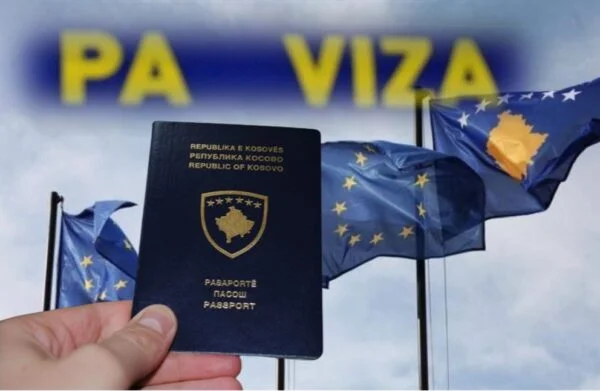
In mid-November, given visa liberalisation for Kosovo citizens, the European Commission proposed that visas be removed for the passport carriers of the Republic of Serbia, who reside on Kosovo territory.
To include passport carriers leaving a special office in Belgrade (co-ordination office) The commission has proposed changing the decision on visa liberalisation for Serbia.
Serbs from Kosovo have the right to own Serbia's passport, which has received visa liberalisation in 2009. However, at the request of the EU, it has had to form an Co-ordination Administration for issuing passports to those with addresses in Kosovo. In April of this year, the EC had stressed that approved visa liberalisation for Kosovo applies only to Kosovo passport owners, and not to those citizens who have Co-ordination Administration passports, which work within the framework of Serbia's Ministry of Internal Affairs
At that time it was estimated that the danger exists from mass migration as well as some security issues.
In his proposal, the European Commission has argued that there is already no reason why it was decided that Kosovo's Serb residential Republika Srpska passport carriers could not be able to travel without visas, unlike Serbia's citizens with residence in Serbia.
What did the Kosovo government say?
On 21 November, Kosovo Deputy Prime Minister Besnik Bislimi said he has turned to the EU, demanding that he review the proposal on the issue of lifting visas for Kosovo citizens who have Serbian passports.
“The illegal passports issued by Serbia's Co-ordination Centre consider municipalities within Kosovo as part of Serbia's jurisdiction, violations of our sovereignty and unacceptable”, Bislimi said.
He said the Kosovo government is already applying an accelerated procedure for equipping all Serbs in Kosovo with passports. According to Bislim, more recently citizens' interest in passport equipment and “compared to last year, we have a 29 percent increase of”.
From 1 January 2024 Kosovo citizens are expected to travel visa-free to 27 EU countries, which make up the so-called Schengen zone.
After visa liberalisation for the bearer of biometric passports of the Republic of Kosovo goes into effect, Kosovo-based Serbian passport carriers, if the EC proposal does not live, would remain the only one without the possibility of visa-free movement. / REL