9 minutes ago
EU <x0) Serbia: Ties with Moscow Question European Integration
Periskopi(3 years ago)
(3 years ago)The European Union (BE) has addressed a series of criticisms to Serbia due to maintaining close and high-level ties with the Russian Federation. In the EC Progress Report for 2023, published Thursday, Brussels has stressed that these relations have raised questions about Serbia's strategic orientation. Serbia from [...]
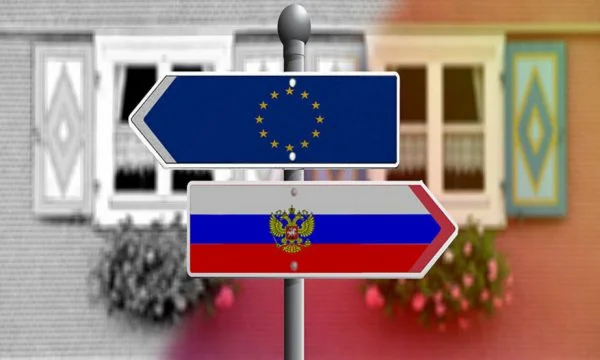
The European Union (BE) has addressed a series of criticisms to Serbia due to maintaining close and high-level ties with the Russian Federation. In the EC Progress Report for 2023, published Thursday, Brussels has stressed that these relations have raised questions about Serbia's strategic orientation.
Serbia has started membership talks with the EU since 2014, and, according to the negotiating framework, Belgrade is expected to progressively bring its policies to third countries with EU-endorsed policies and positions, including restrictive measures.
Serbia continued to develop intensive relations and strategic partnerships with a number of countries worldwide, including maintaining relations with Russia and China. Summit contacts and bilateral visits from Russia were held, though with reduced frequency, raising questions about Serbia's strategic orientation. In October 2022, Russia's deputy foreign minister visited Belgrade, where he hosted a meeting of Russian ambassadors stationed in the region. In April 2023, members of the Russian top room, the Federation Council, which is on the list of EU sanctions, were received by the Serbian chief parliament, MPs and Minister of Public Administration and Local Power. The Russian ambassador was often and regularly expected by the president, the First Deputy Prime Minister and Minister of Foreign Affairs and the Minister of Energy. In May 2023, the head of the National Security Information Agency attended the 11th Moscow International Security Conference. Serbia's first Deputy Prime Minister and Foreign Minister announced that he will visit Moscow by the end of 2023. The Serbian president met briefly with the Russian president in the margins of the Belt and Road summit in Beijing in October 2023x1>, the report said.
Serbia, highlighted in the document, Serbia's harmonisation scale with European foreign policy was 46% in 2022 and 51% in August 2023. Serbia's “certain actions and statements were against EU foreign policy positions. Serbia is expected to improve, as a priority issue, its approach to the EU's Common Foreign and Security Policy, including EU restrictive measures, and to refrain from actions that clash with EU foreign policy positions”, the Report says.
Political and economic influence on the media remains a source of concern for Brussels. Therefore, the EU recommends that Serbia take urgent action to reject anti-trautral narativa - The EU, propagand by numerous media and reject manipulation and external intervention in the context of Russia's fight of aggression against Ukraine.
Russia's “International Canal Today (RT) in English was not banned by the REM and is still broadcast in Serbia on cable TV. Besides, in November 2022, RT launched a local multimedia platform of the Serbian-language RT, also hosting government representatives in its video format. The media also promoted military recruiting for the Wagner paramilitary group, which is banned under Serbian legislation, but was not attended by prosecutorial services. These media, along with Sputnik Serbia and other local media, produce and distribute content that manipulates the information environment in Serbia. Such content has echoed in a large part of the major media in Serbia and in the region more widely”, the report said.
According to Brussels, additional efforts are needed to investigate and prosecute foreign fighters' recruiting networks, especially in the context of Russia's fight of aggression in Ukraine.
Serbia, according to the report, remains dependent on its only gas supplier Gazprom and the control of the Russian majority on gas infrastructure and Serbia's oil industry.
Serbia must take further steps to reduce this dependence on Russian fossil fuels. Serbia is encouraged to start the necessary steps to harmonise with the EU Rule for Gas Masagamination and meet the obligation to certified gas storage operators until the first quarter of 2024”, the document said.
Otherwise, the EU remains Serbia's largest trade and investment partner, representing 58.7% of total trade and 32.9% of foreign direct investment inflows in 2022. Total trade between the EU and Serbia increased by 27.7%, either from 30.6 billion euros to 2021 to 39.1 billion euros in 2022. After the EU, Serbia's main trade partners in 2022 were signatories of the Central European Free Trade Agreement (10.3% of total trade), China (8.7%), Russia (5.8%) and Bosnia and Herzegovina (5.3%). /Gepost