22 minutes ago
Why, according to Artan Mustaf, would the autonomy of Serbs in Kosovo be the largest in Europe?
Periskopi(3 years ago)
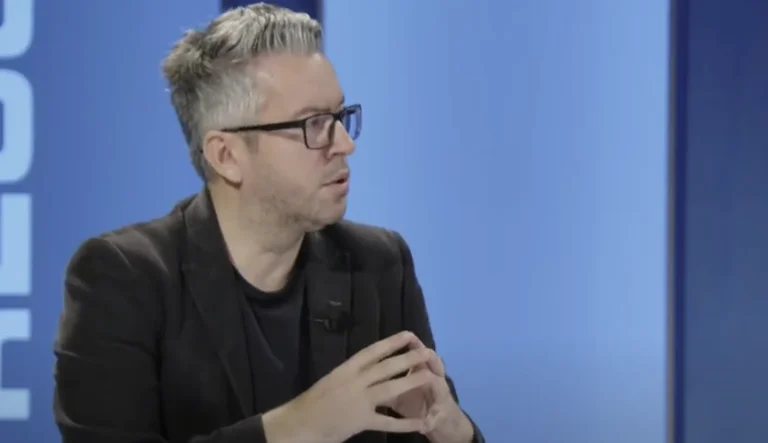
(3 years ago)Scholar Artan Mustafa, on the Pressing show concerning the draft Association and the entire process of dialogue, says that it is clearly about autonomy. Below, Periscopi brings his statement to Pressing: From the perspective of political science, it's important to analyze the institutional structure, the actors involved and the capacity to reach [...]
Below, Periscopi brings his statement to Pressing:
From the perspective of political science, it's important to analyze the institutional structure, the actions involved and the capacity to reach the actual results.
Rama's proposal is probably part of the effort to create the climate of discussion on the statute, to create the atmosphere.
The brokers' agenda, in these talks that began in 2013 and continue to mean their peak is the Brussels and Ohrid Agreement, in essence it is the creation of an entity, an asset that has elements of territorial, cultural, personal autonomy.
So it comes to creating an entity that is the basis of the will of the Serbian population here and their political, symbolic, thirst representation.
That would be the biggest autonomy in Europe because if it is created without the recognition of five EU countries and without Serbia's recognition normalisation, it does not solve the problem of protecting the minority of a country with which you have problems, as it has been resolved in many European states.
It is much less than Germany's 1972 agreement because in 1973, East Germany is joined by the United Nations.
So weep on the side of formal recognition, it's much less. In that sense this is the most negative development since 1999.
From 2013 to 2023, it's the worst deal.
This is the last phase of Kosovo's liberal statehood project. Kosovo has emerged as an independent state from international statehood.
There are few countries that are completely of origin.
I'm sure this autonomy project has existed since 1999. If we look at the cantonisation project, decentralisation, partitioning Mitrovica to the point of coming, certainly on the way, problems have been presented, which Serbia resists making recognition, etc.
A criticism that would have to become Western centres is that these autonomys in Southeast Europe do not have the stability and often the same effect as in countries with cosolated democracy.
Most democratic states, consolidated, have autonomy or federalism, so they have regulated their ethnic problems, but in the context of Southeast Europe, for example, you have seen it in Crime, Oate, Abkhazia, etc., these have often led to wars and the context is different.
However, the international community has great power, control with NATO troops, economic power, propagandistic, the leverage for Kosovo's integration, potentially the impact of recognition by the five countries, which make the leading actor in this picture.
The Kosovo government has instruments in its hands, has power and now from today's perspective when life in Kosovo and political organisation is looking very difficult, we can turn to commend leaders who have been even further, I have no dilemma that the Government of Kosovo has said to make as little compromise as possible, but there are limits.
As I see, from the perspective of internationals, they see the full legitimacy that the Government of Kosovo has and we have entered the implementation phase. /Periscopi/