23 minutes ago
Tensions in the north with negative impact on Kosovo economy
Periskopi(3 years ago)
(3 years ago)The successive riots in northern Kosovo ʹ the Serb-run populated area have led international investors to hesitate to extend their capital not only to Kosovo, but throughout the Western Balkans region, Kosovo's Free Europe Chairman Lulzim Rafuna tells Radio Free Europe. “Why one [...]
The successive riots in northern Kosovo ʹ the Serb-run populated area have led international investors to hesitate to extend their capital not only to Kosovo, but throughout the Western Balkans region, Kosovo's Free Europe Chairman Lulzim Rafuna tells Radio Free Europe.
“Why is an event, a tension in one country has an impact on the entire Balkans? Because we are small countries and every investor coming to invest, the Balkans see it as a single market, a market of 17 million or 17 million consumers, Rafuna says.
Kosovo's north remains a hotbed of tensions since the post-war, in 1999. Some 50,000 Serbs living there do not recognise Pristina institutions and view Belgrade as its capital.
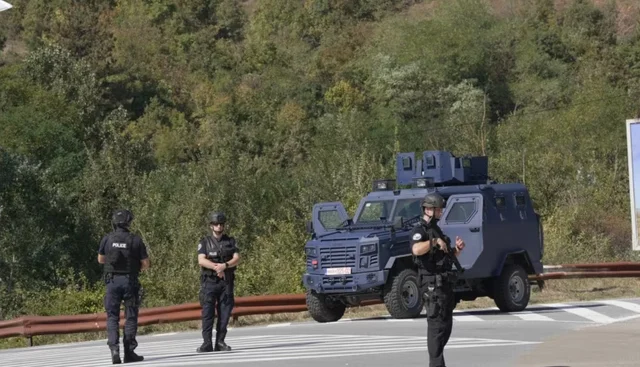
Tensions have reached a peak on 24 September, when armed groups have attacked Kosovo police, killing a sergeant.
Three supporters of Serbian nationalism have also been killed in the subsequent shootout.
Kosovo has blamed Serbia for the attack, but Serbia has denied it has a finger.
The last “case in northern Kosovo may have prompted investors to suspend or postpone their investment” for a time, Rafuna expresses conviction.
His arguments are also supported by the executive director of the Council of European Investors in Kosovo, Emrush Wolfani.
He says that every time it is talked about the possibility of the arrival of any foreign company in Kosovo, the topic of the north prevails.
The situation in the north is an obstacle to each citizen, leaving it to a potential investor, which would extend its capital”, says Wolfan.
Arrian Zeka, executive director of the American Economic Ode in Kosovo, says this is a problem that has been accompanying Kosovo since the post-war.
The foreign investors have not seen Kosovo with a good eye at these 24 years”, he says.
Always connect it to images of the conflict of war. Unfortunately, their perception continues to get worse every time there are tensions in the northern side of”, Zeka says Radio Free Europe.
At each meeting with potential international investors, he adds, most of the time is spent on repairing damage that makes tensions in the north Kosovo image.
Security as a concern is also highlighted by some investors who have previously talked about the REL.
The Investment and Support Agency of Enterprises in Kosovo (KIESA) did not respond to REL's interest in reactions that have shown current and potential investors following recent tensions in the north
K IESA is the state institution that has a mandate to protect and support foreign investment.
For 15 years over 4.5 billion euros in foreign investment
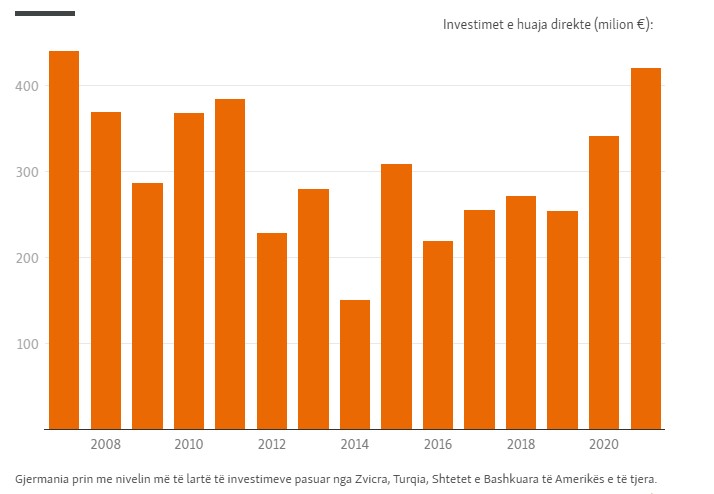
Within the past 15 years, the value of foreign direct investments in Kosovo amounts to over 4.5 billion euros. The real estate sector represents the sector with the highest participation in the foreign direct investment facility, followed by the finance and security sector.
Few Foreign Companies
From the Central Bank of Kosovo data shows that since 2008, when Kosovo has declared independence, the value of foreign direct investment has reached nearly 5 billion euros.
Investments have been focused mainly on the real estate sector, then on finance and security.
But according to the CEC, their greatest value is attributed to the Kosovo diaspora.
“We don't have corporate investments that have a global name”, Zeka says.
According to him, Kosovo needs investments that affect the creation of stable jobs and, therefore, economic growth.
According to Kosovo Statistics Agency data, the number of companies registered in the country in 2022 has been 11.024.
Only 49 companies have been registered as foreign companies.
According to the AKS, they are small, since the number of employees in them is less than ten.
Meanwhile, in the first quarter of this year, but according to the AKS, the number of registered foreign companies has been 16.
EU Penalties
The situation in the north has further impacted Kosovo's economy, as the European Union has undertaken several punitive measures against the country in late June.
This, since the Kosovo government has not convinced them, according to the international community, its demands to expand the situation in the north.
These measures have included suspending funding programming for Kosovo, including those from the IPA "The Instruments for Pre-EU Membership" and the Western Balkans' Investment Framework.
The European Union's Office in Kosovo tells Free Europe Radio that these measures are not expected to have a direct negative impact or to produce financial losses for businesses, but, however, “ato have suspended signing new contracts, which would have created a potential value for businesses in Kosovo”.
Free Economic Zone in the North
For the normalisation of reports between Kosovo and Serbia, US Special Envoy for the Western Balkans Gabriel Escobar, in December last year, has come up with the idea of creating an economic zone in northern Kosovo.
But the idea remains as such, since no step has been taken in practice.
Commenting on it, Zeka, from the American Economic Oda in Kosovo, says that economically focused “wherever there are interethnic tensions, certainly is the best and longer-term solution”.
According to a poll conducted by the Kosovar Centre for Security Studies and the New Initiative, 46 percent of Serbian citizens surveyed have said that lack of jobs is a major concern for them.
According to the AKS, the unemployment rate in Kosovo in the last quarter of 2022 has been 11.8 per cent.
The KSF does not have official data on the economic and social situation in the four municipalities in northern Mitrovica, Zvecan, Zubin Potok and Leposaviq Serb-populated. / REL