14 minutes ago
Costett: After Banjska, EU, US Must Rethink Association
Periskopi(3 years ago)
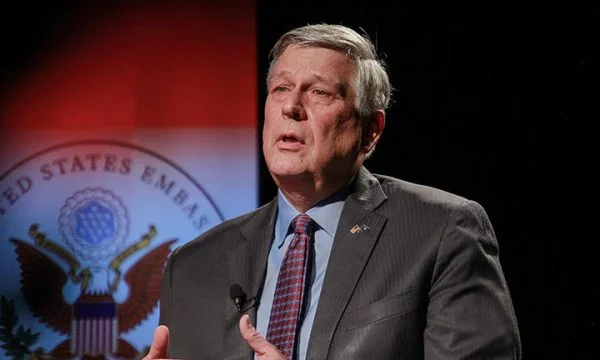
(3 years ago)Former US Ambassador to Kosovo Philip Costett has talked about the current situation in the country and the terrorist attack on Banjska. Explaining what had happened, Costnet says terrorist Milan Radojic's claim to have organised the only attack is unbelievable. Costett: After Banjska, The EU and the US should reconsider the former US ambassadorship [...]
Former US Ambassador to Kosovo Philip Costett has talked about the current situation in the country and the terrorist attack on Banjska.
Explaining what had happened, Costnet says terrorist Milan Radojic's claim to have organised the only attack is unbelievable.
Costett: After Banjska, EU, US Must Rethink Association
Former US Ambassador to Kosovo Philip Costett has talked about the current situation in the country and the terrorist attack on Banjska.
Explaining what had happened, Costnet says terrorist Milan Radojic's claim to have organised the only attack is unbelievable.
Read:
With this simple trick, you're gonna lose 17 kilos in 3 weeks.
Trajkovic: I have information that more than three Serbs were killed, someone we...
Serbia's “response was the classic Vuciqi é playing with nationalist feelings, he proclaimed a day of mourning for the martyred Serb fighters, along with efforts to portray himself before the states of the West as a person of moderate influence, promising an investigation. Meanwhile, Kosovo Serb politician and alleged gangster Milan Radoicic -- photographed on stage during the clash at the monastery -- appeared in Belgrade to assume responsibility, saying he had collected weapons and formed an armed group without Belgrade's support or knowledge. (If anyone believes this, please move forward!)”
Kostett said the fundamental issue is that neither Serbia nor Kosovo feel any urgency to implement an agreement, until he added that after the attack on Banjska, The EU and the US should reconsider what association will look like.
There are three ideas that can increase flexibility on the Kosovo side: First, after Banjska, The EU and the US must reconsider the Association of Serb majority municipalities. In the past, Western diplomats (including me) have stated that limited self-government for Serb municipalities may over time reduce distrust between Kosovo Serbs and their majority Albanian neighbours. Kosovars fear that the association could pose an internal security threat and predict Kosovo's de facto division. Many compare association with Bosnia's ultranationalist Republika Srpska, seeing both as useful to Russia-backed efforts to destabilise the Balkans. If the EU and the US want to sell any version of the Association in Kosovo, they will have to have a convincing argument that it will not threaten Kosovo's security”, Costett told the Centre for European Policy Analysis.
Centre for European Policy Analysis: In the course of serious clashes between the Kosovo Police and the armed Kosovo Serbs on 24 September, followed by the movements of Serbian and NATO troops, the EU-brokered Kosovo-Serbia dialogue and backed by the US has stalled. Is it now time to reinvest or time to reconsider?
Philip Costett, former US ambassador to Kosovo: Eight months ago, the EU-brokered and US-backed effort to negotiate a comprehensive peace between Serbia and Kosovo seemed to be progressing. In February, Serbian President Aleksandar Vuciq, and Kosovo Prime Minister Albin Kurti approved an agreement requiring, among other things, limited self-government for Kosovo Serbs through a Serbian Communist Association (for the first time agreed in principle in 2013); and mutual recognition of the national symbols, documents and territorial integrity ♫ what Kurti called recognition of Kosovo's “facto<1>. No one expected implementation to be easy. Vuciq flew home and immediately rejected the deal in front of his local audience; Kurti (as the majority of the Kosovo Albanian majority) was deeply skeptical of association. But the following talks on implementing the agreement were made, and the train seemed to be on the track, but it did not take long to get off track. In April, Kosovo Serbs boycotted municipal elections in four Serb majority municipalities in an effort to increase Western pressure on Kosovo to implement association, resulting in the election of ethnic Albanian mayors. In May, Kurti decided police in the north, despite Western objections to deploy new mayors in their offices. Serbian demonstrators injured dozens of KFOR and NATO peacekeepers. Later, on Sunday 24 September, about 30 heavily armed Serbs attacked the Kosovo Police near the northern town of Banjska, killing a police officer before they were withdrawn to a Serbian Orthodox monastery. In a one-day battle, Kosovo police killed four and arrested several armed Serbs (the others escaped) and seized a secret weapons depot in the monastery, as well as vehicles Kosovo Interior Minister Jedal Svechla claimed to be of the Serbian Army. Kosovo requested extradition of armed persons who had fled to Serbia.
The United States initially responded with a more cautious language, defending the Kosovo Police, while urging both sides to refrain from any action or rhetoric that could further fuel tensions” and resume negotiations.
Serbia's response was the classic Vuciqi once playing with nationalist feelings, he declared a day of mourning for the martyred Serb warriors, along with attempts to portray himself before the states of the West as a person of moderate influence, promising an investigation. Meanwhile, Kosovo Serb politician and alleged gangster Milan Radoicic -- photographed on stage during the clash at the monastery -- appeared in Belgrade to assume responsibility, saying he had collected weapons and formed an armed group without Belgrade's support or knowledge. (If anyone believes that, please move forward! )
Vuciq later launched the delocation of military units on the Kosovo border. With this, Washington and his allies finally seem to have lost patience with Belgrade. On 29 September, National Security Council spokesman John called the deployment of the Serbian Army “very destabilising” as NATO established a British battalion to reinforce KFOR, and later a Romanian battalion. At the same time, the EU and the US continue to call for implementation of all agreements drawn from the dialogue.