a minute ago
Ukraine calls “nuclear terrorism” the Russian attack on its thermal power plant
Periskopi(4 years ago)
(4 years ago)A Russian missile exploded near a nuclear power plant in southern Ukraine on Monday, damaging nearby industrial equipment, but did not affect its three reactors. Ukrainian authorities denounced the move as an act of “nuclear terrorism”. The rocket struck within a distance of 300 meters from nuclear plant reactors in southern Ukraine, near [...]
A Russian missile exploded near a nuclear power plant in southern Ukraine on Monday, damaging nearby industrial equipment, but did not affect its three reactors. Ukrainian authorities denounced the move as an act of “nuclear terrorism”.
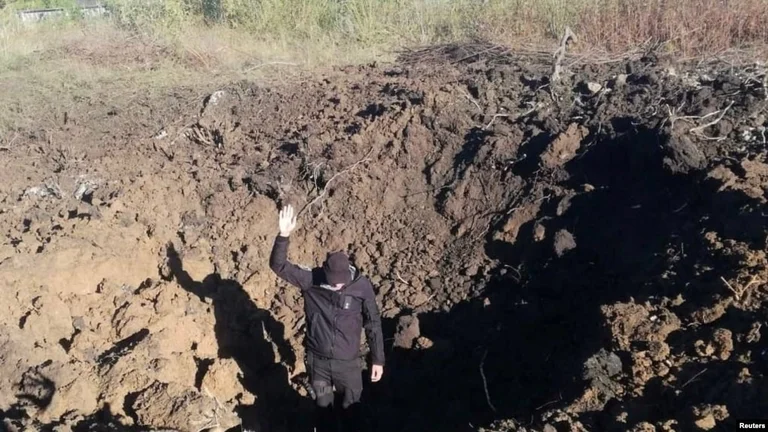
The rocket struck within a distance of 300m from nuclear plant reactors in southern Ukraine, near the town of Yuzhnoukracinski in the province of Mykolaiv, opening a hole 2m deep and 4m wide, Ukrainian company “Energoatom”, which operates the nuclear power plant.
The reactors were functioning normally and no employees were injured, says the Ukrainian company's announcement. But the nearness of the attack brought back fears that Russia's nearly 7-month war in Ukraine could cause a nuclear disaster.
This is the largest nuclear power plant in Ukraine following Zaporisiza's, which has been the target of continued attacks.
Following recent losses on the battlefield, Russian President Vladimir Putin threatened last week that he would step up attacks on Ukrainian infrastructure. Throughout the war, Russia has targeted the equipment of Ukraine's production and power transmission, causing disruptions and jeopardising the security systems of the country's nuclear power plants.
The nuclear complex along the southern Bug River is located about 200 miles [300 km] south of Ukraine's capital, Kiev. The attack triggered the provisional closure of a nearby hydropower plant and damaged more than 100 windows in the complex, Ukrainian authorities said. The International Atomic Energy Agency said three power lines were cut off, but later reconnected to the power grid.
The Ukrainian Defence Ministry published a video showing two large fire cannons that broke out one after another in the dark, 19 minutes after midnight on Sunday. Ukrainian Defence Ministry and Company “Energoatom” called the attack “nuclear terrorism”.
The Russian Defence Ministry has not immediately commented on the attack.
Russian forces have occupied the Zaporizia nuclear power plant, Europe's largest since the start of the attack on Ukraine on 24 February. Bombings have cut power transmission lines, forcing operators to close its six reactors to avoid the possibility of nuclear radiation leaks. Russia and Ukraine have blamed each other for the attacks.
Patricia Lewis, director of international security research at the Chatham House Institute in London, said the attacks at the Zaporizzia plant and Monday's attack at the nuclear power plant in southern Ukraine show that the Russian army is trying to get Ukraine's nuclear power plants out of office before winter.
The target of a nuclear power plant is a very dangerous and illegal act”, Mrs. Lewis said. Only generals can know the purpose of the attack, but they have become more frequent. ”
“They seem to be trying to cut power production from the” nuclear reactor, she said. “is a very irresponsible way to do this, because how accurate are these missiles?”
Electricity is needed to operate water pumps used to cool reactors to avoid melting them and release of nuclear radiation.
Russian forces have also targeted thermal power plants in the north and a dam in the south of the country. These attacks were carried out in response to the Ukrainian counteroffensive to the east of the country, during which Ukrainian forces recovered territories occupied by Russia in the Kharkivi region.
Analysts have noted that the challenge for Ukrainian forces will be to control retaked territories. In a video story Monday, Ukrainian President Volodymr Zelenskyy said over that, “I cannot reveal all the details, but thanks to the Ukrainian Security Service, we are now sure that the invaders will have no base on Ukrainian soil”.
Ukraine's successes in Kharkiv, Russia's biggest defeat since its forces backed away from Kiev's suburbs at the start of their attack on Ukraine, have sparked rare public criticism in Russia and have increased military and diplomatic pressure on Putin. Kremlin nationalist critics have raised the question of why Moscow has failed to plunge Ukraine into darkness, hitting all its major nuclear power plants.