5 minutes ago
Queen Elizabeth II's death, why are Indians seeking the return of the Koinoor diamond?
Periskopi(4 years ago)
(4 years ago)Shortly after Queen Elizabeth II died on September 8th, the word “kohinoor” began spreading on Indian Twitter. It was a reference to one of the most famous pearls in the world. Cochinoor diamond is just one of 2,800 stones placed in the crown made for Elizabeth. Many of the tweet posts using the term “Kohinoor”, i [...]
Many of the tweet posts using the term, “kohinoor”, called on Britain to return the Kokoinoor diamond to one of the largest and most controversial in the world to the country of origin.
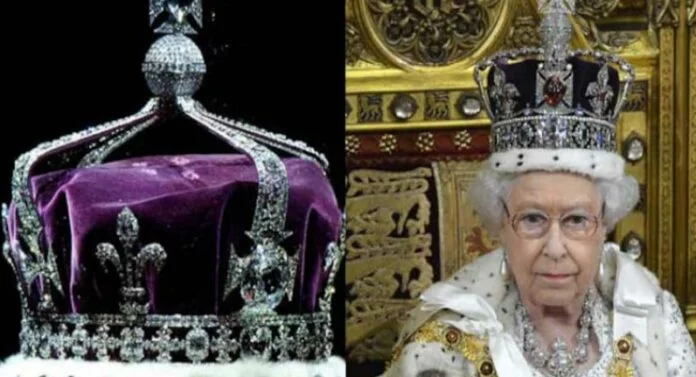
Kohinoor, also written as Koh-i-Noor, is a precious 105 carat stone meaning “mal light”> in Persian. The stone is placed in the crown of the Queen's Mother, which is on display in the Tower of London.
The diamond has been the center of political and legal controversy in India amid disputes over its ownership, with claims coming not only from India but also from Pakistan.
There remains a point of contention in relations between India and Great Britain, because many Indians believe that the diamond, found in India in the 14th century, was “years old” during the colonial regime.
The diamond actually went through the hands of many rulers, including the Rajputs, the Mughal princes, the Iranian warriors, the Afghan rulers, and Maharajas Punjabi before ending up in British crown jewels.
According to the Royal Palace of the United Kingdom, Kohinoor was discovered by the Golconda mines in southern India before surrendering the British monarchy in 1849.
It became part of Queen Victoria's crown jewelry, along with hundreds of other precious stones said to have incalculable cultural, historical, and symbolic value and remain part of the royal collection.
The crown, which also contains a cover of purple brocade and hermelin decoration, was made in 1937 for Queen Elizabeth, the wife of King George VI, to be dressed at the crown of her husband on May 12, 1937.
He's loaded with 28,000 diamonds placed in his platform frame. Scyrus is composed of alternative diamond groups that form crosses and rectangulars, limited by single lines of brilliant cut diamond.