2 minutes ago
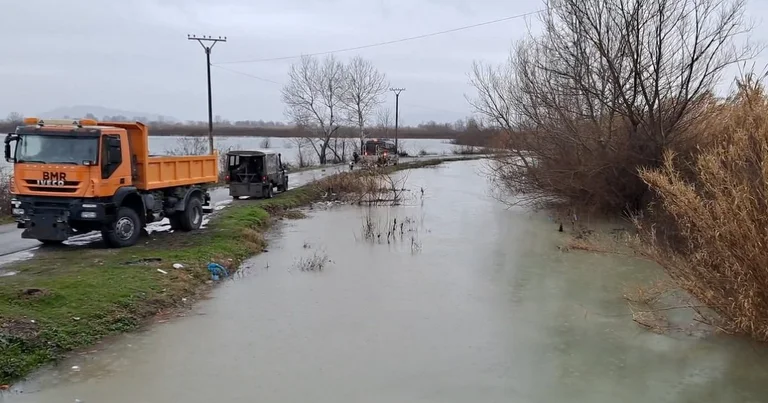
Macedonia's failed management, flood of rivers from waste in Albania
Periskopi(4 years ago)
(4 years ago)The oiling of the East River resembles a country that stretches for miles on either side of the river, bringing hundreds of tons of plastic from urban areas, including Tirana. As noted in the report of Birn journalist Vladimir Karaj, this is the result of the failed waste management system. In [...]
In the mouth of the East River, amateur fisherman Victor Saka comes out of the sea with wet boots and takes 30 seconds between the waste, replaces them with two slips of different colors.
The coast north of Rodon's Cape resembles a large plastic ground, while all sand is covered by waste. The remains arrive there by the Ishme River, which runs through Albania's most populated zone in Tirana, Kamza, Kruje and Fushe-Kruje.
Now you don't miss it with your knee right here, the reason is because you see it. These remains come directly, from beginning the river from Tirana to all. Here come hospital waste, supermatching left from Tirana”, says Mr. Saka.
Environmental experts say that the pollution of the Ishi's estuary and a host of other rivers in Albania is the result of mismanagement of waste treatment throughout the country. The situation continues to remain disturbing even after the government has spent tens of millions of euros on projects like those of waste management engineers.
But there is absolutely no effective system in urban waste management... The administrative units that are part of the Ishi basin do not have such an effective system, which compels citizens, not excluding the culture part, to throw up remains near the streams near the water lines, and then they will be gathered in that large pool”, says Olsi Nika, executive director of the environmental organisation “Eco Albania”
The effects of pollution are not limited to the destruction of the landscape. The plasticity of the remains, which the earth is unable to destroy, is gradually dissolved into small particles, which because of their appearance, is swallowed up by fish and then finished as human food.
A 2016 study conducted in a number of Balkan countries found plastic remains in small and large fish in the Ish area.
In all fish, without exception, there were microplastics in fish that measured over three inches [30 cm] in the fish's stomach and intestines. In the smallest fish, the acuge, the sardine, had a presence, but not in all individuals, says Prof.Ass. Jerina Kolitari, from the Aquaculture and Fishing Department at Tirana Agricultural University.
Environmentalists explain that the plastic that ends at sea is not destroyed but remains in the human body and becomes a source of disease.
These are due to a number of diseases, starting with cancer tumors”, says Mr. Nica.
A 2020 Environment Ministry document, in which the Environment Ministry's Environment Strategic Exploding Strategy Award is made, says the situation in the area is urgent and that only “a real management plan” for municipal waste and then cleaning old waste can provide solutions.
However, the only measures taken in this area are some voluntary shares, the success of which remains largely in sensibility.
For former Environment Minister Ornela Chuchi, voluntary shares are not considered a solution to the problem.
“Albania can't be cleaned with a broom, neither with voluntary shares nor with action, it certainly needs a” system, it says.
Experts add that the historic problem of spilling waste into rivers is getting worse, as sea currents transmit most of the remains north of the Adriatic to Montenegro and Croatia. / VOA