11 minutes ago
Kurti in the Swiss newspaper talks again about possible war with Serbia: There are four reasons for this
Periskopi(4 years ago)
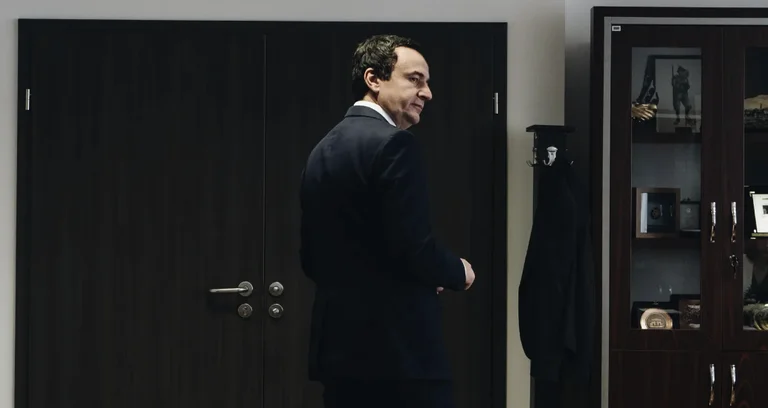
(4 years ago)The Swiss newspaper “Die Republic” has published an interview with Kosovo Prime Minister Albin Kurti. In this interview, Kurti has talked about the current situation in Kosovo, with particular emphasis on disagreements with Serbia. Kurti has said Kosovo is democracy, and Serbia is not. According to him, anyone who borders on an autism is at risk. In [...]
The Swiss newspaper “Die Republic” has published an interview with Kosovo Prime Minister Albin Kurti.
In this interview, Kurti has talked about the current situation in Kosovo, with particular emphasis on disagreements with Serbia.
Kurti has said Kosovo is democracy, and Serbia is not. According to him, anyone who borders on an autism is at risk.
In this interview, Kosovo's prime minister has expressed his concern that official Belgrade maintains close ties with Russian President Vladimir Putin.
Mr. Kurti, Serbian President Aleksandar Vuciq has recently named you the little “Zelnski”. Does that honor you?
I'd previously named the Vuchiqu as the little “Put on Facebook. I don't think he was creative enough to get out with something better.
Putin invaded Ukraine several months ago. The Serbian Army has not crossed the border with Kosovo since the end of the war in 1999. Could it be that you're going too far?
No, in my opinion Serbia is a client regime of the Kremlin. Serbia and Russia hold joint military exercises called “Mouro Slavic” and “Slavic Brotherhood”. Most of Serbia's oil industry is owned by Gazprom. The Russian Defence Ministry has established its office under the Ministry of Defence of Serbia. Serbia receives tanks and weapons systems from Moscow.
Germany is also dependent on Putin's oil. But what makes Serbia unique in Europe is that it refuses to support EU sanctions against Putin?
Today, 70 percent of Serbs have a positive opinion of Vladimir Putin. At the same time, support for the European Union has fallen to the lowest historical level of 30 per cent. This mood has also spread to Serbs in Kosovo, especially in the country's north.
We'll talk about the north later. First a principled question: in an interview in early August you warned of a war with Serbia. Is it really that bad?
We are not afraid, but we are vigilant. We remain concerned. In my opinion, there are four reasons that make conflict imaginable. Firstly, Serbia still does not recognise Kosovo's independence. It fights against our international recognition and at the same time finances illegal structures within Kosovo to undermine the rule of law and our sovereignty. Second: In Serbia, they cannot comply with war crimes committed in the 1990s. No regrets.
This criticism is not new: it was the same in Ukraine before the war.
The third reason that concerns me: Kosovo is democracy, Serbia is not. Anyone who borders on an autism is in danger. Fourth, official Belgrade maintains close ties with Russian despotic President Putin. Vuciq has met Putin nearly 20 times in 10 years, the latest on November 25, 2021 in Sochi, three months before the start of the war.
I quote Vuciqi now: “We talked about double standards and hypocrisy in international relations. President Putin understands what I'm talking about. We also talked about Kosovo's north and showed Putin on map”.
Why is Putin interested in Kosovo's north, wondering?
For Putin, NATO intervention in 1999 against Serbia was an insult. He never recognised Kosovo's independence. Before the war, Putin spoke extremely often about Kosovo. He used this as an example to justify his conquest in Ukraine. What do you answer to him?
The people of Kosovo have experienced genocide. In the spring of 1999, 19 NATO countries gathered and bombed a small country in Europe. So it must have been really bad. It's very difficult to have 19 states on board, the more democratic states, where there have been anti-intervention protests. In Ukraine the situation is very different. It is the Russian army that is conducting military intervention in Crime, Donbas, throughout Ukraine.
While warning of a possible war, thousands of young people danced at a singer's concert I want Lipa in Pristina. The situation of the crisis exists only in the rhetoric of politicians?
I agree with you: ordinary people do not want conflict and do not encourage it. Several hundred Belgrade-funded people do so. Many have gained experience in the wars of the former Yugoslavia.
In the 1990s, Vuciq was the minister of information from a regime that was arrested and deported to Serbia. 22 years later the two have sat at a table and are negotiating their countries' future. Is that a personal pleasure to you?
Not really. I would rather see progressive and pro-European policies in Serbia. But that is not the case. On the other hand, the atmosphere during our meetings in Brussels has improved.
Have you ever held hands with each other?
Not ever. This is because we have met three out of four times during the Corona pandemic and there is still no final agreement.
Let's get to the actual events. The north of Kosovo is populated mainly by Serbs, about 50,000 people. On July 31st barricades were erected at the border. Dezinformation in Titter took over. Suddenly, it was talked about a Serbia attack. What really happened?
13 barricades were erected that day, 9 of them in less than 10 minutes. Criminal gangs that are part of illegal structures in the north linked to Belgrade created them. Their goal was to protect armed individuals after. The situation was very dangerous and tense. We can be happy that there was no death.
A special Kosovo police unit, known as Rossu, continues to go north to hit smuggling activities. Many Serbs have become enemies. Young people refer to them as “Time-breaking”?
You know what's interesting? From April last year and this August, Kosovo Special Forces arrested 71 people in the north -- 33 Albanians, 26 Kosovo Serbs, 6 Serbs from Serbia, 3 Roma, 2 Bosniaks and a Goran.
Do you think ethnicity doesn't matter from a police standpoint?
Organised crime is multiethnic and cross-border. Serbia's illegal structures in northern Kosovo certainly have a problem with our police hitting them. In the fight against smuggling routes, drug labs and the illegal Bitcoin mines, our police were constantly attacked, only this year and last year over 40 times. It is these criminals who erected the barricades in July. Some are on US sanctions lists.
I just got back from Mitrovica. The town is ethnically divided into Albanian south and Serbian north. In the south, US flags wave, north “Z”, the symbol of Russia's aggression war, has been engraved on the walls of houses. How do you want to fix this deep gap in your society?
Most Serbs in Kosovo know that times have changed. They are integrated and a good example for this is that over 130,000 of them now have Kosovo IDs. There is only a small minority between 2000 and 5,000 people who refuse to recognize them. I am optimistic that things will work out well. Illegal structures are increasingly losing influence. Because of this, they are becoming increasingly aggressive. “Z” on house walls is a sign of this.
People in the north drive with license plates issued in Belgrade. They want to change it.
We are working hard for Serbs in Kosovo to pass on Kosovo plates. Because only they are legal in this country. Now I have stretched out my hand to the people. Anyone recording his desk until October 31st paid no taxes or registration fees for the vehicle. This is very attractive for Serbs in Kosovo. That's why they're putting pressure on illegal structures. But there is still enough time to reregister your panels.
Northern communities are plastered with hundreds of banners declaring “no surrender!” stands. People are especially required to keep their Serbian plates. Will you end up forcing them?
After November 1st, these signs will be illegal and we will act in accordance with our laws.
On 15 August 2021, the Taliban took power in Afghanistan after NATO had previously withdrawn from the country. Can You Trust Americans?
NATO will remain in Kosovo because Kosovo wants to join NATO. Both are part of each other's history and this will continue to be so in the future. There is no parallel between Afghanistan and Kosovo. The only thing I wondered about August 15th was: How can I help with the refugee issue? As a result, Kosovo accepted about 1,800 Afghan refugees. NATO offers us protection and security, and we also contribute something to the Western defence alliance. From March to June last year, we participated in military exercise “Defender Europe” with 330 soldiers and sent a peacekeeping force to Kuwait along with the American Army.
You say all this knowing that your first administration fell at Washington's order? Trump's envoy to the Balkans, Richard Green, wanted you to leave. He saw you as a mess you can't make deals with.
Kosovo considers the US a friend, partner and ally for our security and protection. Again, except Belarus, there is no place closer to the Kremlin than Serbia. That's why the United States is more important to us than any other country. But, of course, I disagree with everything US representatives say. This was made clear in 2020 when Trump's envoy for the Balkans, Greenell, wanted me to give up my requests to Serbia.
Green calls you “Alpha” today in Titter. What does that mean for the Balkans if Green Chief Donald Trump comes back one day?
I am optimistic that things will go well in the United States. Joe Biden is the most progressive politician in the world today. I hope this transatlantic feeling is not lost. I hope for the best.
At the local level, your party Vetevendosje recently suffered a defeat. The opposition won in most communities. How do you explain this?
The opposition has united against us. Governance is exhausting. It doesn't give you enough time to be near the party base and meet people. Pandemia has hit us more than other parties because they traditionally advertise through TV spots. Our method has always been public dating.
Could it be that you got fewer votes because the diaspora in Germany or Switzerland did not vote?
You're right. At the local level, it participates in a much smaller number.
Let's get a new Albanian from Switzerland a second or third generation. He lives in Bern and once in Kosovo during the summer. Should such a person be allowed to have his word in politics in your country?
More planes travel between Pristina and Switzerland a day than there are bus connections between individual cities. The diaspora comes, not just once a year, but several times. Every third Kosovo citizen lives abroad most of them in Germany and Switzerland. Foreign transfers make up 20 percent of gross domestic production. They may not live here, but they help us live here. For this material and financial contribution, but even for the knowledge they bring, they must have the political word.
However, the diaspora does not replace the social state. How do you intend to fight poverty in your country?
I consider the double education system in Germany, Switzerland and Austria as a model. We have to connect labour market needs with education. A few days ago, I attended a class of students between the ages of 15 and 18 - haird, bricklayers, hospital helpers, cooks. They're at school three days a week and in the company two days a week. This is a way to fight poverty and create jobs.
Your government recently brought together millions worth of packages to combat inflation and the energy crisis. Economy experts criticise: Fast money for several months is not a particularly stable strategy.
Students have payment once at 100 euros a second time. Children have also benefited mothers with small children. We have increased pensions by 11 percent and those for disabled by 33 percent. Local entrepreneurs, service providers and retail vendors have also received money. We have united an economic stimulus package and an inflation package. We also subsidize energy consumption and facilitate those who reduce consumption, so save energy. But I hope we as a whole of Europe get out of this crisis. And I hope we survive winter. The Kremlin wants to divide Europe.
Four years ago I was widely explained and detailed why you cannot identify yourself with the Kosovo blue and gold flag. Has this changed now? As prime minister of the Republic, the Kosovo flag is my duty and duty, and also something I respect and embrace. That's my top priority. There may be other things in our program of movement.
For example, that Albania and Kosovo can one day form a joint state. Should you give up this dream?
No one should give up his dreams. But you always have to stay realistic.