2 minutes ago
New frame of dialogue, Visar Ymer for Periscope: There's something undesirable about Serbia, what is it?
Periskopi(4 years ago)
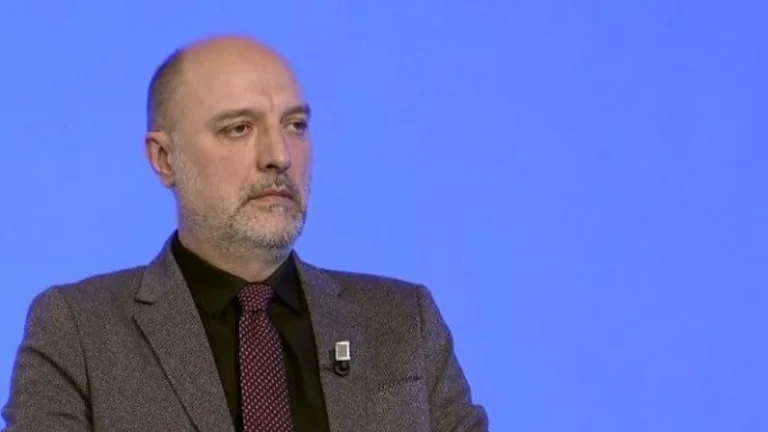
(4 years ago)A text presenting/interpreting the document of the new dialogue co-ordinator between Kosovo and Serbia, compiled after the commitment of President Emmanuel Macro and Chancellor Olaf Scholz, was published the weekend we left behind. Some of the most impressive sentences, Periscope discussed them with the good policy connoisseur, Mr. [...]
Political Affairs Recognition, Visar Ymer, in an interview for Periscope has shown how you see the contents of this document, how this framework was released after the unexpected meeting between Kurti and Rama in Tirana, as well as if the length of the Kurtiʹ government depends on this agreement.
“is hard to evaluate first, how to classify this document. More than texting the potential agreement, this seems to be a framework and collection of commitments from the EU (or France more precisely) about what the conclusion of this phase of dialogue would look like. So the document presents on the one hand the continuation of the EU's (likely because of France's refusal) to think of the rapid progress of Balkan countries towards the EU. And in the meantime this is conveyed to an added insistence on the dynamising of regional relations within the already agreed common Regional Market idea, thus creating that pre-room for EU membership. And on the other side the document decides thick lines of what normalisation would mean in this phase, including in itself Serbia's partial refusal to recognise Kosovo, and also including Kosovo's necessary need for advancement in international reports through recognition by the five EU member states and the opening of the road to NATO membership, and in other international organisations. However, some unclear things remain: what happens to the up-to-date agreements? What are the mechanisms that make this agreement legally binding? {ka means recognition of reality from Serbia? How is recognition guaranteed by the 5 EU member states? And other case”, Ymer told Periscope.
Since the text was published after the unprecedented meeting, Kurti ú Rama in Tirana, Periscope asked Ymer about this detail, but he said he didn't want to speculate in this regard, but he talked about Rama's figure as the most influential politician in the region.
I don't want to speculate about any connection between the framework and the emergency meeting the two prime ministers had last week. However, Prime Minister Rama has been and remains involved in the dialogue process, for the fact that Albania is one of the main countries in the region, the fact that Albania and Kosovo have very good relations historically, as well as the fact that KM Rama is one of the most influential politicians in the region and the political personality with high credibility in the West”, he said.
One sentence that impressed us in the text published in the Albanian Post was that the agreement, the series, will benefit massive economic aid.It's known as regional economic power.
We didn't understand this whole range of words and it's hard to decipher it.
“This is hard to decipher.. And it's one of the issues that makes the document hard to understand. As for mass economic aid, this is the pledge EU countries give Serbia as carrots for signing the agreement. That is also understandable. Of course, similar assistance would have been welcome for Kosovo. But the question is to recognise as regional political and economic power? Who is known as such? And does such recognition apply in practice? Because the power of a state, and especially economics, is a relative issue that is largely dependent on the dynamics of development and competition. Not by any political agreement or decision. What if tomorrow Albania or Kosovo become more economically powerful than Serbia?
We also asked Ymer about why we talk about predictions in case the deal failed and why the government's life span is mentioned.
The dialogue process seems to have entered the final phase by storm. This is noted by the added investment in diplomatic capitals from key Western countries. In such a phase, the rejection of the deal carries responsibility and consequences for any of the parties. What such consequences can be, of course, to be seen. On the other hand, the Kosovo Repbulica government has given strong pledges that the agreement without mutual recognition does not agree. Here we have an immediate public clash, which will see how the days of the following” will take place, he said.
What did the others say?
Asked today by journalists, the parliamentary majority MP in the Kosovo Assembly, Adnan Rrustemi, The government's silence called it extremely great transparency.
“Transparency has been enormous, even the prime minister has met representatives of opposition parties related to dialogue, there are discussions in the Assembly, Government has always been ready to discuss and respond. I think transparency is complete, willingness to share the views of the information with MPs”, Periscope said today in front of the media.
Meanwhile, the chief of PDK deputies, Abelard Tahiri, When asked about this topic, said this party supports a legally binding agreement with Serbia, bringing recognition to Kosovo.
US Ambassador to Serbia, Christopher Hill. said he heard about it (V.j) but expressed strong support The EU and its efforts to solve this problem.
I heard about it, but the only thing I can say is that we strongly support it. The EU and its efforts to solve this long-standing problem. I think it is time for progress and I encourage them to make proposals for both sides, but it is not up to me to comment on the content of those proposals”, Hill said.
“The EU has a difficult task and we support them. It is not easy for them, and what they do not need is people who are not sitting at the table with them giving their thoughts to him. I can only say that we support them”, he said away. /Periscope.