7 minutes ago
So-called Russia referenda enter second day
Periskopi(4 years ago)
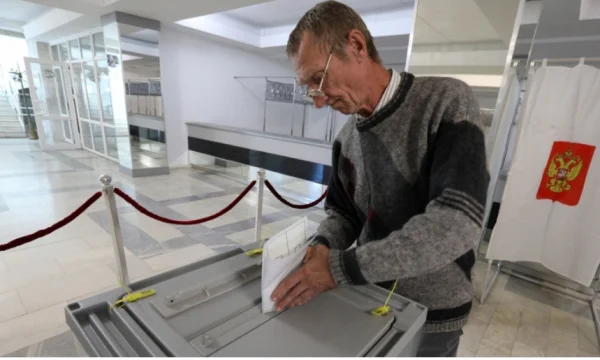
(4 years ago)Four Ukrainian regions, which are partially controlled by Moscow, have entered on the second day of so-called referendums for union with the Russian Federation. These referenda, which the West considers illegal, have been launched on September 23rd and will continue until September 27th. Politicians installed by Moscow have indicated that the referenda [...]
These referenda, which the West considers illegal, have been launched on September 23rd and will continue until September 27th.
Politicians installed by Moscow have indicated that referenda to unite Russia will be held in Luhansk, Donjeck, Herson and Zaporija all in southeast Ukraine.
This act is considered illegal under international law, and the same has been condemned by Ukraine, the West and the United Nations Organization.
The vote conflicts with the UN statute and takes place amid claims by some local officials that voters are threatening and afraid.
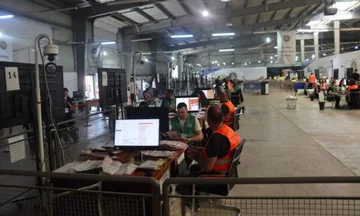
In areas where so-called referendums for union with Russia are being held, there are no independent observers.
All four regions represent about 15 percent of Ukraine, or an area the size of Hungary's territory.
Ukrainian President Voldymyr Zelensky asked the world to condemn “thoughudo-referendmet” aimed at annexing Ukraine's land.
“Bota will absolutely react to the pseudo-referendums, they will be strongly punished”, Zelensky said in his address to the nation on September 23rd.
In Washington, American President Joe Biden condemned this act and warned more sanctions for Moscow.
Russia's “Referendums are a fraud a false pretext, trying to annex parts of Ukraine by force in flagrant violation of international law,” said Biden on September 23rd.
White House Media Secretary Karin Jean-Pierre told reporters that the US is prepared to impose additional economic sanctions on Russia, in step with allies, if Moscow tries to annex Ukraine's territory more.
The European Union's top diplomat, Josep Borelli, has said on September 21st that Russian leaders “and all persons involved in these referenda and other actions that violate international law in Ukraine” will be held accountable.
The false <x0ferendums in the Donjeck, Luhansk, Zaporije and Herson regions will have no legitimacy and will be flagrant violations of the UN Charter”, NATO said through a statement on September 22nd, a day before the start of the vote.
The so-called referenda were declared black this week after Russian President Vladimir Putin ordered on September 21st what he has called partial military mobilization.
Ukrainian officials said people were barred from leaving the four regions where the so-called Russian referendum is being held until the five-day vote ended. They also said Russian armed groups were going door-to-door to force people to vote, and employees threatened to lose their jobs if they did not participate in the vote.
Nikolay Bulaev, deputy head of the Central Election Commission in Russia, has said he expects the <x0... centenarians of the thousands” Ukrainians currently in Russia to participate in these so-called referenda.
Russia is not known for holding free and fair elections, as there have often been reports on fraud and manipulation in the media. Russia annexed the Ukrainian Crime Peninsula in 2014, where very few countries have accepted the results.
Russian President Vladimir Putin has ordered the invasion of Ukraine on 24 February.
He calls the war <x0 special military operation” to demilitarise Ukraine.
The West has responded to Russia, striking the economy of this state with severe sanctions.
As a result of the war, thousands have died, and millions of others have been displaced from their homes. /rel