a few seconds ago
What Vuciq declared for reciprocity a few days before Kosovo government is expected to resume implementation of measures
Periskopi(4 years ago)
(4 years ago)Serbia's President Aleksandar Vuciq said on Sunday that he is determined to seek a compromise solution with Kosovo for the use of identification documents and car plates within ten days, referring to September 1st, when the Kosovo government is expected to resume implementing reciprocity measures on the issue. He warned that [...]
Serbia's President Aleksandar Vuciq said on Sunday that he is determined to seek a compromise solution with Kosovo for the use of identification documents and car plates within ten days, referring to September 1st, when the Kosovo government is expected to resume implementing reciprocity measures on the issue. He warned that Kosovo Serbs could leave all institutions if no solution is found to their concerns.
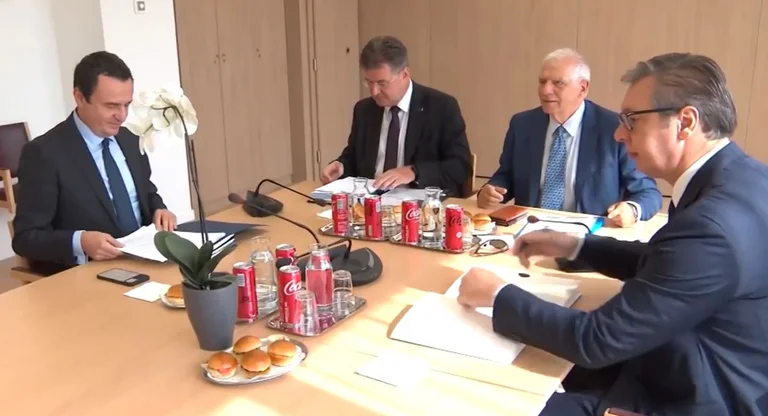
He made those comments, in his first appearance after Thursday's talks with Kosovo Prime Minister Albin Kurti in Brussels, in which he failed to reach an agreement to avoid tensions like those of July 31st when Serb groups blocked roads in Kosovo's north to challenge the central government's decisions in Pristina that the identification documents and license plates issued by Serbia should not be applied on Kosovo territory.
Belgrade implements similar measures for Kosovo citizens who pass through Serbia over the past 10 years.
The Serbian president said he had proposed that Kosovo Serbs be not included in the decision on personal documents and equipped with license plates that are neutral to Kosovo's status.
But, the Kosovo side said, rejected these compromise proposals.
Serbia said it is in a very difficult situation, but will desperately seek a compromise.
The Serbian president said Kosovo called on Thursday to discuss a general agreement on normalising relations that included mutual recognition, war damages, dealing with the issue of missing and rape victims, the symmetry in the rights of Serbs with those of Albanians in Serbia, and reviewing previously agreed agreements.
On Sunday, there was no immediate response to the Kosovo government, which on Thursday said it had discussed two issues, the overall framework of the final agreement, and to Serbian license plates and documents.
The Serbian president said Sunday that Pristina's goal is to abolish everything that concerns the Serbian state and the persecution of Serbs from Kosovo.
He gathered representatives of Kosovo Serbs, from whom he said, on Sunday morning in Belgrade, received their support to work to find a compromise solution, as well as a demand not to face persecution. The Serbian president said I would do everything to maintain peace but would not allow that, while urging NATO peacekeeping forces to care for the security of Serbs rather than deal with roadblocks.
NATO troops increased their presence in the northern part of Kosovo, while warning that they are willing to intervene if sustainability is threatened.
The Serbian president said he has been informed by representatives of Kosovo Serbs who, if no solution is found for a short time, “if the persecution of Serbs does not stop, politicians will leave all of Kosovo's institutions over the next month, and then judges and police officers will follow the example by the end of September” and that there will be, as he said, “made up of the Brussels rule agreed on by”
Meanwhile, Kosovo Interior Minister Xhelal Svecla visited security forces at a border point between Kosovo and Serbia on Sunday, saying: our common interest is that this land is ours and we will not give it up for any price. ”
Talks in Brussels, which began 11 years ago, target an agreement on normalising relations between the two countries. Serbia accounts for Russia's support in opposing Kosovo's independence, which the United States and the major Western countries recognise.
Normalisation is a condition for both sides to advance towards European integration. / VOA