3 hours ago
What a third before the stomach
Periskopi(4 years ago)
(4 years ago)Third is how your body turns food into fuel. On average, this process takes 24 to 72 hours. But how long does it take your body to digest your food? That depends on what you consume, quantity, digestive, metabolism, and physical activity. Carbohydrates, like the primary source of body energy, usually pass through the system [...]
Third is how your body turns food into fuel.
On average, this process takes 24 to 72 hours. But how long does it take your body to digest your food? That depends on what you consume, quantity, digestive, metabolism, and physical activity.
Carbohydrates, like the primary source of body energy, usually pass through the digestive system faster than proteins or fats.
Proteins digest faster than fat. While some carbs melt faster than others, some of them, such as fibers, do not digest at all.
Carbs train begins in the mouth. This is because enzymes and the mechanical act of chewing begin to train them before reaching the stomach.
Although carbs are wasted in the stomach, most of them, except for alcohol, are absorbed by thin intestines.
Your body can only absorb simple sugars. Cells supporting the thin intestine secrete enzymes that divide complex carbs into simple sugars.
Carbohydrate is determined by the number of chemical connections contained. On the basis of chemical connections, they are divided into simple sugars (monosacarides, or cascarides) and complex (oligokaride and polysaharide).
The complex carbs, must be divided into simple sugars before your body can absorb them.
Fibras are another type of carbs that usually cannot be used for energy.
Hence, they remain unbroken until they reach the colon, where a small amount is digested by bacteria and absorbed. Fruits, vegetables, and cereals all contain little fiber.
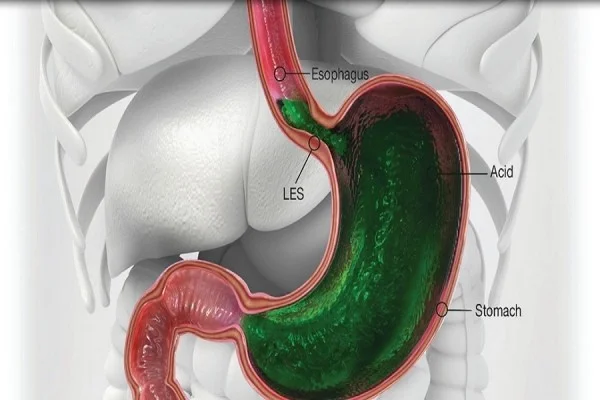
Protein digestion occurs mainly in the stomach, where stomach acids break down.
Pepsi and Trypsina are two enzymes secreted by the stomach to digest proteins. Almost all protein in food digests as the rest passes through the colon.
Although fat leaves your stomach slower than carbohydrates or proteins, your stomach digests a small amount. Then there is the liver that prepares fat for digestion, making it digestable in water.
This makes it easier for enzymes to divide fat into smaller pieces to keep on digesting. In the thin intestine, the spase enzyme produced by the panchreas divides fats into fatty acid and lycerine. Once separated, your body is easily absorbed.