4 months ago
Former senior official of NATO: Not Belgrade, but NATO provides security in Kosovo
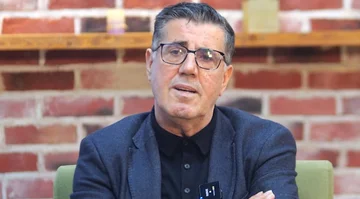
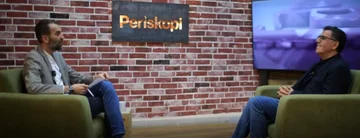
Periskopi(4 years ago)
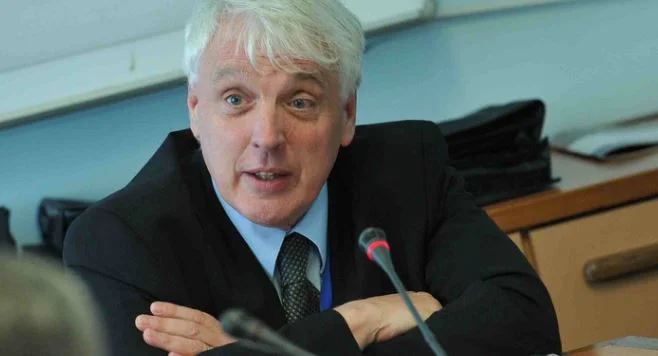
(4 years ago)At times of high tensions between Kosovo and Serbia, former senior official NATO, Jamie Shea, calls on both sides to give up stimulating rhetoric and focus on finding a solution to freedom of movement. Shea, former deputy deputy NATO secretary general, orders Belgrade that responsibility [...]
At times of high tensions between Kosovo and Serbia, former senior official NATO, Jamie Shea, calls on both sides to give up stimulating rhetoric and focus on finding a solution to freedom of movement.
Shea, former deputy NATO secretary general's deputy, orders Belgrade that security responsible for Kosovo is mission NATO, KFOR, which co-operates with the Kosovo Police.
Commenting on Serbian President Aleksandar Vuciq's statement that if NATO does not do its job, Belgrade will intervene “to protect” Serbs in Kosovo, Shea says:
“I think NATO should show Belgrade that it is fully able to continue its mandate, which is security preservation, including Serbs, and that Belgrade has no role in Kosovo, in this direction”.
Shea displays hope that there will be no escalation of the situation. “We are dealing with a diplomatic war, not military war”, he says.
Tensions between Kosovo and Serbia have risen earlier this month when Pristina has said it will force Serbs living in the north who are supported by Belgrade and do not recognise Kosovo institutions to start using car plates issued in Pristina.
In a sign of disappointment, some Serbs in the north have set up barricades on the road and the Kosovo Government, with the international community's suggestion, has postponed implementation of the decision for September 1st.
Radio Free Europe: Mr. Shea, Kosovo and Serbia have only a few days left to September 1st to find a solution to freedom of movement. Serbia says it is seeking compromise, but Kosovo Prime Minister Albin Kurti said on Wednesday it would stick to earlier decisions on license plates and travel documents. Do you fear the escalation of the situation on the ground in the coming days, in northern Kosovo?
Jamie Shea: There's KFOR. [Mbi] 3,700 NATO troops in Kosovo are, of course, aware of the situation. It's been since the problem erupted in July. They are located on the main roads, especially in the north, keeping an eye on the borders and cooperating with the Kosovo Police. We hope there will be no problems, there will be no roadblocks on the streets by local Serbs. But I am sure that KFOR, given the 1 September deadline, is well prepared.
I hope, especially after the meeting in Brussels on 18 August, organised by the EU, the parties [Kosovo and Serbia] give up promotional rhetoric. I heard [Serbian president] Aleksandar Vuciq has said Kosovars want the Serb population to leave Kosovo. This is total nonsense. We all know. So give up this rhetoric, which warms the situation.
I also hope until we approach the 1 September deadline that the EU can organise another meeting between [Kosovo Prime Minister Albin] Kurti and Vuciqi, in an effort to find a kind of solution, especially for the modes of implementation [of decisions on the ground]. I think implementation modalities are key, so that the crisis will calm down and move on.
NATO presence in Kosovo shows “situata is not stable”
Radio Free Europe: You were the spokesman of NATO during its intervention to end the humanitarian crisis in Kosovo in 1999. More than 23 years later, due to increased tensions between Kosovo and Serbia, NATO says it is ready to intervene if stability is threatened. How disturbing is this?
Jamie Shea: KFOR [Peacekeeping Commission] NATO is still in Kosovo. NATO has left Afghanistan, even though it knows it's another confession. NATO has left Bosnia, which has surrendered to the EU many years ago. But NATO is still in Kosovo. Of course, it no longer has 40,000 bodies, it has [over] 3,700. But the fact that they are there indicates that the situation has not stabilised and normalized yet completely. NATO in Brussels must have reserve troops, which can be sent quickly to Kosovo in the event of the crisis. There must be an evacuation plan, too.
And yes, as the spokesman of NATO in 1999, I am the first person to regret that we have not had a final solution between Belgrade and Pristina, which would enable Kosovo to become independent in the full sense of the word, being recognised by its neighbours and by the rest of the international community.
Although, currently, we all think of Ukraine and the six-month start of the Russian war there, NATO must keep an eye on the Balkans, of course.
Radio Free Europe: NATO peacekeeping troops have already stepped up the presence in northern Kosovo. Is that a signal?
Jamie Shea: KFOR had to increase its presence in the north to be able to cope with any problems. It is his duty to preserve the security environment. I have seen that Vuciq has declared that if NATO cannot preserve peace, we, Serbs, will do so. No, thank you. No need. I think NATO should show Belgrade that it is fully able to continue its mandate, which is security preservation, including Serbs, and that Belgrade has no role in Kosovo, in this direction.
Radio Free Europe: Yeah, I wanted to stop by this Vuciki statement. Even though there is no evidence that Kosovo Serbs are threatened, how much does this statement bother you?
Jamie Shea: As I said a little earlier, and that is true of Albin Kurti, it is important to lower the tone of rhetoric, especially when there is no basis, and to act pragmaticly. For example, after the July events, Kosovars have agreed to postpone implementing decisions by September 1st to give time to draft a relevant strategy for implementation. We still have a few more days.
I think it is perfectly reasonable for people living as citizens of Kosovo to drive Kosovo license plates and have [Kosovo's] identity cards.
We take for example Scotland, my country, where there is great autonomy, but people still circulate with United Kingdom license plates and have passports of the United Kingdom, without compromising in any way the autonomy and competencies of the Scottish Government.
Radio Free Europe: Russia, too, has accused the Government of Kosovo and its Western allies of violating the rights of Serbs and trying to promote violence. Earlier, Moscow has been accused of promoting instability and unrest in the Balkans. Do you think Russia may have had a hand in the latest protests in Kosovo?
Jamie Shea: It's hard to say. From where I am today, as an academic, not as an official NATO, it's hard to say that with any evidence or security. But it is true that Russia sides with Serbia. It has helped Serbia prevent Kosovo's membership in international organisations, has supported Serbia's campaign for non-recognition of Kosovo...
We also know that in recent days Serbia's Interior Minister Aleksandar Vulin has been in Moscow. And, at the time [Russian president Vladimir's regime] Putin is internationally isolated, due to the war in Ukraine, very few people go to Moscow. Interestingly, the only country that refuses to impose sanctions on Russia [due to the invasion of Ukraine] is Serbia, and its officials go and visit Moscow.
Russia has very, very few friends at the moment. Serbia is one of the few countries dealing with it. And, I suppose the Russians feel obliged to repay Serbia that, giving support to issues related to Kosovo.
Radio Free Europe: A senior Russian official has said on August 1st that Russia could offer Serbia military support, if necessary. Can this encourage Belgrade to become aggressive?
Jamie Shea: I would hope not. It is true that Serbia, in recent years, has spent much money on weapons and that Russia has given Serbia several MiG aircraft. But Serbia receives more modern equipment from China. China is Belgrade's considerable supplier, especially in fear. And one might be asked why a small country like Serbia, which wants to join the EU and needs to develop its economy, spends so much money on the military.
But, now, I think Serbia wants to join the EU, is negotiating EU membership. She knows the conditions for this, in the sense of accepting international agreements, standards, peaceful behavior. You know, also, that NATO has a strong presence in Kosovo, that KFOR is there. I also know about the EU, which has about 200 members in its mission to Kosovo, EULEX. So, I think there's a lot of gestures going on, but, in fact, we're dealing with a diplomatic fight, not a military war.
It takes courage to make peace
Radio Free Europe: Why is normalising relations between Kosovo and Serbia taking so long? The parties have started negotiations since 2011.
Jamie Shea: We all know compromise is difficult. Very few people are rewarded for being heroes of compromises. Take, for example, former Greek Prime Minister Alexis Tsipras, who, I believe, is a big historical figure because he made peace with northern Macedonia, recognizing his name after decades of disagreement. He did the right thing. But is Greece's prime minister today? He's lost his election.
So, unfortunately, we have to admit that peacekeepers, the concilients, are not always the people who get rewarded. It was Anwar al Sadat from Egypt many years ago... He has gone to Jerusalem in 1977 to make peace with Israel and has later been killed by his armed forces. This may be an extreme example, but it takes a lot of courage to make peace and explain to people why nationalist causes are no longer in national interest.
On the other hand, Prime Minister Kurti has been elected by large majority [voltas], and Vuciq has also won the presidential election by large. So they're both in a strong political position, which is necessary to make peace... All we can do in the international community is use every lever we have to push them in that direction.
Radio Free Europe: Is there anything the international community can do and has not done so far to bring the parties closer?
Jamie Shea: We cannot love peace more than they can. They must love him themselves. And it's true it can take a long time. For example, in the case of the conflict between Israel and Palestinians, we are not yet [of peace]. But the example of northern Macedonia and Greece [for resolving the name issue] shows that even a very bitter dispute, stalled for nearly 30 years, can be resolved when the two leaders are willing to have a compromise spirit. Thus, there are examples we can imitate.
We have to make it clear both Kosovo and Serbia that if they want to be part of the EU, part of NATO even though Serbia does not seek NATO membership they must behave like Europeans.