a minute ago
Former negotiators asked why São put reciprocity earlier, was in the first 11 years agreement with Serbia
Periskopi(4 years ago)
(4 years ago)What Kosovo did at midnight on August 1st at border points with Serbia, which led to tension the situation in northern Kosovo, was agreed in Brussels 11 years ago between Kosovo and Serbia. The release of the document for entry/mission Serbia had immediately applied to Kosovo citizens, but not Kosovo to citizens [...]
The release of the document for entry/mission Serbia had immediately applied to Kosovo citizens, but not Kosovo to Serbian citizens. This document replaces the two states' identification documents during their stay.
On June 29th, at a regular meeting, the Kosovo Government imposed reciprocity for the entry of citizens of Serbia into Kosovo, as well as for the possibility of reregistering cars with city license plates in Kosovo ʹ, which release Serbian authorities with those RKS.
The decision, signed by Prime Minister Kurti, does not provide any explanation as to why after 11 years the measure begins to apply.
The decision says that “any person submitted for the crossing of the state border with personal identification documents issued by Serbia's authorities will be equipped at border crossings with a warrant that temporarily replaces the use of such document”.
According to Kosovo Interior Minister Xhelal Svechla, past governments in Kosovo have lacked political will.
“There was no political will for Kosovo's position to be placed at a level equal to Serbia's” position, Svecla said in an interview for public television on August 2nd.
The agreement on freedom of movement between Pristina and Belgrade was reached in Brussels in 2011 by then negotiators Edita Tahiri from Kosovo and Borko Stefanovic from Serbia. Freedom of Movement Agreement
Agreement point 3 says “Each side can apply a system where identity cards will be accompanied by written access/responsion documents for persons from the other location”.
This letter, whose idea was to represent neutrality in relation to the state documents of both countries in 2011, is issued to any Kosovo citizen entering Serbia's territory.
The same agreement envisions only RKS or KS plates used in Kosovo. The KS plates from September 2020 are no longer issued by Kosovo authorities.
This was because in 2016 the parties agreed that KS plates would be used over a period of five years.
In the north, however, the plates have been used with Kosovo acronyms issued by Serbia, which Kosovo considers illegal.
Internationals did not support entry-out cards
Former officials who have led with the Brussels dialogue, such as Edita Tahiri, have not commented on why Kosovo did not decide on issuing entry papers to Serbian citizens, as did Serbia.
Why has the EU not insisted on this, as the negotiating mediator, there is no response from official Brussels.
The two negotiators who succeeded Edita Tahiri in leading dialogue with Serbia in Brussels, Skender Hyseni and Avni Arifi, said that in the time they have led the dialogue, it is not discussed issuing these letters to Serbia's citizens.
The reason, according to them, is that Kosovo has insisted not to impose barriers as Serbia has done.
As long as I led the dialogue, it wasn't the subject of discussion. As far as I've led the discussion's theme dialogue has only been the general agreement on recognition of”, Hyseni said, from the ranks of the Democratic League of Kosovo.
But further, Hyseni, who was also Interior Minister in the government of Isa Mustaf, said the international factor has not backed the idea that Kosovo should issue such letters to the citizens of Serbia.
Then Mrs. Edita Tahiri led the dialogue to target a general solution and it was the International Community's request not to start implementing this point. It has not implemented fully, neither Serbia nor Kosovo, the agreement [for freedom of Movement]”, Hyseni said.
From the EU, they said that as a general rule, “does not reveal details or timetables for our commitments with partners on specific topics”.
On the other hand, even former Kosovo chief negotiator in the Burksel dialogue, Avni Arifi, in Ramush Haradinaj government, said that even at meetings he has led between Kosovo delegations and Serbia with EU officials, the issue of issuing these letters to citizens of Serbia has not been discussed.
I've led the dialogue from January 2018 and this topic has never been developed at that time. Neither have I, therefore, been part of the agreement [for the freedom of Movement reached in 2011]”, Arifi says.
Rashit: Kosovo considers provisional measure
In a report released in March by the Balkan Policy Group, Kosovo has reportedly given up applying for applications for access to access to others since the early phase of implementing the Free Movement Agreement.
It gives two reasons -- the first that the document contains no security element for identifying individuals who cross the border and that it constitutes barrier to freedom of movement.
The director of this organisation, Naim Rashit, told Radio Free Europe that governments in Kosovo have consistently believed dialogue is heading towards a final agreement that included mutual recognition of ID documents.
Each government could have made [the release of access to] papers for the citizens of Serbia], but it has always been thought that the issue of these letters will be temporary arrangement and that it is moving towards the final agreement”.
Kosovo did not want to create barriers because as a new state it did not want to be a place where people who enter face barrier”, Rashi said.
He named the agreements, reached at the beginning of the technical process of dialogue, as the most successful but, according to him, the impasse in their implementation has turned them into the source of tensions between Kosovo and Serbia, as well as in the northern part of Kosovo.
In Serbia they say Kosovo cannot impose reciprocity
Milovan Drescu, representative of the Serbian Progressive Party and former chairman of the Commission for Kosovo in Serbia's Parliament, told Radio Free Europe that Kosovo cannot impose reciprocity.
“cannot be compared and cannot be talked about reciprocity because Kosovo is not an internationally recognised country, it is not a member of the United Nations, unlike Serbia, and there can be reciprocity there”, he said.
Asked about the failure to implement the full agreement on freedom of movement, Drescu said the current government in Serbia does not accept anything that does not have neutrality on Kosovo's status.
“You should ask a representative of the previous government (at that time negotiator) Borko Stefanovic, who accepted it. As for this government, we don't want to agree to anything that isn't exactly the neutral status quo, Drescu stressed.
Free Europe Radio has also contacted Serbia's former chief negotiator, Borko Stefanovic, but he has not returned.
Drescu said Pristina institutions should not insist that they firmly implement the agreements, as, according to him, there is the possibility of violence and expanding the conflict.
Kosovo's reciprocity decision prompted harsh reactions by other officials in Serbia, including President Aleksandar Vuciq.
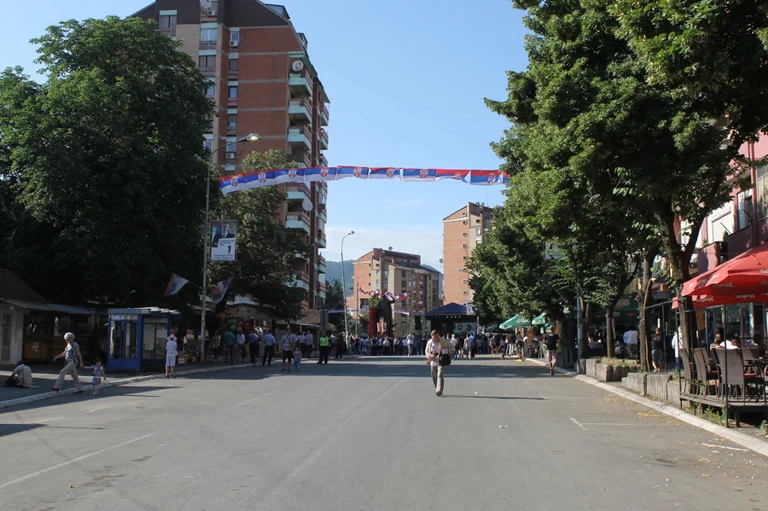
Tensions were also caused in four Serb-run municipalities, where local populations together, supported by Serbian political representatives blocking roads towards two border points, Jarinje and Brnjak.
The Serbian population also rejected the launch of the process of converting car plates to RKS by KM, since they are considered illegal in Kosovo.
Following tensions, roadblocks in the north and international intervention, Kosovo agreed to postpone issuing forms for Serbian citizens by early September, as well as a two-month period for reregistering the license plates.
US Ambassador Jeffrey Hovenier on Tuesday welcomed the Kosovo leaders' decision to temporarily suspend the implementation of reciprocity measures for license plates and entry/send documents.
For these two measures, he said they are fully in line with Brussels' agreements and that they are co-ordinated with the international community. / REL