8 minutes ago
German architect: It's disaster, chaos in Pristina must stop
Periskopi(4 years ago)
(4 years ago)Kosovo is a chaotic country, but very vivid” is the description with which German architect Jan Liesegang starts talking with Radio Free Europe. Liesegang is located in Kosovo to realise a project to restore the brick factory's industrial space in Pristina to an alternative cultural centre. This object, which for many can [...]
Kosovo is a chaotic country, but very vivid” is the description with which German architect Jan Liesegang starts talking with Radio Free Europe.
Liesegang is located in Kosovo to realise a project to restore the brick factory's industrial space in Pristina to an alternative cultural centre.
This object, which may seem to be simply littered with ruins, is ideal for meetings of artists, discussions, concerts, and others.
“Indeed, the brick factory can be an incubator for various activities, whether for the neighborhood around it or for the entire city [Pristina], but also for large concerts”, says Liesang.

The brick factory in Pristina.
Interventions under the city's tultore by the Liseang-led team are being conducted within the framework of cultural activity “Manifesta” a European nomad Binale that is held in Kosovo this year.
It is dedicated to art in public spaces, but it also serves as a bridge of communication among artists.
“Manifesta 14 Pristina” aims, in fact, to support Kosovo's citizens in restoring public spaces.

Work at the brick factory in Pristina. architect Lisegang expects to complete his work by July 22nd, when “Manifesta 14 opens Pristina”
Kosovo can make this transition, says Jan Liesegang. He is one of the founders of Raumlabor, a collective of experimental architects, based in Berlin, Germany. Their work could be described as a crossroads of architecture, urban planning, art and intervention in existing objects.
Liesegang says Pristina is an extremely chaotic country in which new constructions are not friendly with the environment.
When I see the construction of objects around the city, I think it's going completely wrong. It's a disaster. Building objects with glass, and within a few years we won't have affordable energy resources... and these objects will be empty, cold or extremely hot”, says Liesang.

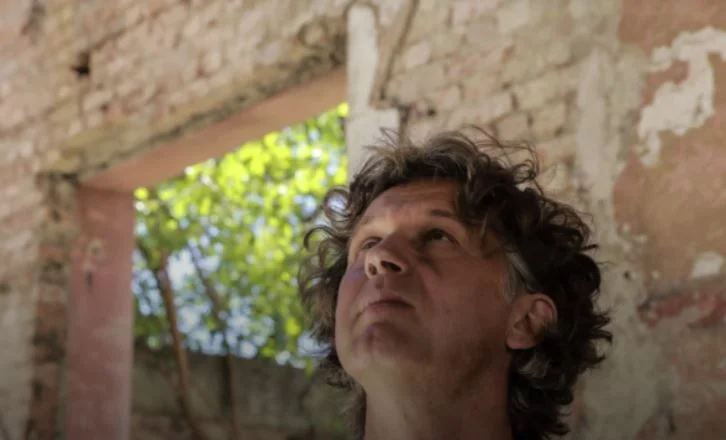
German architect Jan Liesang working on his work within the Manifesta.
He lives in Berlin and says that there he tries to minimize the use of vehicles, which are one of the leading producers of air pollution.
Unlike Berlin, in Pristina, he says, he sees the opposite.
I live in a circle where we try to give up the use of the car. Here everybody wants to drive the biggest possible car. I have to say, this is where you're all headed in the wrong direction. But I also have to say that we've all done it earlier this way”, says Lisegang.

Work at the brick factory in Pristina.
In Pristina, but also in other countries of the world, Liesegang appeals to change city development policies.
There is an urgent need to change as soon as possible, further away within the next five years. Otherwise, the earth will survive, but for us, humans, it will be too hot here”, he says.

Construction in Pristina. According to German architect Jan Liseang, Kosovo “is a chaotic country, but very vivid”.
“Manifesta 14 Pristina” will officially open on July 22nd. To date, works that Liseang is leading to Pristina brick factory industrial space are also expected to complete.
A summer school will also be held in which recycling, the circuit economy, and other topics aimed at urban development, protecting the environment.
Liesegang wishes that the space in which the work is being performed continues to be in service to Pristina artists and citizens even after “Manifesta”.
Over 100 days as it lasts “Manifesta”, organisers have said they expect the participation of about 100,000 visitors from abroad.