4 months ago
Reaching final Kosovo-Serbia agreement is urgent
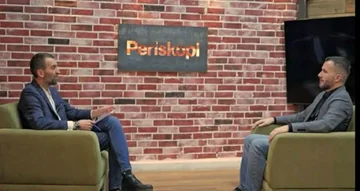
Periskopi(4 years ago)
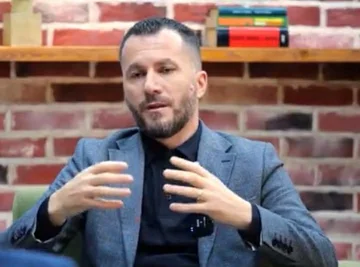
(4 years ago)Chief of the Interconnecting Office of the Slovak Republic in Pristina Rastislav Kostilnik has declared that reaching the final Kosovo-Serbia agreement is urgent, as the status quo is not sustainable and serves neither Serbia nor Kosovo. Kostilnik in an interview for Kosova Prees has said that for his country, any agreement [...] for which [...]
Chief of the Interconnecting Office of the Slovak Republic in Pristina Rastislav Kostilnik has declared that reaching the final Kosovo-Serbia agreement is urgent, as the status quo is not sustainable and serves neither Serbia nor Kosovo.
Kostilnik in an interview for KosovaPress has said that for his state, any agreements Kosovo and Serbia agree to -- excluding the territorial exchange, but including mutual recognition -- is acceptable.
He has indicated that he sees room for Kosovo and Slovakia's co-operation in many areas and that Slovakia's stance on Kosovo's status is not an obstacle to cultural and economic co-operation.
And as far as talking about economic co-operation, it says they regularly encourage entrepreneurs from Kosovo to contact Slovak counterparts.
“Unfortunately, diplomacy can play only a limited role when it comes to business and unfortunately, I don't see much interest here in creating more connections with Slovak business representatives”, he says, adding that Slovaks are more interested in Kosovo than in the past, as there are clear signs of exploring Kosovo's beautiful nature by Slovaks.
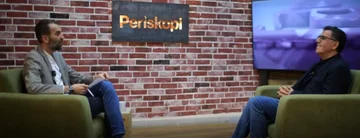
This is a full interview:
KP : How would you define the current relations between Kosovo and Slovakia? Are they fine, good, or is there more work to improve these relationships? How are your reports with Kosovo state leaders?
Costilnik: I would say we have good relations within its borders. As for my relationship with political leaders, I am happy to say that I have very good relations and that I am not alone. My minister too, Mr. President. Ivan Korcok, meets with Kosovo representatives. Shortly ago, in April, he participated with Foreign Minister Donika Grovalla, on the same panel under the Delphy Economic Forum, and this month held bilateral meetings with Prime Minister Albin Kurti in Bratislava.
KP: Slovakia is a state that has not recognised Kosovo's independence, but recognises its documents. When can we expect your country to recognise Kosovo's independence?
Costilnik: In general, we haven't come there yet and have to correct you here, we don't know Kosovo documents. They still have to be approved by the interim administration UNMIK. However, in terms of humanitarian, since 2012, we recognize Kosovo passports as a travel document, excluding diplomatic or service passports for obvious reasons. Let me stress here that recognising a travel document under International Law does not mean recognition of the subject that issued it.
KP: Is Slovakia's recognition hostage to dialogue? So should there be a final agreement between Serbia and Kosovo before thinking of recognising Kosovo's independence?
Costilnik: Our attitude is very consistent and straightforward. There's no room for any kind of confusion and the word “veneer” is not the right word here. The Slovak executive is linked to the statement of the National Assembly of the Slovak Republic (2007), which stipulates a common solution (of the two sides) must be found. Belgrade-Pristina dialogue is the means for such a solution, and for that reason we strongly support Lajcak's efforts.
KP: A citizen of yours is at the top of the dialogue, Mr. Lajcak. He speaks mainly on behalf of the EU. But how does Slovakia assess the process of dialogue between Kosovo and Serbia?
Costilnik: The Belgrade-Pristina dialogue is the process of finding a solution based on the agreement, which would legally establish Kosovo's citizenship with the consent of the two sides, as Slovakia was independent in 1993.
KP: Should there have been more progress after so many years of negotiations? Do you think there should be a final agreement with mutual recognition?
Costilnik: In essence, the speed and progress of EU facilitated negotiations depends only on the constructiveness of the two sides on the table. Russia's struggle of aggression in Ukraine is making progress even stronger. Europe needs more peace and its eyes are on you and Serbia to succeed. Reaching this agreement is urgent, as the status quo is simply not sustainable. It does not serve Serbia, nor does Kosovo. For us, anything the two sides agree on, excluding the territorial exchange, but including mutual recognition, is acceptable.
KP: Do you think our region is endangered by destabilisation after the situation in Ukraine? Do you see any possibility that, God save us, there will be any recursive conflict?
Costilnik: We monitor the security situation closely and agree with KFOR's assessment, under which the situation is stable.
KP: Serbia is the only country that has not imposed sanctions on Russia following its aggression in Ukraine. How have you seen this action of Serbia? Should a EU candidate country be brought in line with the EU?
Costilnik: Your clear stand on Russian aggression has generated much appreciation among member states. We believe our partners in Belgrade understand the sense of urgency to move forward on their European path.
KP: We have seen you visit municipalities in Kosovo and meet with the mayors of these municipalities. What is the purpose of these visits?
Costilnik: It is important for each diplomat to contact and contact people and their representatives. I am interested in their opinion on the issues of the daily “ ” and always take the opportunity to explain the mechanisms of SlovakAid, to encourage them to submit grant proposals. Now how many years we support Kosovo's socio-economic development through Slovak Ayd help the Slovak people.
KP: During the pandemic, especially during those difficult months, we found Slovakia helping Kosovo. Can you tell us how much your country has helped our country to cope with the virus and in what forms?
Costilnik: We've all been caught in COVID-19. Despite the situation within, Slovakia tried to do its best to help even those living outside our borders. In direct and indirect assistance, we offer Kosovo assistance of up to 600,000 euros. We have supported many projects designed to promote awareness of COVID-19 as well as to facilitate its consequences on marginalised groups. Slovakia also donated 30,000 euros to the Health Ministry to strengthen its capacities to fight pandemic.
KP: Thanks to your mediation, exhibitions have been opened and concerts have been held. Can cultural co-operation between Kosovo and Slovakia increase? So our artists can get to know you and vice versa?
Costilnik: I see room for mutual co-operation in many areas. Slovakia's position on Kosovo's status is not an obstacle to cultural and economic co-operation; university, municipal co-operation, etc. I think we should walk before we run. These fields can serve as a means to get to know each other. I'm happy to play an intermediate role, but I want to see a real interest in such cooperation.
KP: The economy is another very important area. What activities is your office currently taking to help economic development in Kosovo? Are there activities to mediate meetings between businesses in Kosovo and Slovakia?
Costilnik: The Slovak Liaison Office has established a very good connection with many businesses and economic associations. We regularly encourage entrepreneurs from Kosovo to contact Slovak counterparts. Unfortunately, diplomacy can only play a limited role when it comes to business. It takes two for tango and unfortunately, I don't see much interest here to create more ties with Slovak business representatives.
KP: Tourism has also been introduced through exhibitions. Is there any figure for the number of Kosovars visiting Slovakia?
Costilnik: Since it is difficult to distinguish between the tourist and the transitor, since there is often a combination, such a number does not exist. However, we appreciate there are several hundred Kosovars visiting Slovakia annually.
Do Slovaks recognise Kosovo as a country? Do they come here for visits, if there are any numbers, how many Slovaks come to Kosovo every year?
Again, we have no statistics and it's hard to make an assessment. However, I can confirm a positive trend. The Slovaks are more interested in Kosovo than in the past; there are clear signs of exploring Kosovo's beautiful nature by Slovaks.
Finally. What's the number of working visa applications in your office? And how many visas are issued annually for Kosovars who want to work in Slovakia? Has there been increasing demand last year? Are there statistics for the first five months of this year?
Before talking about numbers, it should be stressed that the Slovak Liaison Office is a small office with limited capacity compared to other Schengen members. Much smaller than other countries, but we note Kosovars' interest in working in Slovakia.
As a result of pandemic over the past two years, there has been a significant decline in the number of applications, both for Schengen visa applications and for working visas. Current figures still do not reflect the situation before COVID-19.