3 minutes ago
Since October, workers in Germany will be paid 12 euros per hour of work
Periskopi(4 years ago)
(4 years ago)Some 6.2 million workers in Germany will benefit from the increase in the minimum wage approved by lawmakers. This increase comes from increased inflation in Germany. German Chancellor Olaf Scholz made the minimum wage increase a key point on his election platform, and on Friday, lawmakers adopted a bill [...]
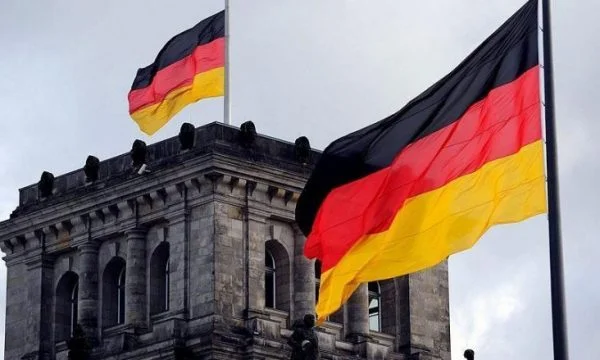
Some 6.2 million workers in Germany will benefit from the increase in the minimum wage approved by lawmakers. This increase comes from increased inflation in Germany.
German Chancellor Olaf Scholz made the minimum wage increase a key point on his election platform, and on Friday, lawmakers approved a bill increasing the minimum wage to 12 euros per hour, starting on October 1st an increase of 2.18 euros per hour.
This increase would mean an additional 400 euros per month for people with a monthly income of 1700 euros, according to Labour Minister Hubert Hale.
Germany introduced a national minimum wage in 2015 with the insistence of Scholz's centre-left Social Democrats, who at the time were small partners in the conservative government of former ancellara Merkel.
Many citizens of our country work hard, but earn little this should change,” wrote in a Twitter post when his cabinet agreed to this increase in February. For me, this law is one of the most important laws and a matter of respect. ”
Did someone object to the minimum wage?
The minimum wage increase bill passed by a wide margin of 400 pro, 41 against and 200 abstentions, mainly from the opposition bloc of Christian Democrat Union and the Christian Social Union (CDU/CSU).
Politicians from CDU/ The centre-right CSU stressed that they were not against the minimum wage increase, but the way the Scheloz coalition of Social Democrats, greens and free neoliberal Democrats brought it. The Socialist Left Party joined the government's coalition parties' trend in voting to adopt the bill.
How is the minimum wage determined in Germany?
The minimum wage in Germany is generally recommended by a commission involving representatives of employers and employees. Politicians then issue laws based on these recommendations. But for this increase, the government exceeded the commission and set the price of 12 euros on itself, adding that the body would determine future increases.
Some employers were critical of this increase, arguing that the government is interfering in long-created negotiations between employers, employees and trade unions to establish compensation levels.
Unions and politicians, however, rejected this criticism, saying a minimum wage set at 12 euros per hour of work would reduce poverty in Germany.
Who gets a minimum wage in Germany?
Germany's minimum wage covers most workers in the country over 18. That includes seasonal workers, no matter where they are from.
As in most countries, there are a number of exceptions to order. Practicers, workers taking part in job promotion schemes, long-term unemployed in the first six months after re-entering the labour market, and self-employed individuals are not covered by the minimum wage law.
Workers who cross the country, such as airline pilots and truck drivers, also do not cover up.
How often does minimum wage change?
The current national minimum wage is 9,82 euros, with an increase of 10.45 euros since July currently in the register. The minimum wage commission will decide on possible growth levels in the future in January 2023 and June 2023.
Germany has one of the highest minimum wages in the European Union. With the current rate of 9,82 euros per hour of work, a full-time employee would earn 1,621 euros a month, shortly after Luxembourg (2,257 euros), Ireland (1,775 euros), the Netherlands (1,725 euros) and Belgium (1,658 euros).
A number of European Union countries such as Denmark, Italy, Austria, Cyprus, Finland and Sweden have no national minimum wage. They rely on individual unions and sectors to establish their salaries. / DW