6 hours ago
What is a monkey's permit, a rare infection that has emerged in Europe and the United States
Periskopi(4 years ago)
(4 years ago)After the United Kingdom recorded several cases of monkey oak infection last week, the mysterious disease reached Portugal and Spain but also in the United States and Canada. Monkey line is a virus that causes fever symptoms and shows bumps in the body. He is usually gentle, although he has two [...]
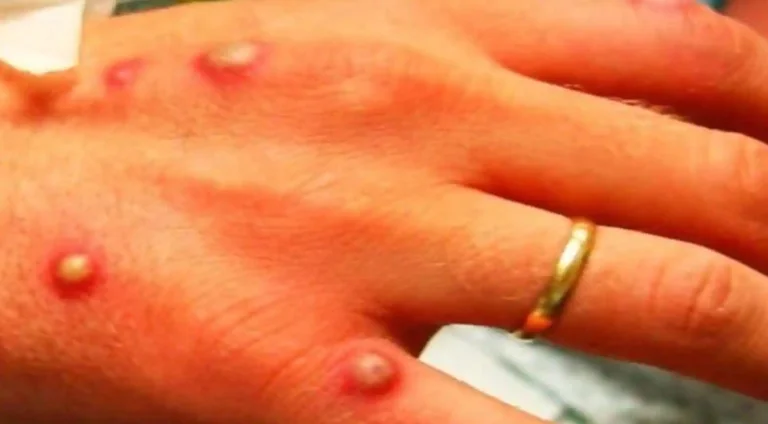
Monkey line is a virus that causes fever symptoms and shows bumps in the body.
It is usually mild, although there are two main types: the Congo, which has a mortality rate of up to 10 percent and West Africa, which has a mortality rate of one percent, reports the dan.
The virus is spread by close contact from both animals and humans. It was first found in monkeys in 1958, so it was named “the monkey's”, although rodents are now regarded as the main carriers, it broadcast Telegrafi.
The transmission of this virus is confusing experts because a certain number of infected people in Great Britain do not have any family ties.
A warning from the United Kingdom Health Security Agency said that recent cases were mainly among men who identified themselves as gay and bisexual, so these groups are advised to be cautious.
Scientists are currently conducting genomic tests to determine whether viruses are linked, World Health Organisation (OBSH) announced.
Where did the entire infection come from?
British cases have been reported as West Africa. Portugal has recorded five new cases of infection, and Spain is testing 23 possible cases. The health authorities of the U.S. State of Massachusetts confirmed the existence of ape oak, the first case of this infectious disease in the United States.
The U.S. Department of Health announced on Wednesday that a man who has recently gone to Canada has been infected, but adds that this case poses no danger to public health. A Massachusetts resident was sick and in hospital since May 12th. He's in hospital isolation and he's in stable condition.
The hospital administration added that because the disease is very rare, it took six days to prove that they had monkeypoke.
Why is it spreading now?
One possible scenario after increasing the number of cases is the increase in travel after restrictions have been lifted due to coronavirus.
Experts have urged people worldwide not to panic because the likelihood is small that the infection will spread to a greater extent.
Otherwise, the monkey's permit was classified into the small - leaven family until the first human case was recorded in 1970 in the Democratic Republic of Congo <x0).
Most of the cases were reported in DRC and Nigeria, and in 2003 the disease was first discovered in the United States. /Telegraphy/